


TLDR
- Bitcoin maintained its position above the $70,000 threshold on Friday, registering approximately 7% weekly gains amid market turbulence
- International equity markets rebounded from midweek losses, pushing S&P 500 futures toward the 6,840 level
- Crude oil experienced a dramatic 16%+ weekly surge following Iran’s tanker blockade in the Strait of Hormuz
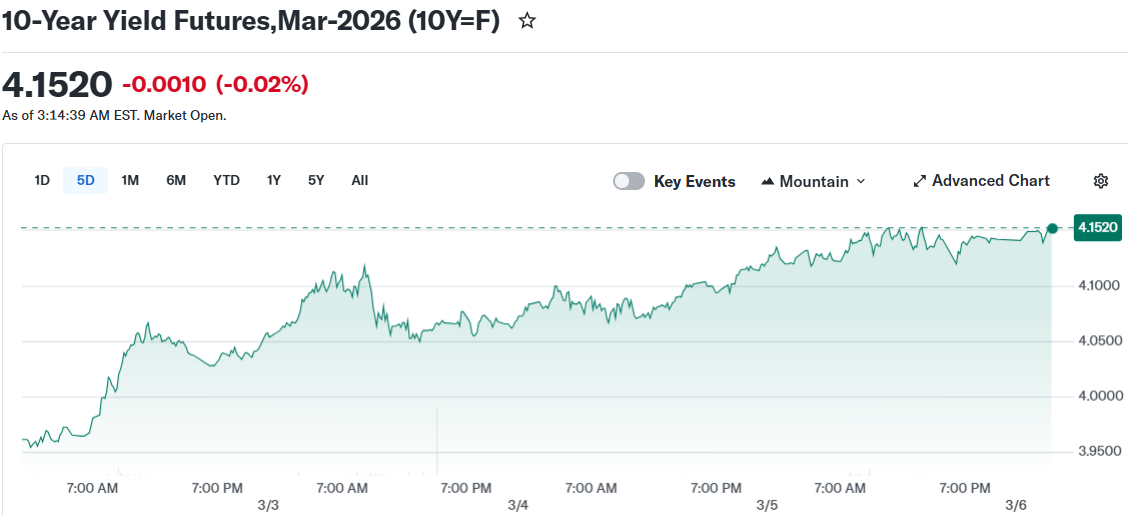
- The 10-year U.S. Treasury yield extended its rally for four consecutive sessions, advancing from 3.93% to 4.15%
- Market expectations for Federal Reserve rate reductions dropped significantly, with odds falling from nearly 80% to under 50% for two cuts in 2026
Bitcoin successfully maintained its position above the $70,000 mark on Friday while international equity markets found stability following a week marked by escalating tensions involving the United States, Israel, and Iran. However, fixed-income markets are painting a more concerning picture.
The trading week opened with significant selling pressure across risk-sensitive assets after Iran implemented a blockade on oil tankers navigating through the Strait of Hormuz, a critical waterway that facilitates approximately 20% of global oil transportation. This action triggered a dramatic surge in crude oil prices, climbing over 16% throughout the week—marking the steepest weekly advance since March 2022.
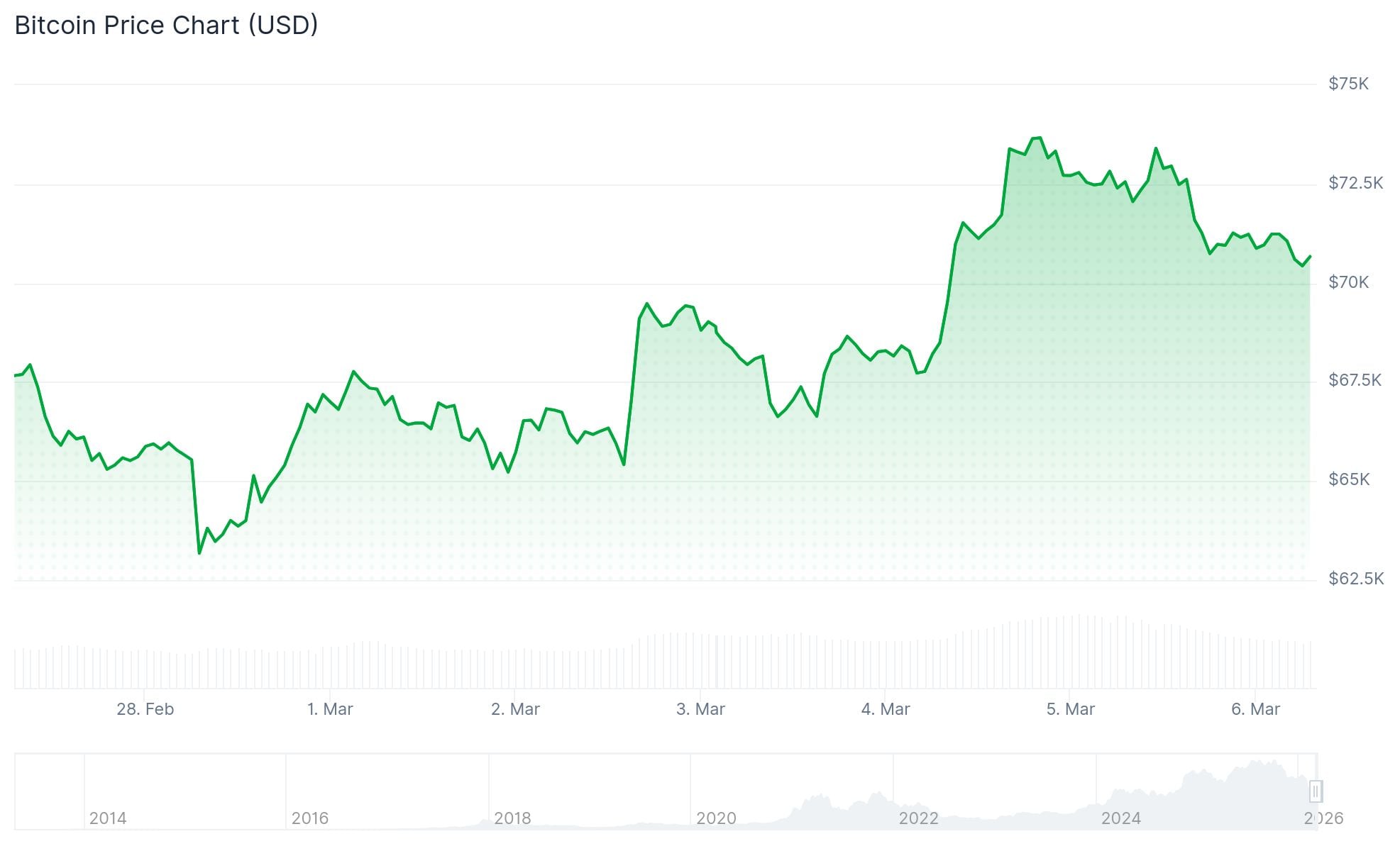
Bitcoin experienced a weekend downturn to approximately $65,000 before staging a recovery. The leading cryptocurrency briefly touched $74,000 during Wednesday’s session before retreating to $70,182 by Friday’s opening, maintaining a solid weekly performance gain of roughly 7%.
Stock markets mirrored this volatile trajectory. S&P 500 futures declined to a multi-week bottom of 6,718 during Tuesday’s trading before climbing back toward 6,840. The Dow Jones Industrial Average recorded a weekly decline exceeding 2% and entered negative territory for the 2026 calendar year. The Nasdaq Composite demonstrated stronger resilience, positioning itself for modest weekly appreciation.
U.S. authorities took steps to stabilize petroleum markets by announcing naval protection for tankers transiting the strait, which helped moderate initial market anxieties. Nevertheless, energy prices remained at elevated levels.
Treasury Yields Continue Upward Trajectory
The more significant market development centers on bond market dynamics. The 10-year U.S. Treasury yield extended its advance for four consecutive trading sessions, climbing from 3.93% to 4.15%. The two-year yield surged from 3.37% to approach 3.60%.
Escalating yields signal mounting concerns that elevated oil prices will reignite inflationary pressures, constraining the Federal Reserve’s flexibility to implement interest rate reductions.
Prior to the conflict’s escalation, market participants assigned nearly an 80% probability to two Fed rate cuts during the current year. That expectation has now collapsed below the 50% threshold.
Bryan Tan, a trader at Wintermute, said the rates market is “revealing the tension in this rally,” pointing to strong economic data alongside an inflationary energy shock as a combination that could keep the Fed on hold longer.
Recent U.S. economic indicators reinforced this narrative. The ISM Services index registered 56.1 in February, demonstrating ongoing sectoral expansion. The ADP payrolls report revealed 63,000 private sector employment additions, exceeding the anticipated 50,000 and representing the strongest reading since July 2025.
Alternative Cryptocurrencies and Broader Assets Face Headwinds
The majority of prominent alternative cryptocurrencies experienced losses on Friday. Ethereum declined 3% to reach $2,069. XRP retreated 1.8% to $1.39. Solana slipped 1.6%, while Cardano and Polygon each posted 2.5% declines. Dogecoin similarly fell 1.8%.
Gold positioned itself for a weekly loss despite persistent geopolitical uncertainties, pressured by a strengthening U.S. dollar.
Analyst Jack Prandelli observed that oil prices historically surge 20–30% within 60 days following significant geopolitical disruptions, suggesting current markets may be underestimating supply risk scenarios.
Market attention now shifts to Friday’s nonfarm payrolls release. Economists anticipate employment growth of approximately 55,000, representing a deceleration from January’s 130,000 figure. A stronger-than-projected report could drive yields considerably higher.
Get 3 Free Stock Ebooks
Discover top-performing stocks in AI, Crypto, and Technology with expert analysis.
- Top 10 AI Stocks - Leading AI companies
- Top 10 Crypto Stocks - Blockchain leaders
- Top 10 Tech Stocks - Tech giants


