



TLDR
- BTC plummeted to approximately $63,000 during the weekend following coordinated U.S.-Israel military operations against Iran, then bounced back toward $67,000
- Unconfirmed reports claiming Iran’s Supreme Leader had been assassinated temporarily lifted BTC past $68,000
- Oil prices spiked as high as 13%, maintaining downward pressure on risk-sensitive assets like Bitcoin
- Critical U.S. employment figures due Friday could trigger additional Bitcoin volatility
- Technical analysis reveals a bearish pennant formation suggesting possible decline to the $52,000 region
Bitcoin experienced significant downward pressure throughout the weekend as coordinated military operations by the United States and Israel against Iranian targets sent shockwaves through global financial markets.
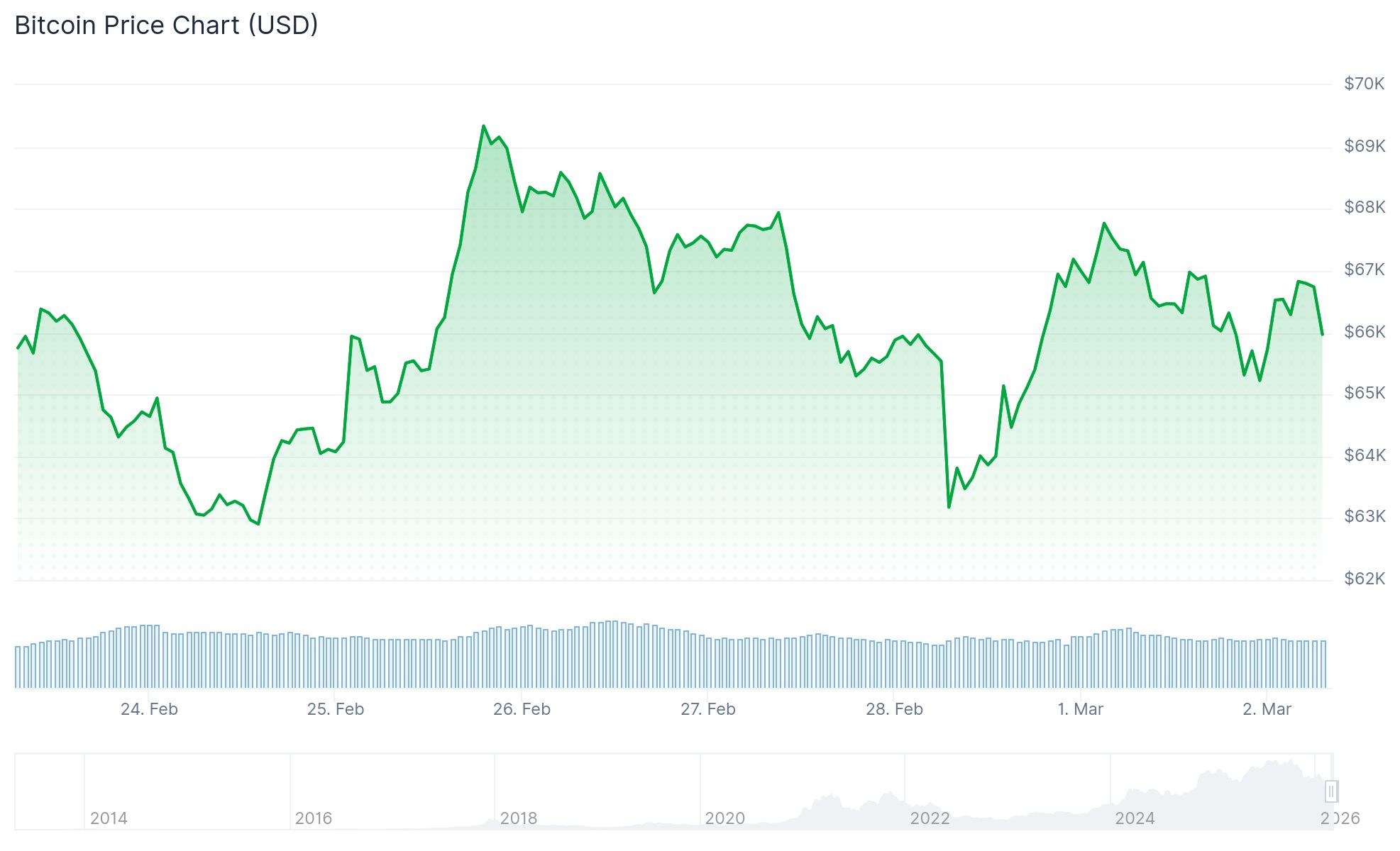
The leading digital asset by market capitalization slid to approximately $63,255 on Saturday, representing a decline of roughly 6.5%, before staging a recovery that brought prices back above the psychologically important $67,000 threshold by Monday.
As Asian markets opened Monday, BTC was changing hands near $66,197, reflecting a 2.1% daily decline.
The military campaign reportedly resulted in the death of Iran’s Supreme Leader Ayatollah Ali Khamenei — unconfirmed reports that momentarily propelled Bitcoin beyond $68,000 before the rally lost momentum.
Tehran retaliated with successive rounds of missile attacks aimed at American and Israeli military facilities. President Trump indicated the military operations would persist for the foreseeable future.
Ethereum experienced a steeper correction, dropping approximately 10% following the escalation, with prices hovering around $1,950 by Sunday.
Energy Markets and Traditional Safe Havens Rally
Crude oil markets demonstrated dramatic volatility in response to the Middle East tensions. Brent crude surged up to 13% while West Texas Intermediate posted gains approaching 10% during Sunday evening trading.
Gold advanced roughly 2%, climbing to its highest levels in several weeks as capital rotated into traditional safe-haven instruments.
Sean Farrell, Fundstrat’s head of digital assets, noted that geopolitical-driven selloffs often present buying opportunities, though he identified crude oil as the critical variable to monitor. He cautioned that any interruption to global shipping routes or energy supply chains could exert additional downward pressure on Bitcoin valuations.
U.S. equity index futures declined during Asian session trading, signaling a challenging opening for Wall Street.
Critical Economic Releases and Technical Outlook
Market participants are now focusing attention on a densely packed U.S. economic calendar. Monday brings the ISM Manufacturing index, with ADP employment figures and ISM Services data scheduled for Wednesday.
The week’s centerpiece arrives Friday with the Nonfarm Payrolls release, a report that consistently influences Treasury yields and dollar strength — two factors with documented correlation to Bitcoin price action.
From a technical perspective, BTC appears to be developing what market observers characterize as a bearish pennant pattern following its retreat from the $73,000–$74,000 zone. This formation indicates the cryptocurrency may consolidate within a $63,000 to $69,000 trading corridor near-term.
A decisive break below this range could send prices toward support in the $51,800–$52,000 area, based on pattern-based price projections.
Bitcoin has declined 23% year-to-date and registered losses for five consecutive months. The asset reached an all-time peak of $126,000 in October.
Several institutional analysts are now modeling scenarios where BTC tests the $50,000 level before potentially establishing a base for recovery during the year’s second half.
At the time of writing Monday, BTC was trading around $65,961.

