



TLDR
- Brent crude climbed more than 4% to reach $88.85 per barrel on Friday; WTI surged 5.3% to $85.31 per barrel
- WTI recorded its largest daily percentage increase since May 2020, jumping 8.5% Thursday
- Qatar’s Energy Minister cautioned that Gulf nations might suspend production in coming days
- UBS forecasts predict oil could surpass $90 per barrel if Strait of Hormuz faces continued disruptions
- Elevated crude prices are driving bond yields upward while creating headwinds for equity markets
Crude oil markets experienced another significant rally on Friday, building on substantial gains from the previous session, as energy traders increasingly fret about potential supply chain interruptions across the Middle East region.
Brent crude futures advanced approximately 4% to settle at $88.85 per barrel. West Texas Intermediate climbed 5.3% to close at $85.31 per barrel. The two primary oil benchmarks have now posted consecutive gains for five trading sessions. Brent has surged 19% during this period, while WTI has jumped 25%.
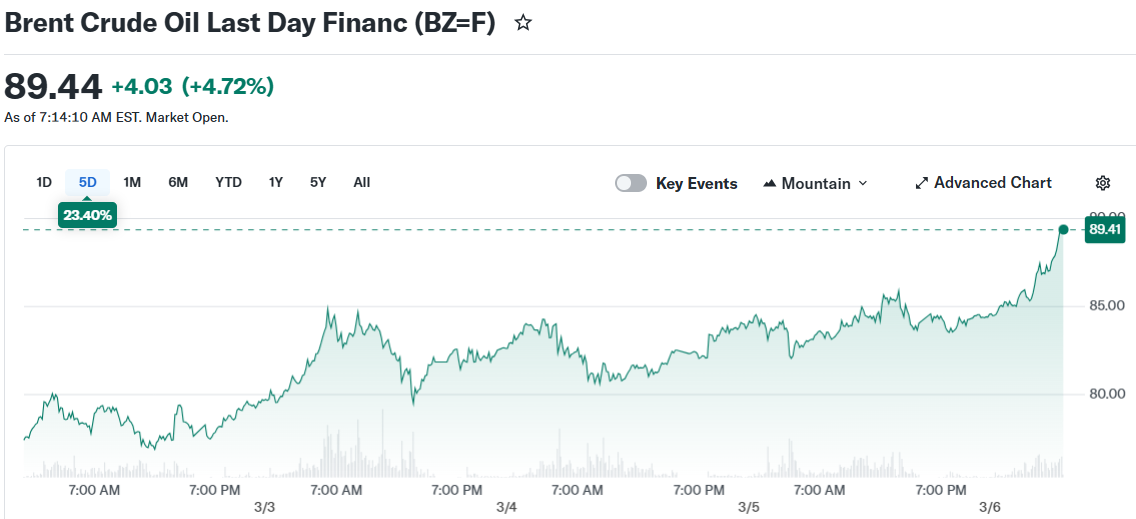
During Thursday’s session, WTI achieved its most significant single-day percentage increase since May 2020, advancing approximately 8.5%. This dramatic movement sent ripples through global financial markets.
Deutsche Bank’s strategist Jim Reid noted that the crude rally has caused market participants to scale back their forecasts for upcoming interest rate reductions. This shift has driven bond yields upward across the Atlantic on both sides, while equities and fixed-income securities experienced simultaneous declines.
Why Traders Are Worried About Supply
Market anxiety is focused on the Strait of Hormuz, a critical maritime chokepoint that facilitates the passage of approximately 20% of global oil supplies. Escalating military confrontations between Iranian forces and combined U.S.-Israeli military operations have intensified concerns that the strait might be blocked.
Qatar’s Energy Minister Saad al-Kaabi informed the Financial Times on Friday that armed conflict in the Middle East region could compel Persian Gulf producers to suspend energy output within a matter of days. He cautioned that crude could potentially reach $150 per barrel under such circumstances.
UBS analysts indicated in their research note that current oil prices do not represent a “stable equilibrium.” Should maritime disruptions continue or critical energy facilities sustain additional damage, prices could climb above the $90 per barrel threshold, according to their assessment.
UBS analysts Mark Haefele and Giovanni Staunovo further noted that should hostilities cease, prices would likely retreat, with Brent potentially returning to a $60 to $70 per barrel trading range.
The United States took steps to alleviate some market pressure by announcing authorization for Russian oil sales to India over a 30-day period. Additionally, the U.S. Treasury Department is anticipated to unveil measures designed to manage energy costs through financial market mechanisms, Reuters reported.
What It Means for Inflation and Rate Cuts
Certain market participants now express concern that sustained higher oil prices could accelerate U.S. inflation, potentially postponing Federal Reserve monetary policy easing. U.S. Treasury yields have already climbed in reaction, creating downward pressure on stock valuations.
UBS analysts suggested that crude prices would need to remain at elevated levels for multiple months before they would “materially affect growth or inflation.”
Energy Secretary Chris Wright indicated Thursday that the Iran conflict might conclude within weeks. “We don’t know the exact length, but pretty temporary,” he told ABC News.
Nevertheless, there are minimal indications that military operations are subsiding. Israeli forces conducted strikes against Hezbollah positions in Lebanon and targeted Tehran on Friday, while Iran’s Revolutionary Guards deployed drones and missiles toward Tel Aviv.
Get 3 Free Stock Ebooks
Discover top-performing stocks in AI, Crypto, and Technology with expert analysis.
- Top 10 AI Stocks - Leading AI companies
- Top 10 Crypto Stocks - Blockchain leaders
- Top 10 Tech Stocks - Tech giants


