


Key Takeaways
- Ford’s Q1 2026 US deliveries dropped 8.8% to 457,315 units; GM fell 9.7% to 626,429 vehicles
- March 2025’s tariff-induced purchase rush created an unusually strong comparison period
- Ford’s iconic F-Series pickup sales declined 16%; electric vehicle deliveries plunged 70% to 6,860 units
- New vehicle transaction prices hovering above $50,000 continue suppressing consumer demand
- Escalating fuel costs linked to Middle Eastern instability may drive shoppers toward economy models
America’s top two domestic automakers experienced significant sales headwinds during the opening quarter of 2026. Ford Motor Company moved 457,315 units nationwide, representing an 8.8% year-over-year contraction. General Motors fared similarly, recording 626,429 vehicle deliveries — a 9.7% decrease from the same period in 2025.
Executives from both Detroit giants attributed much of the weakness to an unusual market distortion from spring 2025. Anticipating the implementation of automotive tariffs, consumers accelerated their purchasing decisions in March of that year. This pre-tariff scramble drove the seasonally adjusted annual rate to 18.4 million vehicles — a level not witnessed since April 2021. The resulting elevated baseline has made year-over-year growth comparisons exceptionally challenging.
Additionally, harsh winter conditions during January and February discouraged showroom traffic, according to GM representatives. The automaker observed that March deliveries rebounded approximately 18% compared to February as weather patterns normalized.
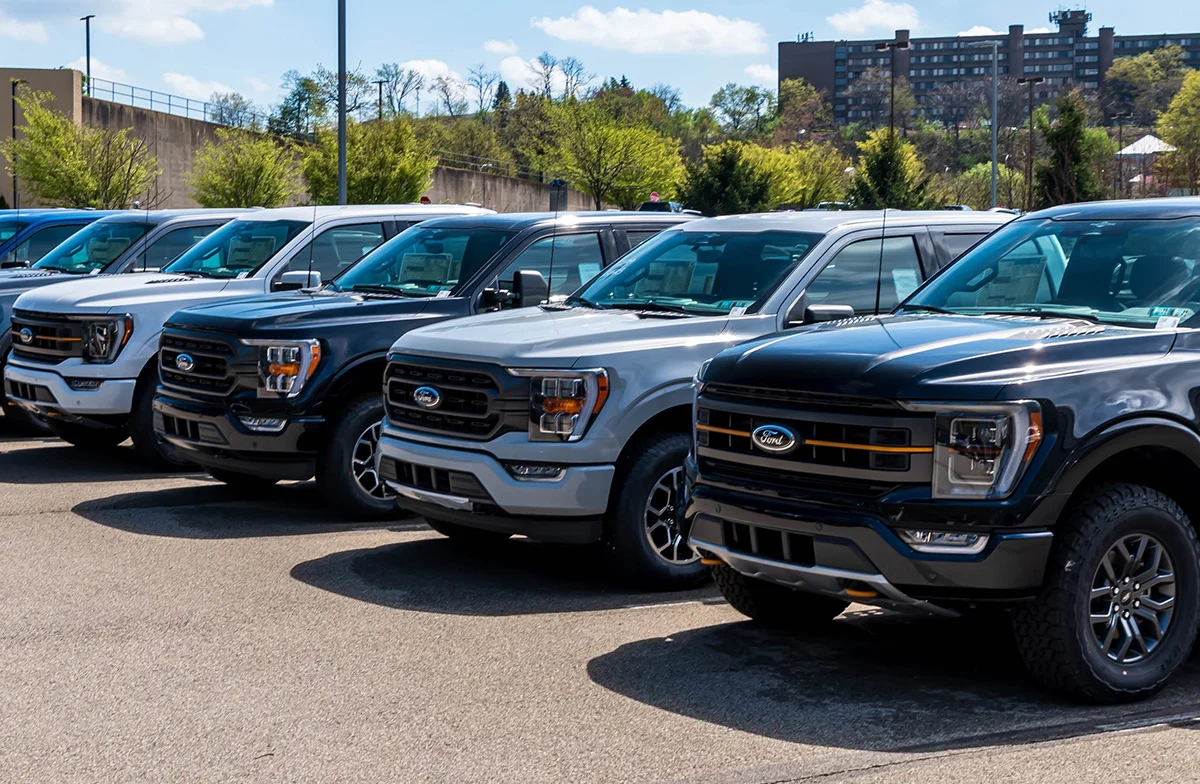
Ford’s flagship F-Series pickup line — America’s perennial best-seller — experienced the steepest decline among major product lines. The franchise recorded 159,901 units sold, down 16% from the prior year. Company officials attributed a portion of this shortfall to manufacturing disruptions stemming from aluminum supplier facility fires that occurred in 2025.
The Dearborn automaker’s electrification efforts faced particularly severe headwinds. Total EV volume reached just 6,860 units during the quarter, representing a dramatic 70% collapse compared to Q1 2025. The F-150 Lightning electric pickup — since discontinued — saw deliveries crater from 7,187 units to merely 2,060. Hybrid-powered vehicles also retreated 19.4% to 41,159 units.
Despite these setbacks, Ford achieved notable successes in specific segments. Explorer SUV deliveries surged 29.7% while Expedition sales climbed 30.2% — marking the strongest combined first-quarter performance for these nameplates since 2002. The Bronco Sport crossover achieved a record-breaking Q1 with 35,021 deliveries.
Ford’s retail market penetration improved to 11.6%, gaining 0.2 percentage points versus the year-ago period.
Pricing Challenges Continue Hampering Industry Recovery
The typical new vehicle transaction price in America has climbed to approximately $50,000. Combined with persistently elevated borrowing costs, these economic realities continue excluding significant numbers of potential buyers from the market.
GM’s value-oriented Chevrolet Silverado carries a base manufacturer’s suggested retail price of $36,900, excluding freight charges. While GM offers six Chevrolet and Buick models positioned below the $30,000 threshold, the company lacks the extensive mainstream hybrid portfolio available from competitors like Toyota and Hyundai.
General Motors delivered 25,900 battery-electric vehicles during the first quarter, showing modest improvement from Q4 2025 figures. The corporation maintains its position as America’s second-largest EV seller, trailing only Tesla.
Energy Market Volatility Compounds Uncertainty
Accelerating gasoline prices — partially attributable to persistent Middle Eastern geopolitical tensions — threaten to redirect consumer preferences toward compact and efficient vehicle segments. Industry forecasters had previously anticipated gradual sales momentum building through 2026, but that optimistic outlook now faces increased skepticism.
General Motors retained its position as America’s volume leader through Q1 2026, maintaining a cushion exceeding 57,000 units over Toyota, with Ford securing third place.
Ford executives indicated expectations for an irregular recovery pattern, with stronger volume materializing during the year’s second half.
Get 3 Free Stock Ebooks
Discover top-performing stocks in AI, Crypto, and Technology with expert analysis.
- Top 10 AI Stocks - Leading AI companies
- Top 10 Crypto Stocks - Blockchain leaders
- Top 10 Tech Stocks - Tech giants


