


TLDR
- Fourth quarter 2025 net earnings at Foxconn declined 2% to NT$45.21 billion (approximately $1.41B), significantly below Wall Street’s NT$60.88 billion projection
- Top-line sales surged 22% annually to NT$2.606 trillion, fueled by artificial intelligence server orders
- The company attributed the earnings shortfall to an elevated tax burden rather than softening market conditions
- Cloud infrastructure and AI server products represented 42% of quarterly revenue
- Management forecasts “strong growth” for Q1 2026 and the complete fiscal year, with ambitions to capture 40% of the AI server market
Despite achieving unprecedented quarterly sales figures, Foxconn delivered a disappointing earnings result as increased tax obligations compressed profit margins. The Taiwan-based manufacturing giant maintains an optimistic outlook, banking on continued AI infrastructure expansion.
Fourth quarter earnings settled at NT$45.21 billion ($1.41 billion), representing a 2% year-over-year decrease. The result significantly underperformed against analyst consensus of NT$60.88 billion from FactSet and the NT$63.86 billion projection compiled by LSEG.
Meanwhile, the revenue picture painted a starkly different narrative — climbing 22% compared to the prior year to reach NT$2.606 trillion. This marked an all-time quarterly high for the electronics manufacturer.
The divergence between robust sales growth and disappointing profitability traced back to a single culprit: taxation. An elevated effective tax rate during the period substantially reduced net income. Additionally, gross margin contracted to 5.88% versus 6.15% in the comparable prior-year period.
Artificial intelligence infrastructure has emerged as a cornerstone of Foxconn’s operations. The cloud and networking division — which encompasses AI server production — generated 42% of fourth quarter sales. This represents an increase from the 41% contribution in Q2, when this segment initially surpassed consumer electronics to become the firm’s largest revenue generator.
The manufacturing powerhouse produces server hardware for Nvidia and handles iPhone assembly for Apple. Manufacturing operations in India currently handle the majority of iPhones destined for American consumers, while emerging production sites in Mexico and Texas are being established to manufacture Nvidia’s AI server platforms.
Strong Outlook for 2026
During the earnings conference call, Chairman Young Liu emphasized that artificial intelligence momentum shows no signs of decelerating. “Artificial Intelligence’s strong growth was not just for this past year or two,” he stated. “It will last through the next two to three years.”
Liu noted that key customers anticipate the AI sector will expand to $1 trillion in value within this period. Foxconn has set its sights on capturing a 40% share of the AI server manufacturing market.
This represented the first occasion the manufacturer has provided comprehensive annual revenue guidance for 2026. Both first quarter and full-year projections carry a “strong growth” designation — the most optimistic rating Foxconn employs.
Geopolitical Risk Flagged
Liu also raised concerns about external headwinds during the analyst call. “The biggest external challenge this year, in my view, is still the global political and economic situation, especially the war in the Middle East,” he noted.
The chairman provided no additional specifics on these concerns. Supply chain vulnerabilities stemming from Middle Eastern conflicts have remained a persistent worry for international manufacturing operations.
Regarding consumer electronics, Foxconn anticipates robust year-over-year expansion in smart device sales. Liu indicated that memory component shortages and rising prices have had minimal impact on demand, primarily due to the company’s focus on premium product categories.
The personal computer division presents a contrasting outlook — Foxconn projects a year-over-year contraction in this segment during the first quarter.
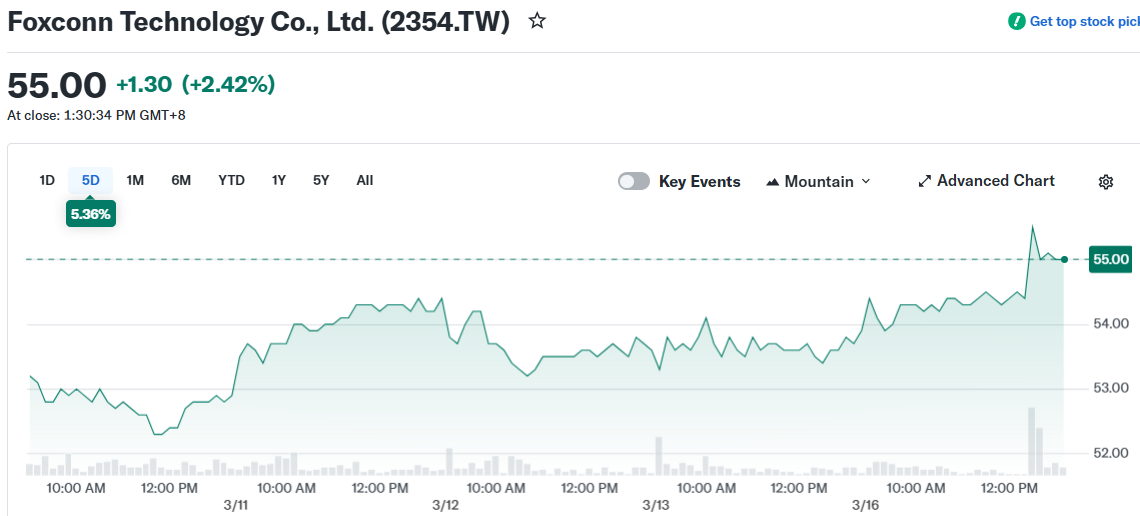
Shares of Foxconn have retreated 6% during 2026 thus far, lagging behind the 15% advance posted by Taiwan’s primary market index.
Get 3 Free Stock Ebooks
Discover top-performing stocks in AI, Crypto, and Technology with expert analysis.
- Top 10 AI Stocks - Leading AI companies
- Top 10 Crypto Stocks - Blockchain leaders
- Top 10 Tech Stocks - Tech giants


