



TLDR:
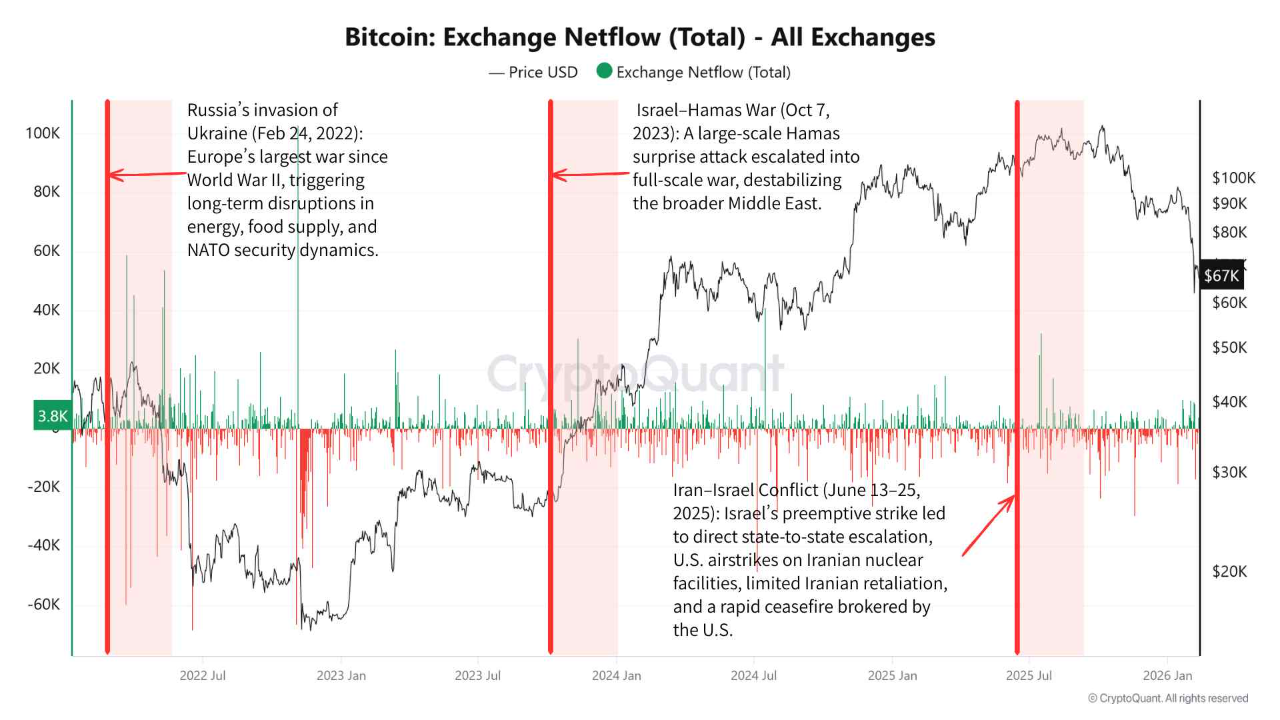
- Exchange Netflow data from three major conflicts shows Bitcoin inflows spike briefly, then normalize within 90 days.
- Bitcoin’s fixed supply schedule and network function remain unaffected by military conflicts or national fiscal crises.
- ETFs and institutional players now absorb geopolitical shocks through derivatives, reducing sustained spot market pressure.
- The U.S. Clarity Act and macro liquidity conditions are now the primary forces shaping Bitcoin’s structural direction.
Geopolitical risk and Bitcoin have long been studied together, yet their relationship is still widely misread by market participants.
On-chain data from three major military conflicts shows that war events cause short-term volatility but do not reshape Bitcoin’s structural trend.
CryptoQuant’s Exchange Netflow data tracks this behavior consistently across all three cases. Fear-driven inflows appear briefly, then normalize.
Trade wars and regulatory changes, by contrast, carry far more weight in shaping Bitcoin’s medium-term direction.
War Events Trigger Brief Market Disruption but No Lasting Structural Change
Three conflicts tested Bitcoin’s market resilience in recent years. Russia invaded Ukraine on February 24, 2022. The Israel–Hamas war began on October 7, 2023.
The Iran–Israel escalation followed on June 13, 2025. All three events produced short-lived spikes in CryptoQuant’s Exchange Netflow data, reflecting temporary fear-based positioning among traders.
Source: CryptoQUant
However, within three months of each event, Exchange Netflow levels returned to their normal ranges. Exchange trading volume showed no sustained structural shift in any of the three cases.
Capital did not exit the Bitcoin market in a lasting or measurable way during these conflict periods.
This pattern reflects Bitcoin’s core architecture and market structure. Unlike sovereign currencies, Bitcoin has no direct link to any single nation’s fiscal stability.
Military conflicts strain national economies, but they do not change Bitcoin’s supply schedule or disrupt its network function.
Additionally, the growing role of ETFs and institutional participants has changed how markets absorb conflict-driven shocks.
Much of the fear-based pressure now channels through derivatives markets rather than sustained spot selling. This structural shift reduces the lasting effect of geopolitical tension on Bitcoin’s price trajectory.
“Military events create noise. Macro conditions create trends. On-chain data continues to confirm this distinction across all three major conflict periods reviewed.” — Cryptoquant analyst XWIN Research JapaN noted.
Trade Policy and Regulation Carry Greater Weight for Bitcoin’s Direction
Trade wars and economic instability carry a more direct and measurable effect on Bitcoin than armed conflict. Tariff escalation, financial tightening, and liquidity contraction all shape global dollar flows and investor risk appetite. These conditions produce concrete, observable changes across multiple on-chain metrics.
Stablecoin supply, Realized Cap trends, and broader capital allocation patterns all respond to macroeconomic tightening.
As a result, these indicators offer more reliable directional signals for Bitcoin than conflict headlines do. Reviewing on-chain data consistently over time makes this distinction between macro pressure and military events increasingly clear.
This analysis builds on the January 5, 2026 report, “Venezuela and Bitcoin — Reading Geopolitical Risk Through On-Chain Data.”
That earlier report showed how economic instability, rather than political conflict, drove Bitcoin capital movement in Venezuela. The current findings reinforce that same conclusion across different geopolitical contexts.
Regulatory clarity is now attracting close attention from institutional investors and market participants alike. The U.S. Clarity Act is gaining visibility for its potential to open new capital pathways and expand institutional access to Bitcoin.
History points firmly to liquidity conditions and regulatory frameworks, not military conflict, as the forces that consistently define Bitcoin’s structural direction.

