



TLDR
- Gold prices stayed above $5,000 per ounce after December retail sales missed expectations, strengthening the case for Federal Reserve interest rate cuts
- The metal has clawed back half of its 13% two-session plunge from late January’s record peak above $5,595 per ounce
- BNP Paribas projects gold will hit $6,000 by end of 2026 with Deutsche Bank and Goldman Sachs also maintaining bullish outlooks
- US dollar dropped for fourth straight day while 10-year Treasury yields reached their lowest level in nearly a month
- Traders await Wednesday’s nonfarm payrolls and Friday’s consumer price index data for Federal Reserve policy signals
Gold prices remained anchored above the $5,000 per ounce threshold Wednesday as weaker-than-expected US economic data boosted speculation about Federal Reserve rate reductions. Spot gold advanced 0.6% to $5,052.11 per ounce in Asian markets.
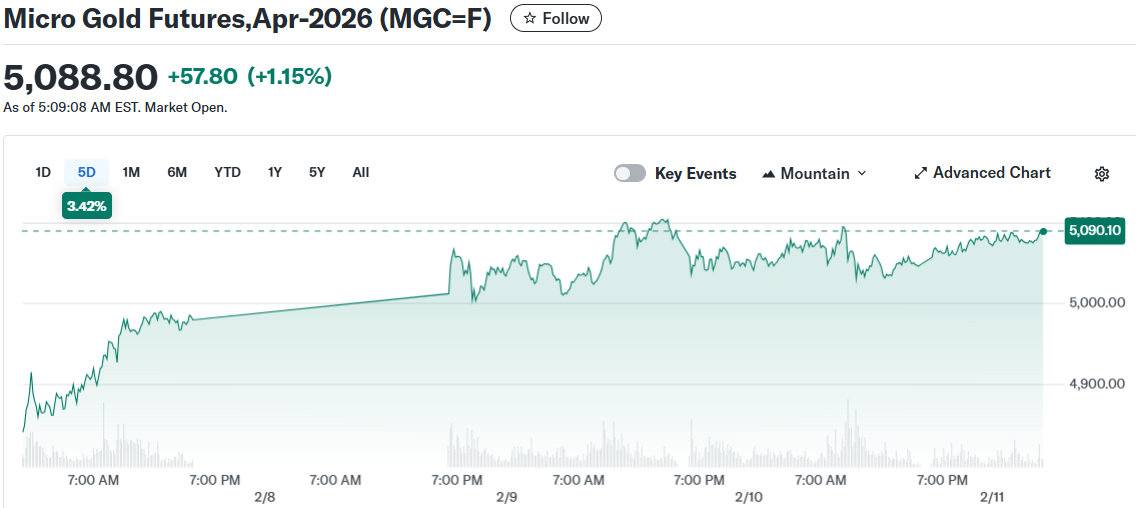
The rally followed December retail sales data showing consumer spending unexpectedly stalled. The figures suggested economic momentum may be slowing in the United States.
Silver posted stronger gains during the same period, surging 3.4% to $83.5555 per ounce. Platinum and palladium both added more than 2% as investors diversified into precious metals.
The US dollar continued its decline, falling 0.3% to mark a fourth consecutive day of losses. Over the four-day stretch, the currency has dropped 1.3% against major peers.
A weaker dollar reduces the cost of gold for buyers using foreign currencies. This dynamic often drives increased demand for the precious metal.
US 10-year Treasury yields declined to their lowest point in almost 30 days. Lower yields enhance gold’s relative attractiveness since the metal generates no interest income.
Stabilization After Sharp Correction
Gold reached an all-time high above $5,595 per ounce in late January. The rally was fueled by geopolitical concerns, questions about Federal Reserve independence, and shifts away from conventional assets.
Heavy speculative buying pushed prices higher before triggering a sharp reversal. The metal collapsed approximately 13% over two trading sessions as profit-taking accelerated.
Gold has since recovered roughly half those losses. Prices have consolidated around the $5,000 level throughout the current week.
Pepperstone Group analysts noted that speculative positions have been flushed from the market. This development reduces the risk of extreme price volatility in the near term.
The calmer trading environment could set the stage for another upward move. Major financial institutions continue to forecast higher gold prices through year-end.
Central Bank Decisions Drive Market
BNP Paribas has established a $6,000 per ounce price target for gold by December 2026. Deutsche Bank and Goldman Sachs have issued similarly optimistic forecasts for precious metals.
Federal Reserve monetary policy remains the primary driver for gold prices. President Donald Trump nominated Kevin Warsh to serve as the next Fed chairman.
Warsh has previously expressed support for additional rate cuts. Reduced interest rates generally benefit gold since the metal produces no yield.
Cleveland Federal Reserve President Beth Hammack provided a different perspective Tuesday. She indicated interest rates could remain on hold for an extended period while officials review incoming data.
Wednesday’s nonfarm payrolls report will provide critical information about labor market conditions. Strong employment data could delay rate cut expectations while weak numbers would support them.
Friday’s consumer price index release will measure inflation trends. The Federal Reserve considers both employment strength and price pressures when making rate decisions.
Analysts at Motilal Oswal Financial Services said declining yields helped push gold higher. When returns on bonds and other investments fall, gold becomes more attractive to portfolio managers.
Get 3 Free Stock Ebooks
Discover top-performing stocks in AI, Crypto, and Technology with expert analysis.
- Top 10 AI Stocks - Leading AI companies
- Top 10 Crypto Stocks - Blockchain leaders
- Top 10 Tech Stocks - Tech giants


