



TLDR
- The precious metal faces its first weekly decline in more than a month, dropping roughly 3%
- The US dollar’s 1.5% weekly surge is creating headwinds for gold valuations
- Escalating conflict between the US-Israel alliance and Iran has driven oil markets higher while dampening rate cut optimism
- Market participants now anticipate only 35 basis points in Fed rate reductions by December, half the previous week’s forecast
- Certain market participants are liquidating gold positions to generate cash for covering shortfalls elsewhere
The precious metal has enjoyed a remarkable performance throughout the year, but this week tells a different story. Gold is positioned to record its first weekly decline since the final days of January, occurring paradoxically as Middle Eastern tensions continue to intensify.
By Friday morning in London, spot gold was changing hands near $5,089 per ounce, showing a modest 0.2% daily increase while remaining approximately 3% lower for the week. This performance is set to end a four-consecutive-week rally.
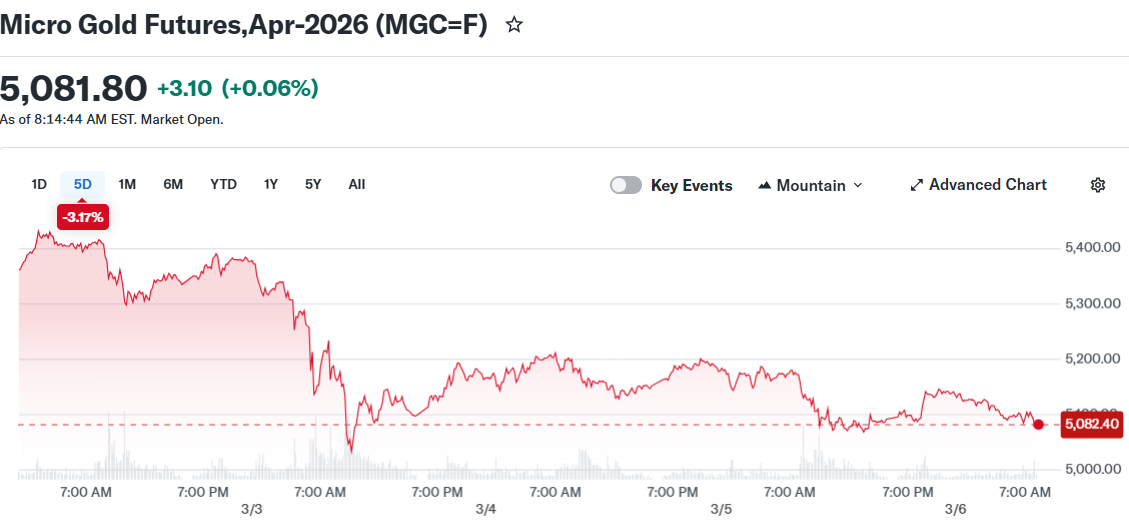
The decline appears counterintuitive given gold’s traditional role as a protective asset during periods of geopolitical turmoil and market uncertainty. Market experts point to multiple converging factors behind the pullback.
The greenback has experienced a powerful rally this week, climbing 1.5% — marking its most substantial weekly advance since last October. When the dollar strengthens, gold becomes costlier for international buyers, typically applying downward pressure on valuations.
US Treasury yields have also advanced for four consecutive sessions, reaching multi-week peaks. Elevated yields increase the opportunity cost of owning gold, an asset that generates no income stream.
Iran War Raises Inflation Fears, Pushes Back Rate Cut Bets
The intensifying military engagement involving the US-Israel coalition and Iran has propelled oil prices significantly higher. Crude is tracking toward its largest weekly percentage gain since 2022. The Strait of Hormuz, a critical conduit for international petroleum transport, has essentially been shut down.
Iranian forces have also targeted energy facilities across multiple nations. President Donald Trump has indicated his administration expects input on Iran’s future leadership, while his advisors explore strategies to address climbing fuel expenses.
Elevated oil valuations are stoking inflation concerns. This dynamic has prompted market participants to revise downward their Federal Reserve rate cut projections. According to the CME FedWatch tool, there’s now a 69% probability the central bank maintains current rates at its June gathering, up significantly from 43% seven days earlier.
Interest rate reductions typically provide support for gold prices. Diminished cut expectations create resistance.
Investors Selling Gold to Raise Cash
Adrian Ash, a researcher at BullionVault, said the sell-off reflects crisis behavior. “What we’re seeing right now is classic crisis trading: investors cutting risk, selling whatever they can for cash and covering margin calls elsewhere,” he said.
He noted that gold’s strong performance earlier this year positioned it as one of few holdings market participants could liquidate at a gain.
The precious metal has still accumulated nearly 20% in gains year-to-date. A widespread equity market downturn this week has also compelled some market participants to tap gold holdings as a liquidity source.
Silver climbed 1.1% Friday to reach $83.08 per ounce. Both platinum and palladium posted gains as well.
Israeli military officials announced Friday they’re transitioning to the “next phase” of their Iran operations. Defense Secretary Pete Hegseth indicated US military assets in the region are “about to surge dramatically.”
Get 3 Free Stock Ebooks
Discover top-performing stocks in AI, Crypto, and Technology with expert analysis.
- Top 10 AI Stocks - Leading AI companies
- Top 10 Crypto Stocks - Blockchain leaders
- Top 10 Tech Stocks - Tech giants


