



TLDR
- Net-long positions in Nasdaq 100 futures fell by over $7 billion between mid-January and February 10, 2026
- Short interest jumped $3 billion while investors trimmed long positions during the same timeframe
- Nasdaq Composite extended losses to five consecutive weeks, the longest streak since 2022
- Nasdaq 100 futures dropped 0.6% on Tuesday as tech stocks led market declines
- Morgan Stanley says current volatility is normal for major investment cycles despite AI disruption concerns
Major investors have dramatically reduced their Nasdaq 100 futures exposure in recent weeks. CFTC data reveals net-long positions dropped by more than $7 billion from mid-January through February 10. This marks the biggest position cut since spring 2025.
The pullback reflects changes across the entire market. Short positions climbed roughly $3 billion over the period. Long positions were consistently trimmed as fund managers reassessed their holdings.
Artificial intelligence disruption has become the central focus on Wall Street. Market participants are determining which companies will thrive and which will struggle. The analysis extends far beyond technology stocks into multiple sectors.
Tech stocks led US futures lower on Tuesday morning. Nasdaq 100 futures slid 0.6% while S&P 500 futures dropped 0.3%. Dow Jones Industrial Average futures fell 0.1% in early trading.
Tech Stocks Face Extended Selling Pressure
The Nasdaq Composite closed its fifth straight week of losses on Friday. This losing streak represents the longest decline for the tech-heavy index since 2022. The Dow and S&P 500 have dropped in four of the last five weeks.
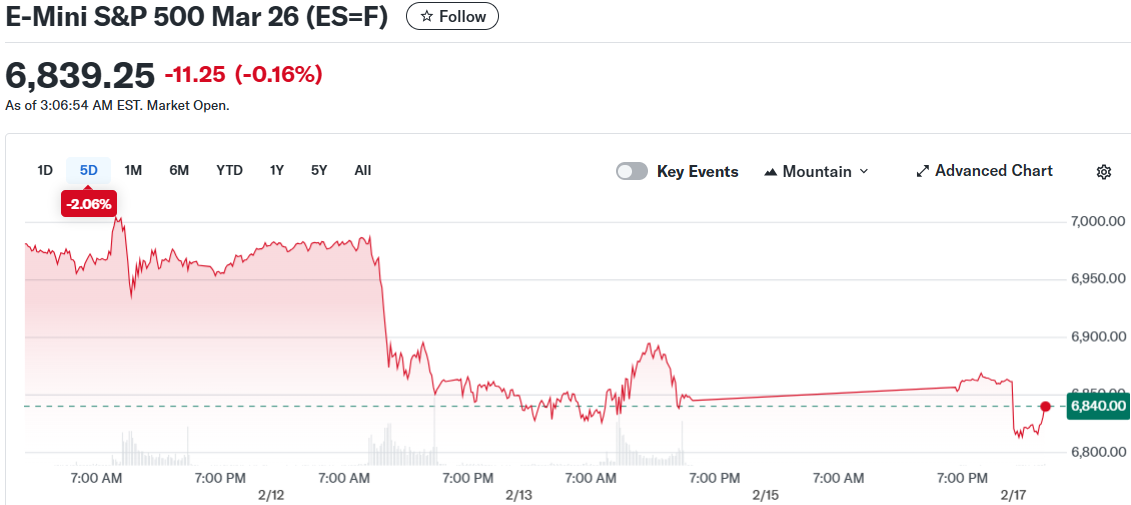
AI disruption concerns have spread across multiple industries. Companies in wealth management, transportation, and logistics face increased scrutiny. Investors are questioning how machine learning and automation will transform business models.
The current positioning setup creates potential for volatile moves. If sentiment shifts positive, short positions could trigger rapid price increases. However, continued negative momentum could accelerate selling pressure.
Consumer price index data released Friday came in below expectations. The January inflation report showed cooling price pressures. Despite this positive news, growth concerns and sector disruption worries dominated market attention.
Wall Street Split on AI Impact
Morgan Stanley strategists led by Michael Wilson frame recent turbulence as typical for major investment cycles. The team identifies contradictions in market fears about AI. Concerns include both underperformance in service stocks and worries about AI capital expenditures and job automation.
Wilson’s team calls AI highly disruptive but views this as positive for infrastructure and computing investments. Job loss concerns could become efficiency improvements and better profit margins. Capturing these gains requires more application development and enterprise system integration.
The strategists note investor anxiety is clearly present. They consider increased volatility and dispersion normal as markets identify winners and losers. Money is flowing toward structural and cyclical beneficiaries. Software companies with distant cash flows face disproportionate selling pressure.
Wilson admits faster AI model advancement than expected poses risks. Rapid progress could increase disruption and change sector leadership faster than current forecasts anticipate.
This week brings additional economic data releases. The Personal Consumption Expenditures index arrives Friday. Federal Reserve meeting minutes are scheduled for Wednesday.
Get 3 Free Stock Ebooks
Discover top-performing stocks in AI, Crypto, and Technology with expert analysis.
- Top 10 AI Stocks - Leading AI companies
- Top 10 Crypto Stocks - Blockchain leaders
- Top 10 Tech Stocks - Tech giants


