



Key Takeaways
- Extended conflict in Iran could drive crude oil prices beyond $100 per barrel, intensifying global inflation concerns
- Federal Reserve policymakers indicate it’s premature to assess how the conflict will influence rate policy
- Historical data shows the S&P 500 typically rebounds from geopolitical crises within a few weeks
- Bundesbank president Joachim Nagel cautions that sustained hostilities could elevate eurozone inflation while dampening economic expansion
- American gasoline prices surged more than 22 cents within seven days, while annual electricity expenses climbed 6.3%
Escalating tensions in Iran have disrupted global energy markets, sparking renewed concerns about inflation dynamics, monetary policy trajectories, and financial asset valuations as spring 2026 approaches.
U.S. gasoline prices reached $3.19 per gallon by midweek, marking an increase exceeding 22 cents from the previous seven-day period, AAA data shows. Brent Crude climbed beyond $85 per barrel on Tuesday, reaching its peak since July 2024.
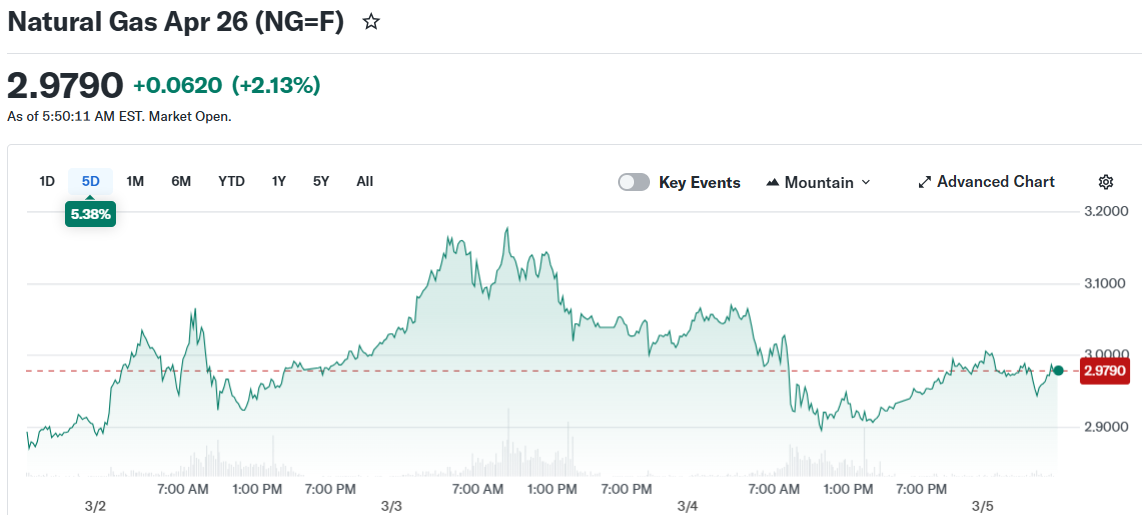
Market observers suggest crude could breach the $100 threshold if hostilities continue. Such a scenario would compound inflation challenges that were already emerging before military action commenced.
U.S. electricity costs increased 6.3% during the twelve months through January 2026, significantly outpacing the 2.5% headline inflation figure. Residential electricity rates advanced from approximately 16 cents per kilowatt hour in January 2025 to nearly 18 cents by November 2025.
Minneapolis Federal Reserve President Neel Kashkari stated Tuesday that he maintained “a lot of confidence” in America’s economic trajectory prior to the outbreak of hostilities. However, he emphasized it was “too soon” to project the conflict’s inflationary consequences.
Cleveland Federal Reserve President Beth Hammack shared similar sentiments, informing the New York Times that determining the war’s economic effects remained premature. She expressed support for maintaining current interest rate levels for “quite some time.”
CME FedWatch projections indicate a combined 54.7% probability of rate reduction at July’s Federal Reserve meeting. Probabilities for March and April adjustments remain minimal at 2.7% and 12.8% respectively.
Market Reaction to Geopolitical Turbulence
LPL Financial research examining over two dozen geopolitical incidents since the Second World War found the S&P 500 averaged merely a 1% single-day decline. Equity markets generally find stability and regain losses within weeks.
The S&P 500 dropped 1.2% following Iran’s April 2024 attack on Israel, rebounding in slightly over two weeks. The benchmark index actually gained 1% after coordinated U.S.-Israeli strikes on Iran in June 2025.
LPL analyst Kristian Ker observed that persistent interruptions to oil and gas supply chains could “influence inflation expectations, weigh on business confidence, and elevate volatility across asset classes.”
European Central Bank Highlights Continental Vulnerabilities
Across the Atlantic, European Central Bank official Joachim Nagel cautioned Thursday that an extended Iran conflict would amplify eurozone price pressures while constraining economic growth.
Nagel, serving simultaneously as Bundesbank president, indicated that persistently elevated energy costs would yield “higher inflation and weaker economic activity in the euro area.”
He noted that formulating interest rate policy conclusions remained premature. The Bundesbank’s 2025 financial statements revealed an 8.6 billion euro deficit linked to securities acquired through previous quantitative easing initiatives.
Wells Fargo chief economist Tom Porcelli argued that anticipated oil price increases reaching 30% fall short of recession-triggering thresholds, and barring protracted conflict, consequences for inflation and central bank policy “should remain modest.”
Oxford Economics chief economist Ryan Sweet assessed that the conflict itself doesn’t significantly impact global economic activity, but cautioned about a “growing risk” of compounding disruptions.
Get 3 Free Stock Ebooks
Discover top-performing stocks in AI, Crypto, and Technology with expert analysis.
- Top 10 AI Stocks - Leading AI companies
- Top 10 Crypto Stocks - Blockchain leaders
- Top 10 Tech Stocks - Tech giants


