


Key Highlights
- Shares of JetBlue climbed more than 15% to $4.88 following a Semafor report about potential acquisition discussions
- The struggling carrier has reportedly engaged financial advisers to assess selling to competitors such as United Airlines, Southwest, or Alaska Air
- Internal analysis has been conducted on how antitrust authorities might view different merger combinations
- As of Tuesday’s market close, JetBlue’s market capitalization stood at approximately $1.55 billion
- The airline maintains its focus on the JetForward initiative, projecting $850–$950 million in additional operating profit through 2027
Shares of JetBlue Airways (JBLU) were changing hands at $4.88, reflecting a gain exceeding 15%, in response to the news.
JetBlue Airways Corporation, JBLU
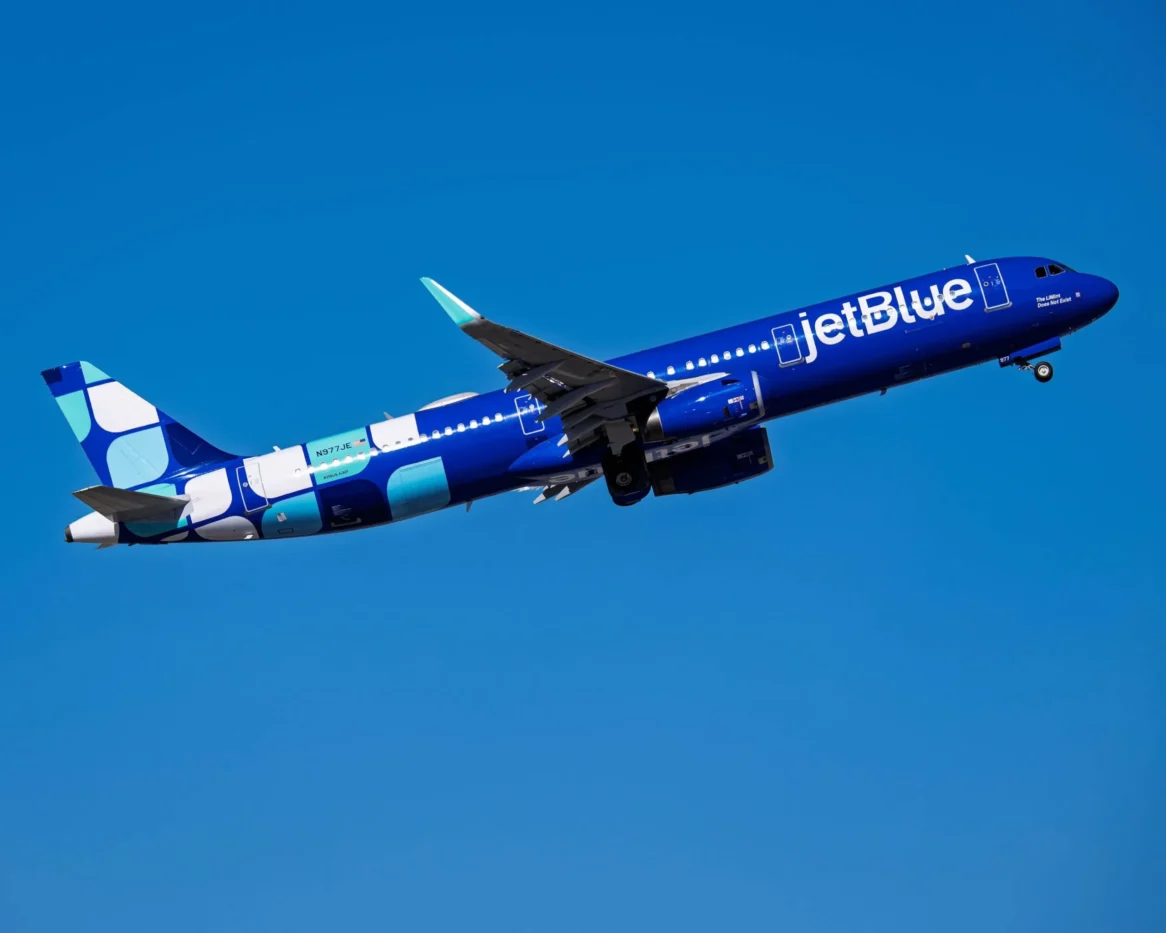
JetBlue Airways (JBLU) experienced a significant stock price surge of over 15% on Wednesday after reports surfaced that the airline is considering selling itself to a competing carrier.
According to a Semafor report citing sources with knowledge of the situation, JetBlue has enlisted the help of financial advisers to evaluate the feasibility of such a transaction. The airline has not issued any confirmation regarding these reports.
The share price climbed to $4.88, representing a substantial jump for an airline that has faced considerable challenges in recent years. Meanwhile, the potential acquirers — United Airlines (UAL), Alaska Air (ALK), and Southwest Airlines (LUV) — experienced minimal stock movement in response to the news, showing only slight gains that were already underway before the report emerged.
According to the report, JetBlue has conducted detailed analysis on how federal antitrust authorities might react to various merger scenarios. This type of preliminary regulatory assessment indicates a strategic approach, although no transaction appears to be close to finalization.
Semafor’s reporting indicates that JetBlue remains in early exploratory phases and may ultimately choose not to enter formal negotiations with any of the mentioned airlines. There have been no reports of formal expressions of interest or active deal discussions.
Financial Struggles Mount
The financial data paints a challenging picture. JetBlue hasn’t recorded an annual net profit since 2019. The company has experienced revenue declines for the past two consecutive fiscal years. Share prices have plummeted more than 75% from the five-year peak of $21.25 reached on April 6, 2021.
With a market valuation hovering around $1.55 billion based on Tuesday’s closing price, JetBlue represents a shadow of its former self — and remains significantly smaller than the airlines reportedly being considered as potential buyers.
The carrier has previously pursued growth through strategic alliances and consolidation efforts. In the past year, it established a partnership agreement with United Airlines that enables customers to make bookings across both airlines’ platforms, utilize loyalty points interchangeably, and grants United access to JetBlue’s JFK airport slots beginning in 2027.
Prior to that arrangement, JetBlue pursued a $3.8 billion acquisition of Spirit Airlines. However, a federal judge blocked the transaction in January 2024, determining it would “substantially lessen competition.” Spirit subsequently entered bankruptcy proceedings in August of that year.
Official Response from JetBlue
JetBlue has refrained from addressing the sale speculation directly. Instead, the company issued a statement emphasizing its commitment to the JetForward strategy — a comprehensive plan designed to reduce expenses, broaden network reach, and enhance customer service.
Earlier in the month, airline executives indicated that JetForward remains positioned to generate $850 to $950 million in additional operating profit by 2027.
“We’re confident JetForward is the right strategy to restore profitability and create value for our shareholders,” the company said.
Both United Airlines and Southwest Airlines declined to provide commentary on the matter. Alaska Air has not responded to media inquiries.
Reuters reported it was unable to verify the Semafor report independently.
Get 3 Free Stock Ebooks
Discover top-performing stocks in AI, Crypto, and Technology with expert analysis.
- Top 10 AI Stocks - Leading AI companies
- Top 10 Crypto Stocks - Blockchain leaders
- Top 10 Tech Stocks - Tech giants


