



Key Takeaways
- February employment data revealed a loss of 92,000 jobs, drastically missing expectations for a 55,000–60,000 gain
- The unemployment rate climbed to 4.4%, surpassing the anticipated 4.3% level
- Major index futures including Dow, S&P 500, and Nasdaq declined significantly Friday morning
- Crude oil jumped more than 6%, pushing WTI beyond $86 per barrel amid Gulf supply disruption concerns
- The Dow has declined over 2% this week, slipping into negative territory for 2026
Equity futures in the United States experienced steep declines Friday morning as investors reacted to two significant developments: disappointing employment figures and escalating crude oil values linked to Middle Eastern geopolitical tensions.
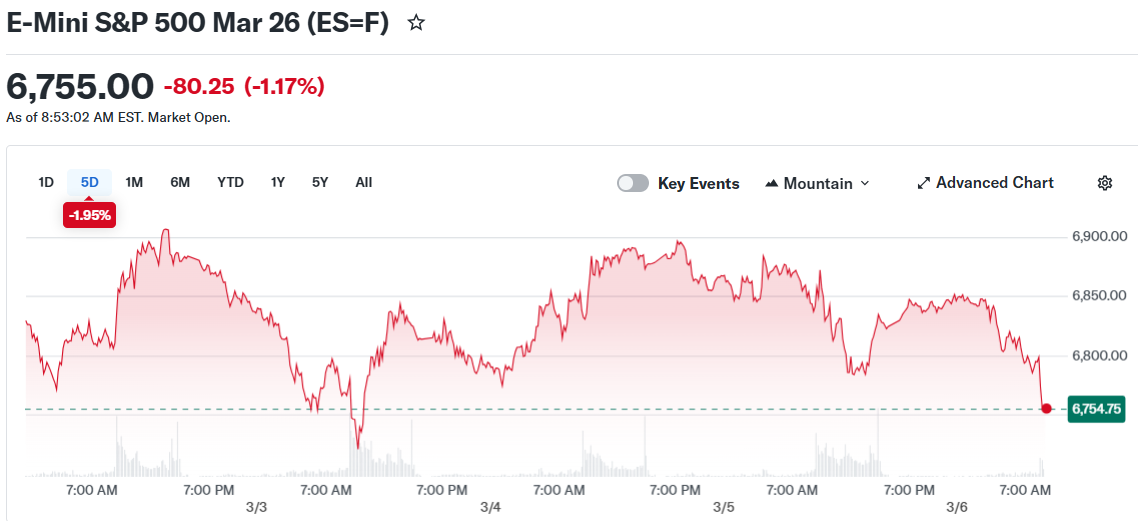
According to the latest employment data for February, the United States lost 92,000 nonfarm payroll positions. Market forecasters had predicted job creation would range between 55,000 and 60,000 positions.
The jobless rate increased to 4.4%, marginally higher than the projected 4.3%. The Bureau of Labor Statistics published these figures Friday morning.
Futures contracts for the Dow Jones fell approximately 0.7% to 0.8% in response to the employment report. S&P 500 futures declined roughly 0.8%, while Nasdaq 100 futures decreased about 1%.
All three major indices had already been trading in negative territory prior to the jobs announcement but accelerated their losses following the data release.
Treasury yields declined after the employment figures emerged. The 2-year note yield dropped to approximately 3.57%, while the 10-year note yield decreased to 4.13%. Falling yields typically indicate investors are anticipating a greater probability of monetary policy easing.
Crude Prices Spike on Gulf Region Supply Threats
Oil prices experienced substantial gains Friday. West Texas Intermediate futures increased more than 6%, advancing above $86 per barrel. Brent crude futures gained nearly 5%, trading north of $89.
Qatar’s energy minister issued a warning that the conflict involving Iran could compel Gulf region exporters to suspend production within days. He further stated prices could climb to $150 per barrel if tensions continue to escalate.
Shipping activity through the Strait of Hormuz has virtually stopped, intensifying concerns about worldwide supply disruptions. Both WTI and Brent are positioned for their largest weekly increase in four years.
Gasoline prices in the United States have reached their highest levels since 2024. The Trump administration granted India a temporary exemption to buy Russian crude in an attempt to moderate the price surge.
Implications of Weak Employment Data for Monetary Policy
Disappointing job creation numbers typically amplify expectations that the Federal Reserve will reduce interest rates. Nevertheless, market observers suggest the probability still leans toward no rate reductions during the year’s first half.
The employment figures will receive careful scrutiny before the Fed’s upcoming policy meetings. Any interest rate adjustments will depend on the overall resilience of the economy.
The Dow has now dropped more than 2% over the week and has moved into negative territory for 2026. The S&P 500 is similarly positioned for a weekly decline.
The Nasdaq Composite may conclude the week with modest gains, diverging from the broader market trend.
As of Friday morning, the 30-year Treasury yield registered at 4.74%, reflecting the evolving interest rate expectations following the employment disappointment.
Get 3 Free Stock Ebooks
Discover top-performing stocks in AI, Crypto, and Technology with expert analysis.
- Top 10 AI Stocks - Leading AI companies
- Top 10 Crypto Stocks - Blockchain leaders
- Top 10 Tech Stocks - Tech giants


