


Key Highlights
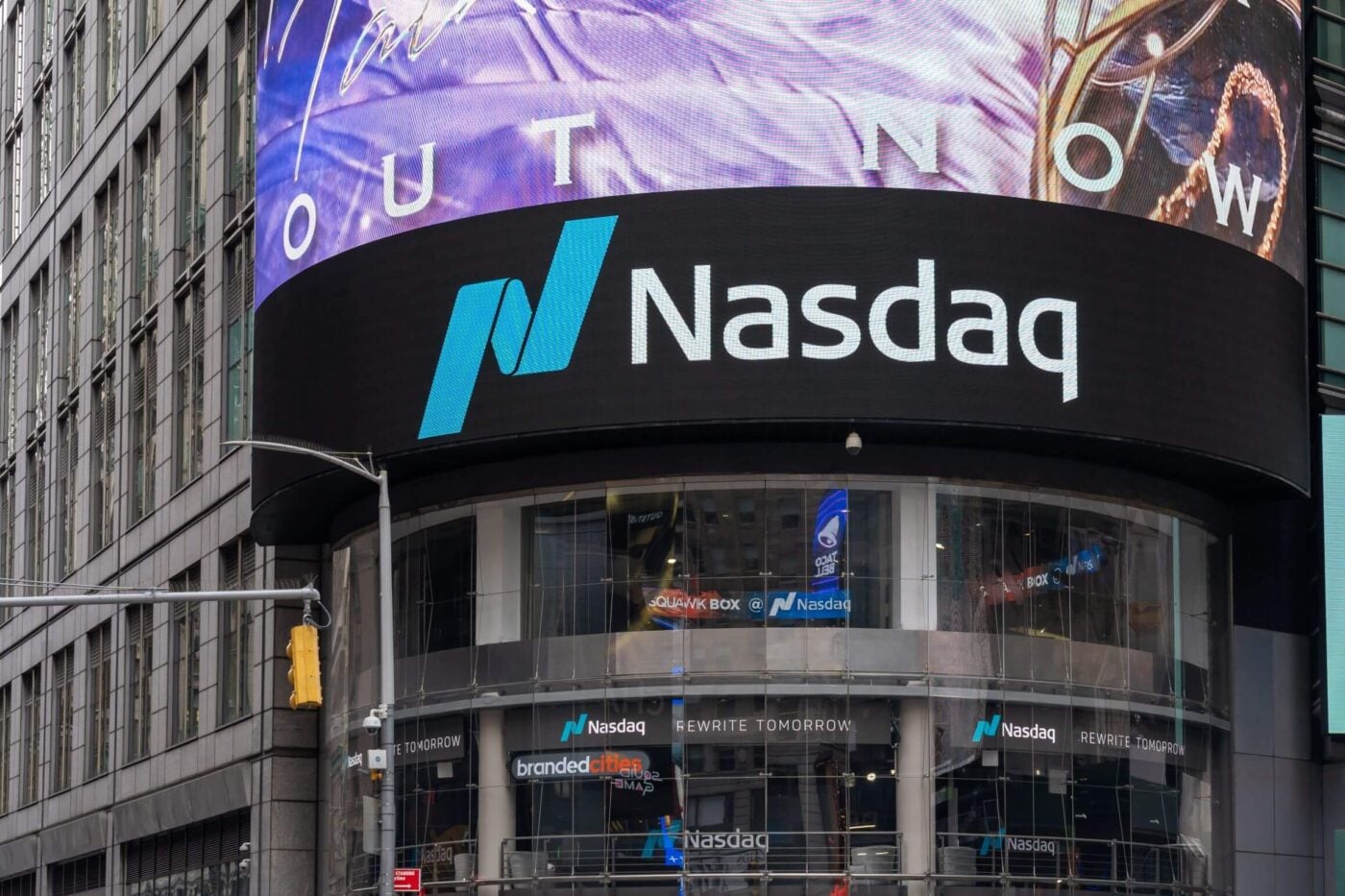
- Nasdaq submitted an SEC filing to introduce binary options contracts linked to the Nasdaq-100, with pricing ranging from $0.01 to $1
- These “Outcome Related Options” replicate the trading mechanics of prediction platforms such as Polymarket and Kalshi
- February saw Kalshi and Polymarket achieve $18.4 billion in combined trading volume, marking the sixth consecutive monthly high
- Major exchanges like Cboe and CME are similarly expanding into prediction-based financial instruments
- SEC Chairman Paul Atkins identified prediction markets as a significant regulatory concern, noting jurisdictional questions between the SEC and CFTC
Nasdaq Submits Filing for Binary Options on Nasdaq-100 as Prediction Platform Activity Reaches New Heights
The exchange giant Nasdaq has submitted a formal application to the United States Securities and Exchange Commission requesting authorization to launch binary options contracts pegged to the Nasdaq-100 index.
Nasdaq MRX, one of several options trading venues operated by Nasdaq, lodged the application this week.
Dubbed “Outcome Related Options,” these instruments carry a price band of $0.01 to $1.00. Contracts pay out the full dollar if the specified outcome materializes, or expire without value if it doesn’t.
The underlying assets include both the Nasdaq-100 Index and its Micro counterpart. The scope would remain limited to financial markets, excluding non-financial events like sporting competitions or electoral outcomes.
This design closely resembles the mechanics employed by prediction market operators such as Polymarket and Kalshi, both of which have experienced explosive expansion recently.
Trading Activity on Prediction Platforms Breaks Records Again
The combined monthly transaction volume for Kalshi and Polymarket climbed to $18.4 billion during February, establishing the sixth straight month-over-month record. The previous peak in January stood slightly above $17 billion.
Nasdaq intends to roll out these contracts across two additional exchanges under its umbrella — Nasdaq NOM and Nasdaq PHLX — both of which employ alternative pricing frameworks designed to incentivize liquidity provision.
The Nasdaq MRX platform, where this application originated, operates on a priority-based execution system without liquidity rewards.
Should the SEC grant approval, these instruments would be classified as securities options under the Commission’s regulatory purview. This designation would differentiate them from comparable event contracts typically supervised by the Commodity Futures Trading Commission.
SEC Chairman Paul Atkins recently characterized prediction markets as a “huge issue,” highlighting the ambiguous regulatory boundaries between the SEC and CFTC.
Competing Exchanges Accelerate Their Plans
Cboe Global Markets announced it’s evaluating the reintroduction of binary “all-or-nothing” options connected to financial indices.
CME Group continues expanding its cryptocurrency derivatives offerings and has forged an alliance with FanDuel to enable wagering on non-financial outcomes.
Asset management firm Bitwise submitted an application last month for “PredictionShares” exchange-traded funds linked to the 2028 presidential race. GraniteShares and Roundhill followed with comparable filings in February.
Cryptocurrency exchanges are entering the arena as well. Coinbase and Crypto.com are incorporating prediction market functionality into their existing platforms.
The Intercontinental Exchange has either deployed capital into prediction market ventures or announced intentions to develop proprietary products.
Nasdaq’s application represents the first attempt to integrate fixed-payout, event-driven trading directly into the established equity index options ecosystem.
This filing arrives during a period of heightened regulatory scrutiny. SEC Chairman Atkins delivered his remarks about the industry’s growth earlier this month.
Get 3 Free Stock Ebooks
Discover top-performing stocks in AI, Crypto, and Technology with expert analysis.
- Top 10 AI Stocks - Leading AI companies
- Top 10 Crypto Stocks - Blockchain leaders
- Top 10 Tech Stocks - Tech giants


