


Key Takeaways
- Nio shares jumped approximately 8% following the unveiling of the ES9 flagship SUV, equipped with proprietary Shenji smart driving semiconductor technology.
- The EV manufacturer posted its inaugural quarterly GAAP profit during Q4 fiscal 2025, marking a historic milestone after years of losses.
- March vehicle deliveries skyrocketed 136% compared to the prior year, while Q1 2026 total deliveries hit 83,465 units — a 98.3% year-over-year increase.
- The company’s battery exchange network has expanded to approximately 3,815 swap locations and more than 28,000 charging points worldwide.
- Challenges persist: weakening Chinese EV demand, aggressive pricing wars, escalating component costs, and full-year fiscal 2025 remained unprofitable.
Nio experienced significant upward momentum Thursday, with shares advancing roughly 8% as several positive developments converged simultaneously. This price action signals an evolving market perception of the Chinese electric vehicle manufacturer — transitioning from a cash-intensive growth narrative to an enterprise demonstrating operational execution.
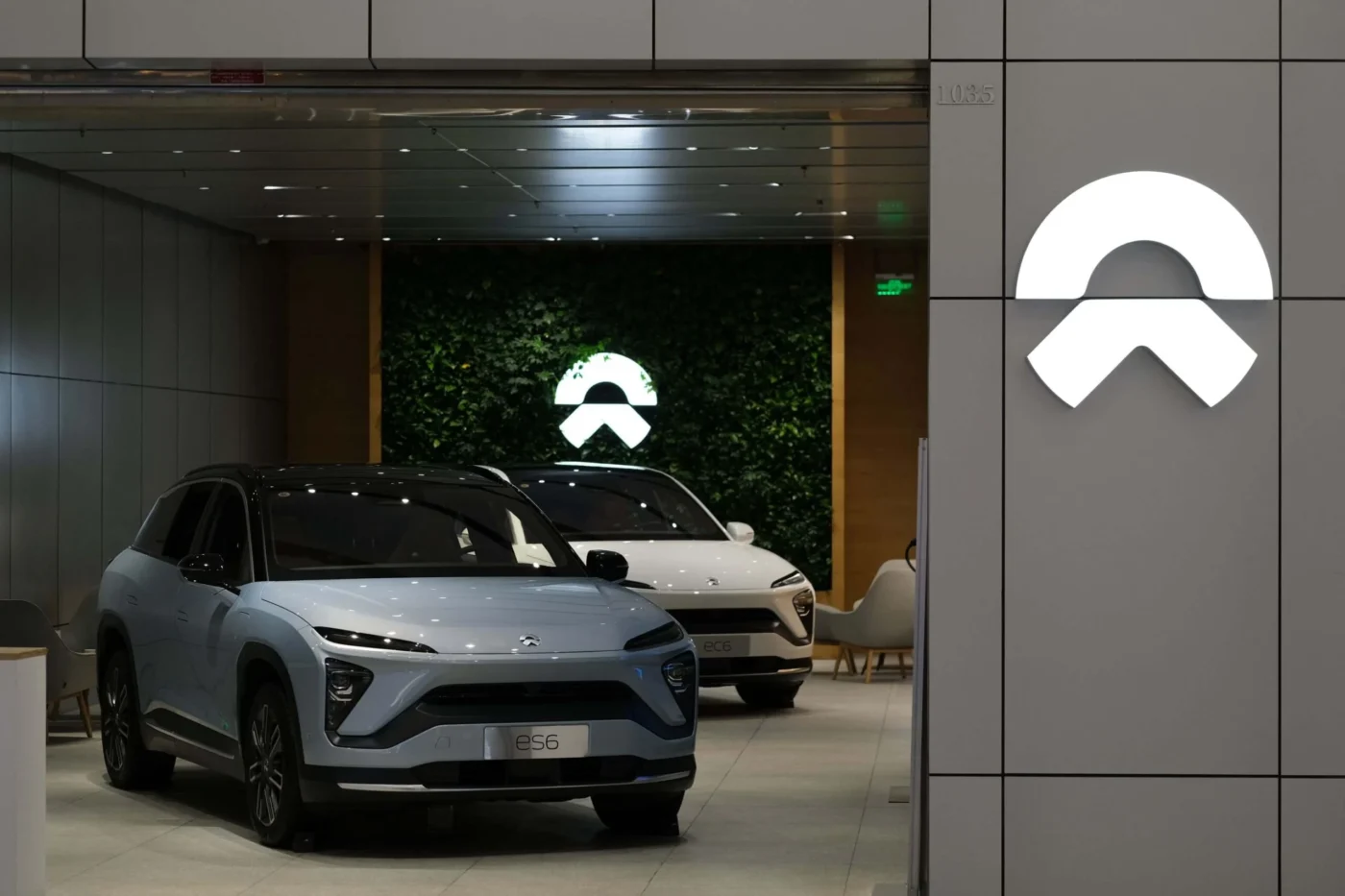
The formal introduction of Nio’s ES9 premium SUV served as a primary catalyst. This model represents the debut vehicle utilizing Nio’s internally developed Shenji smart driving semiconductors. This strategic move is significant as it reduces reliance on external hardware partners and provides Nio with enhanced oversight of its technological ecosystem.
Positive momentum surrounding Chinese EV export activity provided additional support. Recent industry data showed export volumes reaching all-time peaks, positioning Nio to capitalize on expanding international market penetration.
Profitability Milestone Reshapes Valuation Narrative
The most substantial driver behind strengthening investor sentiment is Nio’s inaugural quarterly GAAP profitability achieved in Q4 fiscal 2025. Such achievements fundamentally alter equity valuation frameworks. Throughout its history, Nio commanded valuations based purely on growth projections. Today, the company possesses tangible profitability metrics.
Free cash flow remained positive across two consecutive quarters, while Nio achieved positive operating cash flow for the complete fiscal 2025 year. These financial indicators may lack dramatic appeal, but represent precisely the benchmarks critics claimed were unattainable.
Vehicle gross margin reached 18.1% during Q4, with larger SUV platforms like the ES8 delivering margins approaching 25%. Leadership anticipates further margin expansion as additional large-format vehicles launch throughout 2026, including the ES9 and ONVO L80 models.
Q1 2026 delivery performance demonstrated strength. Nio distributed 83,465 vehicles during the quarter, representing a 98.3% year-over-year expansion. Cumulative lifetime deliveries surpassed the one million vehicle threshold. March individually recorded a 136% increase versus the comparable period last year.
Management projects 40% to 50% delivery growth for the complete year, supported by upcoming product introductions and what leadership characterizes as an expanding target market.
Critical Considerations for Investors
Challenges remain evident. Nio recorded a net loss for complete fiscal year 2025, despite Q4 profitability. The overall Chinese passenger vehicle sector is projected to experience modest contraction in 2026, according to management commentary.
Input costs — including lithium carbonate, semiconductor components, and various parts — are experiencing upward pressure. Nio maintains these cost headwinds are controllable and partially mitigated through premium product mix optimization, though forward visibility remains constrained.
Competitive dynamics within China’s EV marketplace continue intensifying. Industry-wide pricing aggression is compressing margins across multiple manufacturers, with Nio facing similar pressures.
Regarding technology advancement, Nio’s autonomous driving system usage expanded over 80% during February 2026 following a NIO World Model software update deployed in late January. Its charging and battery exchange infrastructure currently encompasses 3,815 swap facilities and exceeding 28,000 charging units globally.
The company’s upcoming earnings release is scheduled for June 2, covering Q1 fiscal 2026 results.
Get 3 Free Stock Ebooks
Discover top-performing stocks in AI, Crypto, and Technology with expert analysis.
- Top 10 AI Stocks - Leading AI companies
- Top 10 Crypto Stocks - Blockchain leaders
- Top 10 Tech Stocks - Tech giants


