



TLDR
- Oil fell over 1% Monday as US-Iran nuclear talks eased conflict fears
- Trump raised tariffs on all US imports from 10% to 15% after the Supreme Court struck down his previous plan
- A third round of US-Iran talks is scheduled for Thursday in Geneva
- Goldman Sachs raised its 2026 Brent crude forecast to $64 average, up from $56
- Goldman sees a 2.3 million barrel per day surplus in 2026, with downside risks if Iran or Russia sanctions ease
Oil prices dropped more than 1% on Monday as two big stories hit markets at once: a new round of US tariffs and fresh progress on Iran nuclear talks.
Brent crude fell 73 cents to $71.03 a barrel. US West Texas Intermediate dropped 75 cents to $65.73 a barrel.
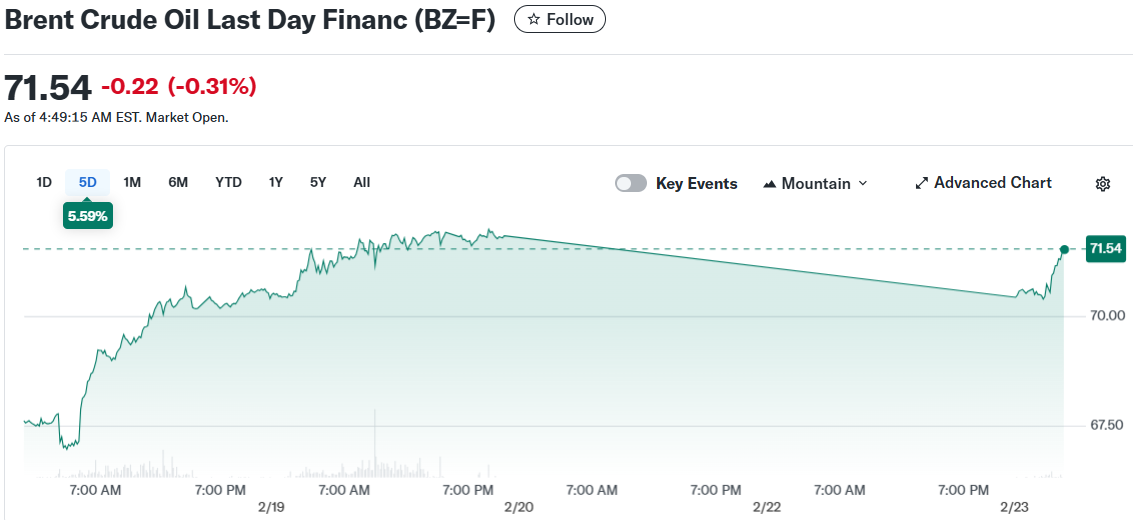
The selling came after President Trump announced he would raise tariffs on all US imports from 10% to 15%. The move followed the US Supreme Court striking down his earlier tariff programme. Trump used the International Emergency Economic Powers Act to push through the new rate — the maximum allowed under the law.
Traders worried the higher tariffs would slow global growth and reduce fuel demand. The news hit oil, US equity futures, and gold at the same time as investors moved away from risk assets.
Iran Talks Ease Fear of Conflict
A third round of US-Iran nuclear talks is set for Thursday in Geneva. Oman’s Foreign Minister confirmed the meeting on Sunday.
Last week, Brent and WTI both jumped more than 5% on fears of a military conflict with Iran. Monday’s talks news helped reverse that move.
A senior Iranian official told Reuters that Tehran is willing to make concessions on its nuclear programme. Iran wants sanctions lifted and the right to enrich uranium recognised in return.
With a potential deal in sight, the risk premium that had built into oil prices started to unwind. Analysts said direction for oil remains unclear, but volatility is likely to continue.
Goldman Sachs Upgrades Oil Price Outlook
Goldman Sachs raised its oil price forecasts in a note published Sunday. It now expects Brent to average $64 a barrel in 2026, up from a previous estimate of $56. WTI is now forecast to average $60, up from $52.
For Q4 2026 specifically, Goldman lifted its Brent forecast by $6 to $60 and WTI by $6 to $56. The bank cited lower OECD inventories as the key reason.
Goldman kept its 2026 surplus forecast at 2.3 million barrels per day, assuming no major supply disruption and no Russia-Ukraine peace deal.
The bank cut its supply outlook for Kazakhstan, Venezuela, Iran, and Iraq after those countries missed production targets. It raised expectations for the Americas and core OPEC nations with spare capacity.
Goldman expects OPEC+ to start gradually increasing output in Q2 2026. It also flagged downside risks of $5 for Brent and $8 for WTI if sanctions relief for Iran or Russia unlocks more supply.
Goldman sees Brent and WTI rising to $70 and $66 by December 2027.
Get 3 Free Stock Ebooks
Discover top-performing stocks in AI, Crypto, and Technology with expert analysis.
- Top 10 AI Stocks - Leading AI companies
- Top 10 Crypto Stocks - Blockchain leaders
- Top 10 Tech Stocks - Tech giants


