



TLDR
- Oil prices have surged past $100 per barrel for Brent crude following Iran’s commitment to maintain its blockade of the Strait of Hormuz.
- In response to what the IEA labels as the most severe supply disruption ever recorded, member nations agreed to deploy 400 million barrels from strategic reserves.
- A temporary exemption from the US Treasury permits certain nations to purchase Russian oil through April 11.
- Intelligence reports indicate Iran has started deploying mines throughout the strait, significantly increasing risks for maritime traffic.
- Plans for US Naval convoy operations through the strait could begin late March, though analysts remain skeptical about their effectiveness in resolving the situation.
Global energy markets experienced severe turbulence this week as Brent crude oil climbed beyond the $100 per barrel threshold, driven by Iran’s promise to maintain its blockade of the Strait of Hormuz.
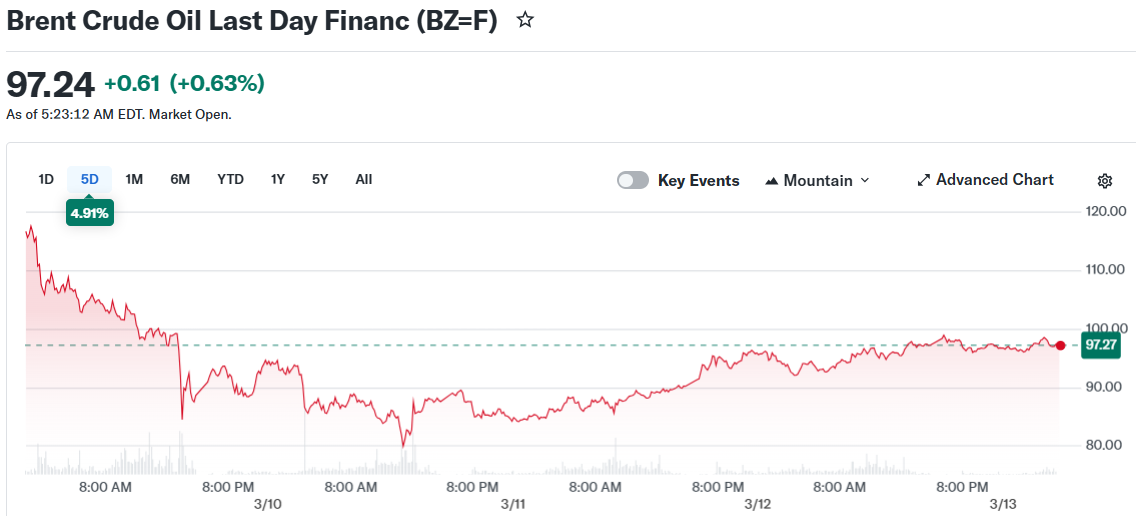
The dramatic price increase comes amid extraordinary market volatility not witnessed in recent years. West Texas Intermediate approached $97, with both major benchmarks experiencing wild price fluctuations reminiscent of pandemic-era chaos.
In his inaugural public remarks following his father’s succession, Iran’s new supreme leader Mojtaba Khamenei declared his government’s determination to maintain the shipping blockade.
The Strait of Hormuz represents a critical chokepoint situated between Iran and Oman. Approximately 20% of global petroleum supplies transit this narrow passage. Maritime traffic has nearly ceased since hostilities between the US-Israel alliance and Iran commenced on February 28.
The International Energy Agency characterized this as an unprecedented supply crisis in petroleum market history. Member states committed to deploying a historic 400 million barrels from strategic petroleum reserves.
According to New York Times reporting citing American intelligence sources, Iran has initiated mine-laying operations within the strait. This development dramatically escalates hazards for commercial vessels attempting passage.
Energy Secretary Chris Wright indicated that Naval escort operations for commercial tankers could commence before March concludes. However, earlier White House communications suggesting successful escort missions had already occurred were subsequently retracted.
US Eases Russia Oil Sanctions
Seeking to alleviate market pressures, the Treasury Department authorized a limited exemption permitting select countries to accept Russian petroleum shipments that departed before March 12. This temporary measure expires April 11.
Treasury Secretary Scott Bessent characterized the decision as necessary for global energy market stability. Russian officials estimated approximately 100 million barrels of their oil currently remains in maritime transit.
British authorities announced they would not mirror the American sanctions relaxation. UK Energy Minister Michael Shanks warned such measures could provide Moscow with resources to sustain its military operations.
French President Emmanuel Macron expressed opposition, arguing the Hormuz crisis doesn’t warrant Russian sanctions relief. Ukrainian President Zelensky characterized the American decision as a “serious blow” to Ukraine’s position.
Markets and Prices
Stock markets declined throughout the week as petroleum prices climbed. Volatility has been amplified by derivatives trading and exchange-traded fund positioning.
WTI crude fluctuated across approximately $43 this week, marking the widest trading band since prices briefly turned negative during pandemic lockdowns. Brent experienced roughly $38 in range variation.
Asian economies, particularly dependent on Persian Gulf petroleum, implemented emergency measures. Japan, South Korea, and Thailand announced fuel price controls. The Philippines, importing roughly 95% of its crude from Middle Eastern sources, mandated four-day work weeks for government employees to reduce consumption.
Market analysts predict a trading range between $85 and $105 while the confrontation continues. While the IEA reserve deployment may provide temporary relief, experts caution it won’t independently stabilize markets.
President Trump stated via social media that preventing Iranian nuclear weapons development remained his priority over oil price considerations.
Get 3 Free Stock Ebooks
Discover top-performing stocks in AI, Crypto, and Technology with expert analysis.
- Top 10 AI Stocks - Leading AI companies
- Top 10 Crypto Stocks - Blockchain leaders
- Top 10 Tech Stocks - Tech giants


