


If you are following Elon Musk and his ‘Martian Empire’, you may have heard of The Boring Company. Despite having a funny name, the brainchild of Elon is delivering a promising solution to the deteriorating metropolitan traffic condition – digging tunnels underground to make vehicles high speed travelling capsules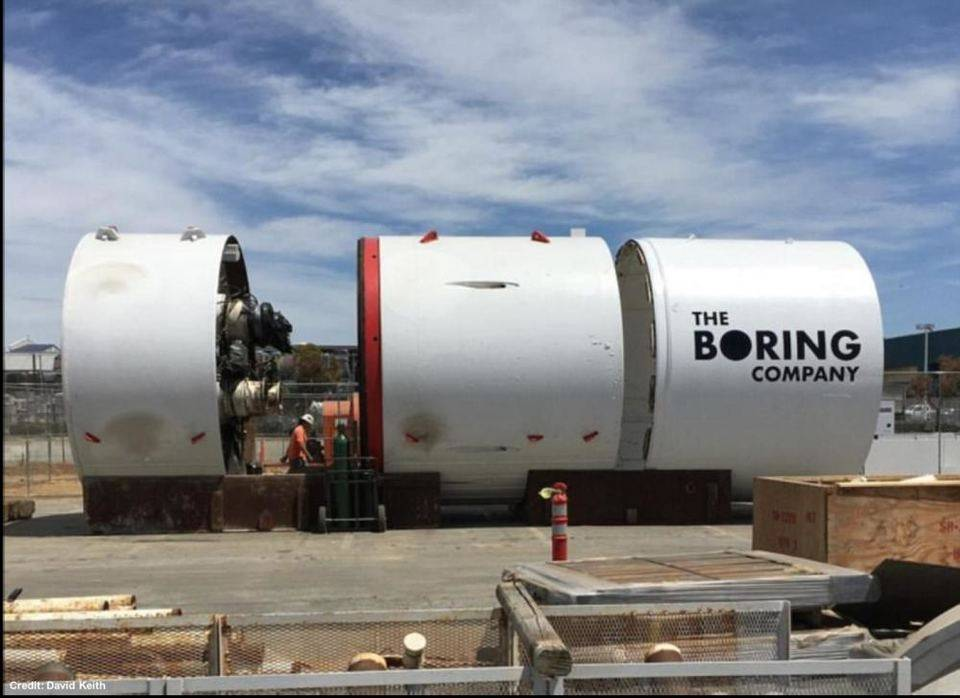 The blockchain space is also suffering from the same congestion issue. While multiple high speed blockchains are being developed, major crypto-native assets like Bitcoin, Ethereum are still highly needed as the collaterals for DeFi ecosystems. Holders of these assets also desire to obtain lucrative yields rather than park their coins in cold wallets without any interest. That’s why we need asset bridge – an infrastructure to transfer assets across different blockchains without the involvement of any centralised parties.
The same methodology by the master of Dogecoin has now been deployed into the crypto world by BoringDAO, a multichain asset bridge that envisions building tunnels as the Layer 2 for Bitcoin and more blockchains.
BoringDAO’s oBTC is now ranking No.5 among all Bitcoin-pegged tokens with over 2000 oBTC in minted volume, all achieved within 9 months since commencement of operation.
What Is BoringDAO’s Mission?
BoringDAO is not just another ‘asset bridge’. Instead, the mission of BoringDAO is to expand the boundaries of DeFi by allowing more assets to freely travel across different blockchains, like Bitcoin, BSC, DOGE, LTC, Solana, NEAR and more.
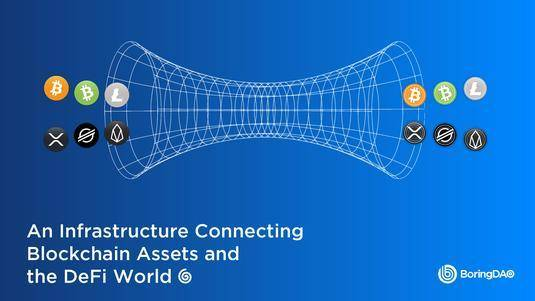 Through ‘tunnels’ of BoringDAO, native crypto assets are allowed to mint ERC-20 compliant tokens in a more decentralized, safe, and low-friction manner. By doing this, these assets can now participate in various DeFi activities and earn yields.
Since its commencement in October 2020, BoringDAO has been in operation with no major security incidents for over 9 months with a TVL of over $100mil. Backed by major crypto VCs like Fundamental Labs, Hashkey, SNZ, and Defiance, BoringDAO is now one of the most important cross-chain infrastructure in the DeFi world.
How Does It Work?
Due to the lack of EVM, the current BTC wrapping mechanisms are highly relying on centralised agencies. Both WBTC and REN are relying on intermediaries, third party or not, to act as the custodian for Bitcoin. That’s one reason even the No.1 BTC bridge only captured less than 1% of total Bitcoin supply.
BoringDAO provides a more decentralised and therefore more secure solution to this issue through a double-layer collateralisation mechanism, or the ‘Tunnel’ mechanism.
A tunnel is a portal through which Bitcoin, Dogecoin, Litecoin and more non-ERC-20-compliant assets can be wrapped and minted to EVM-friendly blockchains like Ethereum, Binance Smart Chain, or Avalanche without the need for overcollateralization. All assets wrapped will also automatically obtain an 100%-150% collateral in $Boring, the governance tokens of BoringDAO.
There are two roles involving in the tunnel operations: o-Assets minters and tunnel operators.
o-Asset Minters: Holders of Bitcoin, Litecoin, Dogecoin and other assets who wish to send their assets to Ethereum or other blockchains. To mint o-Asserts (like oBTC/oLTC/oDoge), minters need to pay minting fee in $Boring. The native assets will be wrapped through a multisig custodianship. Currently BoringDAO’s multisig key holders are well-known blockchain-focused VCs like Hashquark and Bixin. In the future, more multisig key holders will be invited from more diversified backgrounds. All assets wrapped would also receive a 100-150% collateral in $Boring and enjoy on-chain insurance from providers like Nsure or Cover Protocol. Upon very unlikely security breach incidents, $Boring collateral will be paid to minters to cover any potential losses, therefore the wrapped assets are ‘SAFU’. To ensure this, the capacity of each tunnel is also limited by the amount of $Boring staked.
Tunnel Operators: Holders of $Boring who stake into ‘tunnels’ are called tunnel operators. Through staking, the tunnel operators share the minting fee revenue and extra $Boring rewards as the incentive.
Why BoringDAO?
Very likely, BoringDAO is the only substantially used asset bridge based on a sufficiently decentralised principle. Compared to its predecessors, BoringDAO doesn’t rely on a single party as the custodian but multisig mechanism, which mitigates the risk of single point of failure (SPOF). Such a design is in favor of both average holders and whales who are wary of the security of their assets.
BoringDAO is also the only asset bridge that links its token incentives with asset bridge activities. The usage of ‘tunnels’ is positively linked with the demand for $Boring. Consequently the increase in minting fee revenue will drive up the yield of $Boring staking, and with more $Boring staked into tunnels, the security of tunnels can be further improved.
o-Assets is now among the top 5 Bitcoin-pegged tokens according to defipulse.com. Yield farming opportunities for oBTC and $Boring are available in many DeFi protocols, including Curve, Sushiswap, Pancakeswap, Wault, and more.
The oPortal
As a major component of BoringDAO V3, oPortal is a new endeavor to bring better interoperability to the current cross-chain infrastructure. Compared to current solutions, it brings about improvements in two ways:
1. It allows free teleportation of asset between multiple EVM-friendly blockchains
2. It uses native assets rather than wrapped tokens, so say goodbye to xToken, yToken
oPortal is also a solution for many projects desperately seeking off-the-shelf cross-chain solutions. Several projects have already adopted BoringDAO including DeFiner to transfer their FIN token between Ethereum and OKEXChain. In addition, a USDT two-way bridge has also been deployed to facilitate the transfer of USDT between BSC and OKEXChain.


