


Key Points
- President Trump denounced NATO partners as “cowards” for declining to assist in reopening the Strait of Hormuz
- U.S.-Israel military operations against Iran commenced on February 28 and continue into week three
- The S&P 500 has declined approximately 5% since hostilities began
- Gasoline costs have surged 31% to $3.91 per gallon amid supply chain disruptions
- Multiple NATO members committed to supporting safe passage through the Strait, but only following the conclusion of active combat
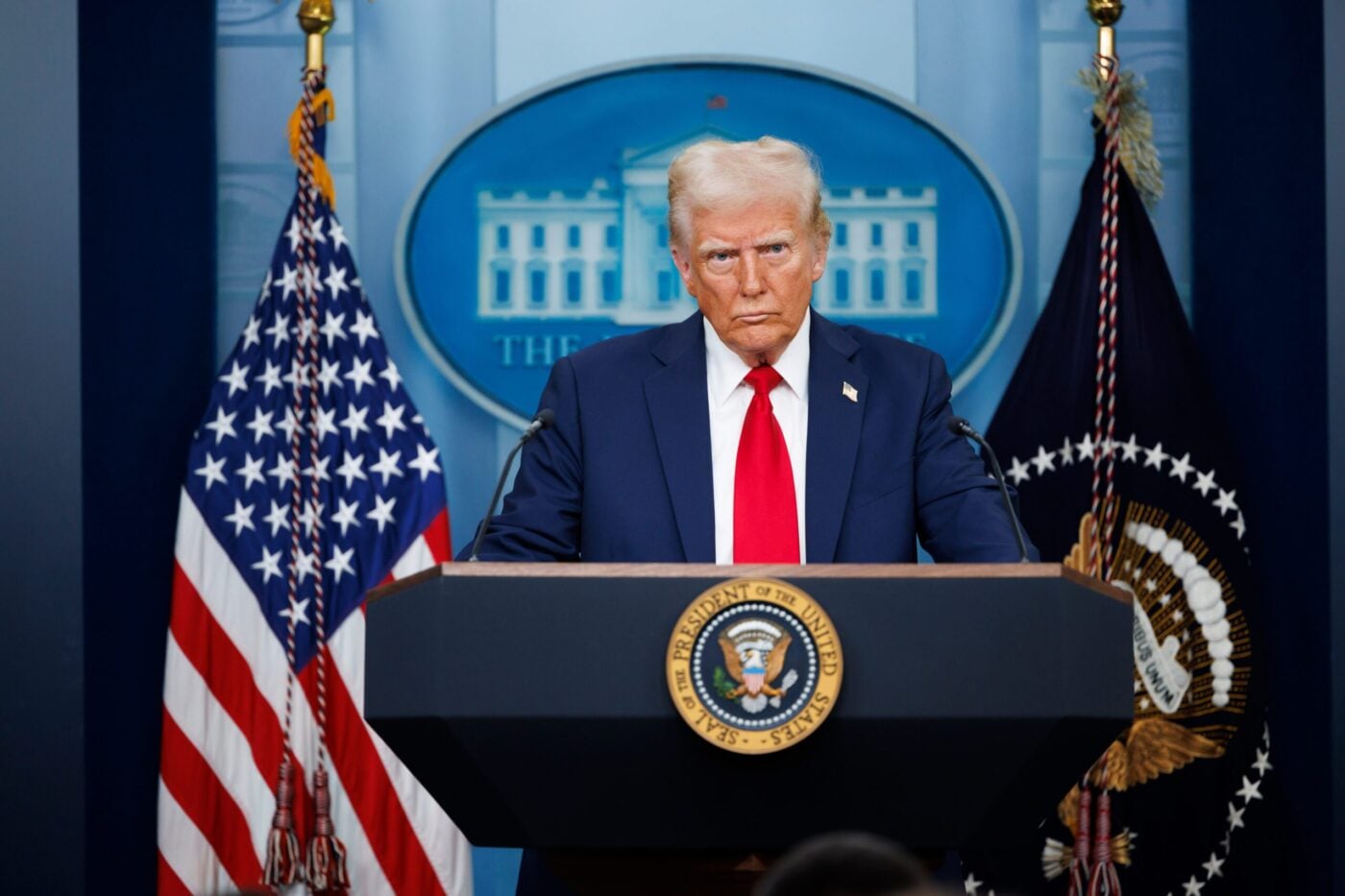
President Trump unleashed a sharp rebuke of NATO partners on Friday, branding them “cowards” for their refusal to participate in efforts to reopen the Strait of Hormuz amid the continuing U.S.-Israel military campaign against Iran.
“Without the U.S.A., NATO IS A PAPER TIGER!” the President declared on Truth Social.
Military operations commenced on February 28 when U.S. and Israeli forces launched strikes against Iranian targets. The ensuing weeks have resulted in thousands of casualties and the displacement of millions of civilians.
The President has consistently demanded that key international partners assist in securing maritime shipping lanes through the Strait of Hormuz, a strategically vital passage under Iranian control. Vessel traffic through this waterway has ground to a virtual halt.
Notably, allied nations received no consultation or advance notification before military action commenced.
Trump maintained that reopening the critical waterway would present minimal challenge and limited risk for NATO member states.
“Now that fight is Militarily WON, with very little danger for them, they complain about the high oil prices they are forced to pay, but don’t want to help open the Strait of Hormuz,” he stated.
His message concluded with an explicit threat: “COWARDS, and we will REMEMBER!”
Economic Impact of the Conflict
The S&P 500 has shed nearly 5% of its value since military operations began on February 28. Gasoline prices have rocketed 31% higher to $3.91 per gallon as supply chains buckle under the weight of halted shipping through the Strait.
Oil prices continue their upward trajectory as the confrontation extends into its third week with neither Washington nor Tehran showing indications of retreat.
The President identified the blocked Strait as the sole driver of elevated energy costs, characterizing its reopening as “a simple military maneuver.”
Allied Nations’ Position
Seven nations—Germany, Britain, France, Italy, the Netherlands, Japan, and Canada—issued a collective statement Thursday committing to participate in “appropriate efforts to ensure safe passage through the Strait.”
Yet German Chancellor Friedrich Merz explicitly stipulated that any German participation would occur exclusively after active combat operations cease.
French President Emmanuel Macron, addressing reporters following an EU summit in Brussels, emphasized that pursuing de-escalation and upholding international law represented “the best we can do.”
He further noted: “I have not heard anyone here express a willingness to enter this conflict — quite the opposite.”
The divide between presidential expectations and allied commitments continues to widen as the conflict moves into its third week without prospects for a ceasefire.
As of Friday afternoon, maritime traffic through the Strait of Hormuz remains essentially paralyzed, with both Washington and Tehran maintaining their hardline stances.
Get 3 Free Stock Ebooks
Discover top-performing stocks in AI, Crypto, and Technology with expert analysis.
- Top 10 AI Stocks - Leading AI companies
- Top 10 Crypto Stocks - Blockchain leaders
- Top 10 Tech Stocks - Tech giants


