



TLDR:
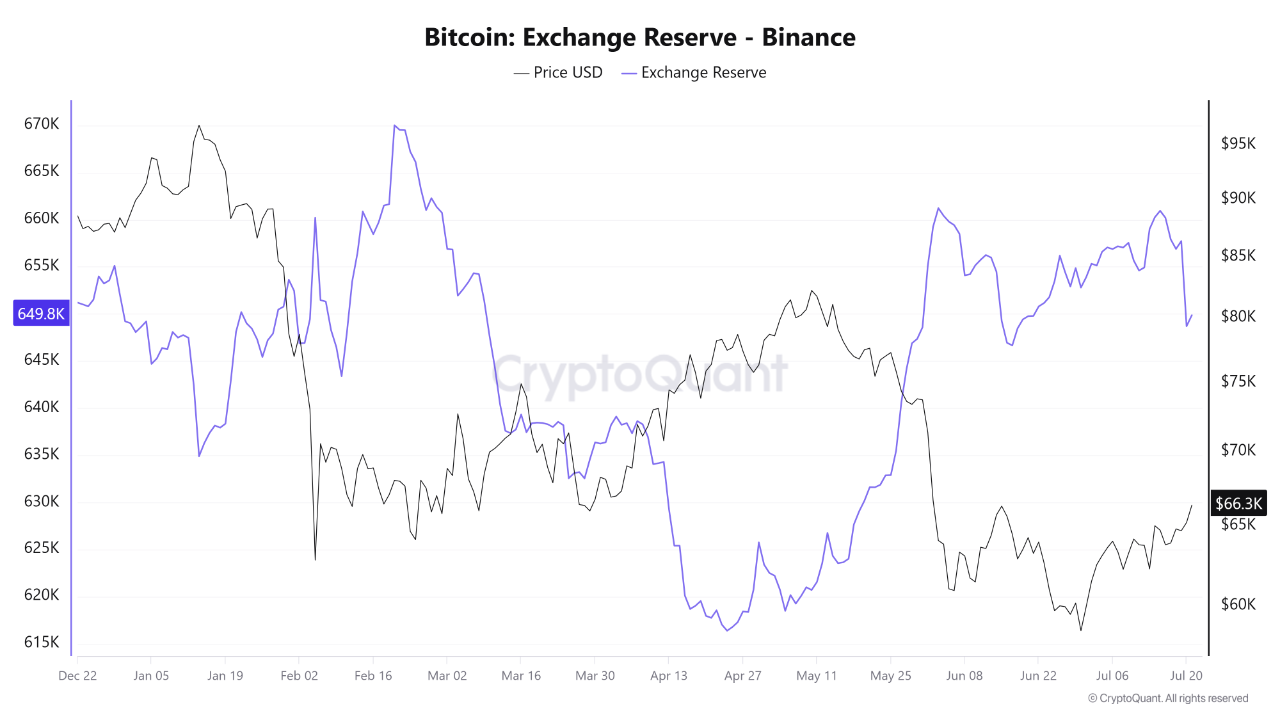
- Binance Bitcoin reserves fell to around 650K BTC, nearing a multi-month low point.
- Reserves declined even as Bitcoin price rose 1.58% in 24 hours, reaching $66,185.
- Falling reserves suggest investors favor long-term storage over active exchange trading.
- ETFs and institutional custody growth continue pulling Bitcoin away from exchange wallets.
Binance Bitcoin reserves continue to decline, falling to around 650,000 BTC in recent weeks. This marks one of the lowest levels recorded in recent months.
The drop comes as Bitcoin trades at $66,185, up 1.58% over 24 hours and 2.75% for the week. CryptoQuant data shows the trend raises questions about what it means for the broader market.
What Declining Reserves Reveal About Investor Behavior
Exchange reserves track the total Bitcoin held on a trading platform at any point. When Binance Bitcoin reserves fall, it often signals that holders are moving coins elsewhere.
Many choose long-term storage over keeping assets ready for quick trades. This shift changes how much Bitcoin sits available for immediate selling.
Source: Cryptoquant
The current decline has taken place while Bitcoin recovers from a recent correction. Prices have climbed even as reserves on Binance keep shrinking.
This pairing suggests withdrawals are not tied to fear or short-term exits. Instead, it points to holders choosing to store coins during a period of price strength.
Binance remains the largest cryptocurrency exchange by trading volume worldwide. Its reserve patterns often mirror sentiment across the broader crypto market.
A steady decline rarely comes from one trader or a small group acting alone. Analysts treat this data as a wider signal of market direction.
Cryptoquant analyst summarized the sentiment online: “Reserves dropping while price climbs tells you where conviction lies.” Posts like this have circulated widely as the trend continues to draw attention from market watchers.
Market Implications as Reserves Keep Falling
Persistent declines in Binance Bitcoin reserves generally reduce coins available for quick sale. Lower reserves can tighten supply if buying demand holds steady or grows. This is not treated as a direct signal to buy. Still, it removes one possible source of future selling pressure.
Spot Bitcoin ETFs have expanded steadily, drawing coins away from exchange wallets. Institutional custody options have grown alongside this trend as well.
Both developments give large holders more paths to store Bitcoin off exchanges. Binance Bitcoin reserves have moved lower as these options gain wider adoption.
Bitcoin’s price has stayed resilient throughout this period of reserve decline. Coins continue leaving Binance while the market holds firm overall.
This combination may show accumulation slowly absorbing available supply. If demand keeps rising as reserves fall, liquidity could tighten further across trading platforms.
Reserve data works best alongside other market indicators for full context. ETF flows, stablecoin liquidity, and derivatives positioning all shape the picture.
Binance Bitcoin reserves remain a key figure for tracking investor conviction. As this trend continues, it stands as one signal worth watching closely in the months ahead.

