



Key Takeaways
- Bitcoin surged past the $60,000 threshold on July 1, 2026, posting gains exceeding 3.7% during the trading session
- Federal Reserve Chair Kevin Warsh indicated that inflationary pressures have decreased while maintaining commitment to the 2% inflation objective
- BTC touched a 22-month bottom at $57,803 before recovering during the same trading day
- U.S. spot Bitcoin ETFs experienced unprecedented monthly withdrawals totaling $4.5 billion throughout June
- Year-to-date performance shows BTC declining 32%, trading more than 50% beneath its October all-time high
Bitcoin staged a comeback above the $60,000 mark on Wednesday, July 1, following remarks from Federal Reserve Chair Kevin Warsh indicating a reduction in inflation-related concerns. The statement provided temporary relief to markets after a particularly challenging quarter for cryptocurrency assets.
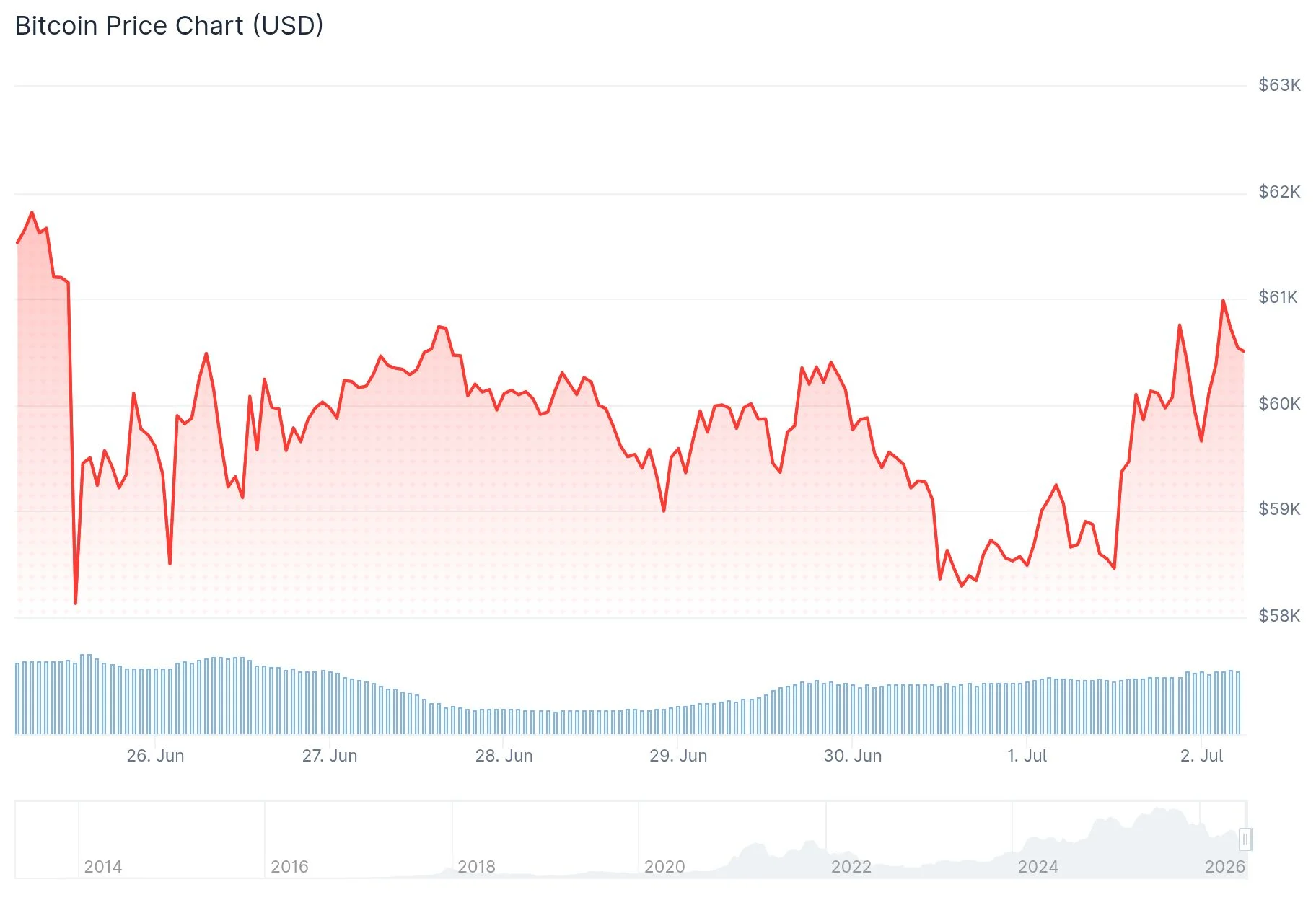
The leading cryptocurrency momentarily dipped to a 22-month nadir of $57,803 during the morning session before staging a recovery. By the late afternoon hours Eastern Time, Bitcoin had climbed to approximately $60,807, representing a gain of roughly 3.7% for the day.
Market analyst Daan Crypto Trades highlighted the price action on social platforms, observing that Bitcoin had reached its 0.618 Fibonacci retracement level calculated from the complete bull market cycle. He noted this level showed “some confluence with the lows from the Summer 2024 consolidation” and that earlier cycles had witnessed relief rallies near comparable zones. He mentioned he was “slowly accumulating spot” positions while avoiding full capital deployment, acknowledging the unique characteristics of this cycle compared to historical patterns.
Meanwhile, market commentator Ted Pillows observed that sellers maintain dominance as long as Bitcoin trades beneath the $60,000 level.
During his address at the European Central Bank’s yearly forum held in Sintra, Portugal, Warsh emphasized the Fed’s unwillingness to accept inflation running above its 2% objective. “We’re going to deliver price stability in the U.S.,” he stated. He refrained from providing specific guidance regarding upcoming rate decisions.
Bitcoin Faces Historically Weak Quarter
The June quarter concluded with Bitcoin posting a 14% decline, extending its year-to-date losses to 32%. The cryptocurrency currently trades at levels representing more than a 50% drop from the peak achieved in October.
The Federal Reserve’s aggressive stance during its June policy meeting elevated expectations for at least one additional interest rate increase this year. Elevated interest rates make the opportunity cost of holding non-interest-bearing assets like Bitcoin more pronounced.
Investor attention has also shifted toward artificial intelligence-related equities, drawing capital away from cryptocurrency markets. Institutional withdrawals from spot Bitcoin ETFs have persisted, with redemptions extending across seven consecutive weeks and potentially heading into an eighth.
Unprecedented ETF Withdrawals Throughout June
U.S. spot Bitcoin exchange-traded funds registered their most substantial monthly redemptions since their January 2024 debut, with $4.5 billion in withdrawals recorded during June alone, based on SoSoValue analytics.
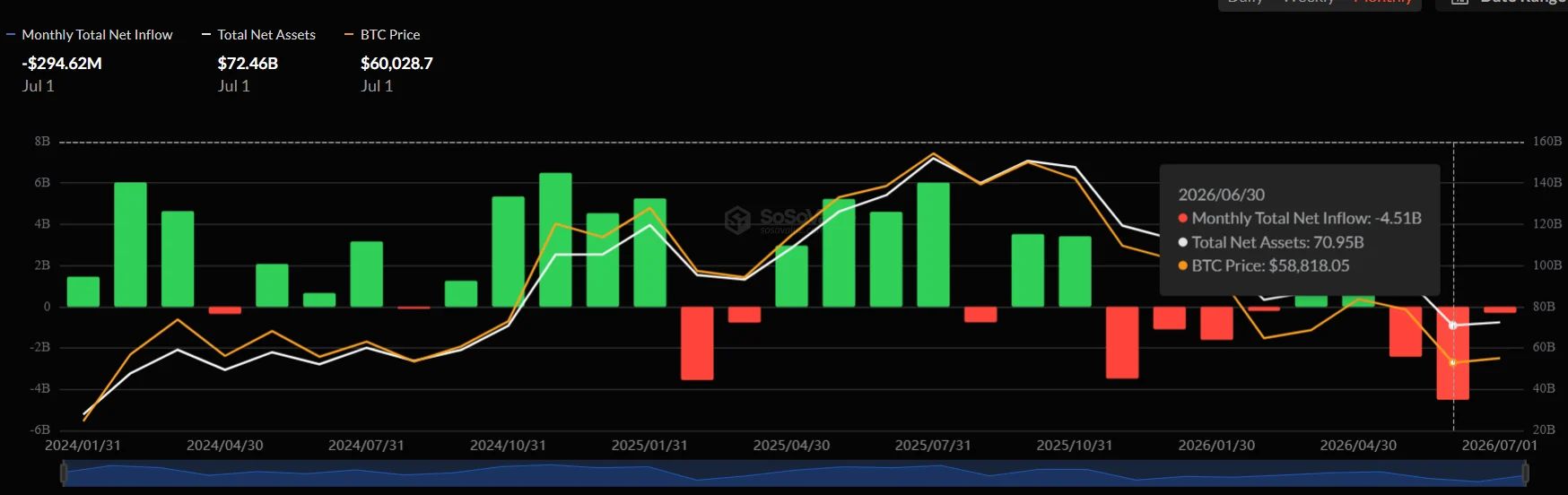
This figure surpassed the prior monthly withdrawal record of $3.48 billion established in February 2025 by approximately 29%.
BlackRock’s iShares Bitcoin Trust represented $3.55 billion of June’s aggregate outflows.
Aggregate net assets held across U.S. spot Bitcoin ETFs have contracted to roughly $70.9 billion, declining from highs exceeding $110 billion recorded earlier in the year.
Notwithstanding the recent redemption wave, cumulative net inflows since the ETFs’ introduction remain in positive territory at over $51 billion.

