



Key Takeaways
- Bitcoin declined to $63K levels on Friday as geopolitical risks escalated
- US military conducted its sixth straight night of operations targeting Iran
- President Trump alleged Chinese interference in 2020 elections during national address
- The Dollar Index jumped to 100.79 while crude oil reached $80 per barrel
- BlackRock’s Larry Fink expressed continued optimism about cryptocurrency over the coming year
Bitcoin (BTC) experienced a downturn to approximately $63,000 on Friday as mounting geopolitical concerns and political instability created headwinds for risk-sensitive assets across the crypto sector.
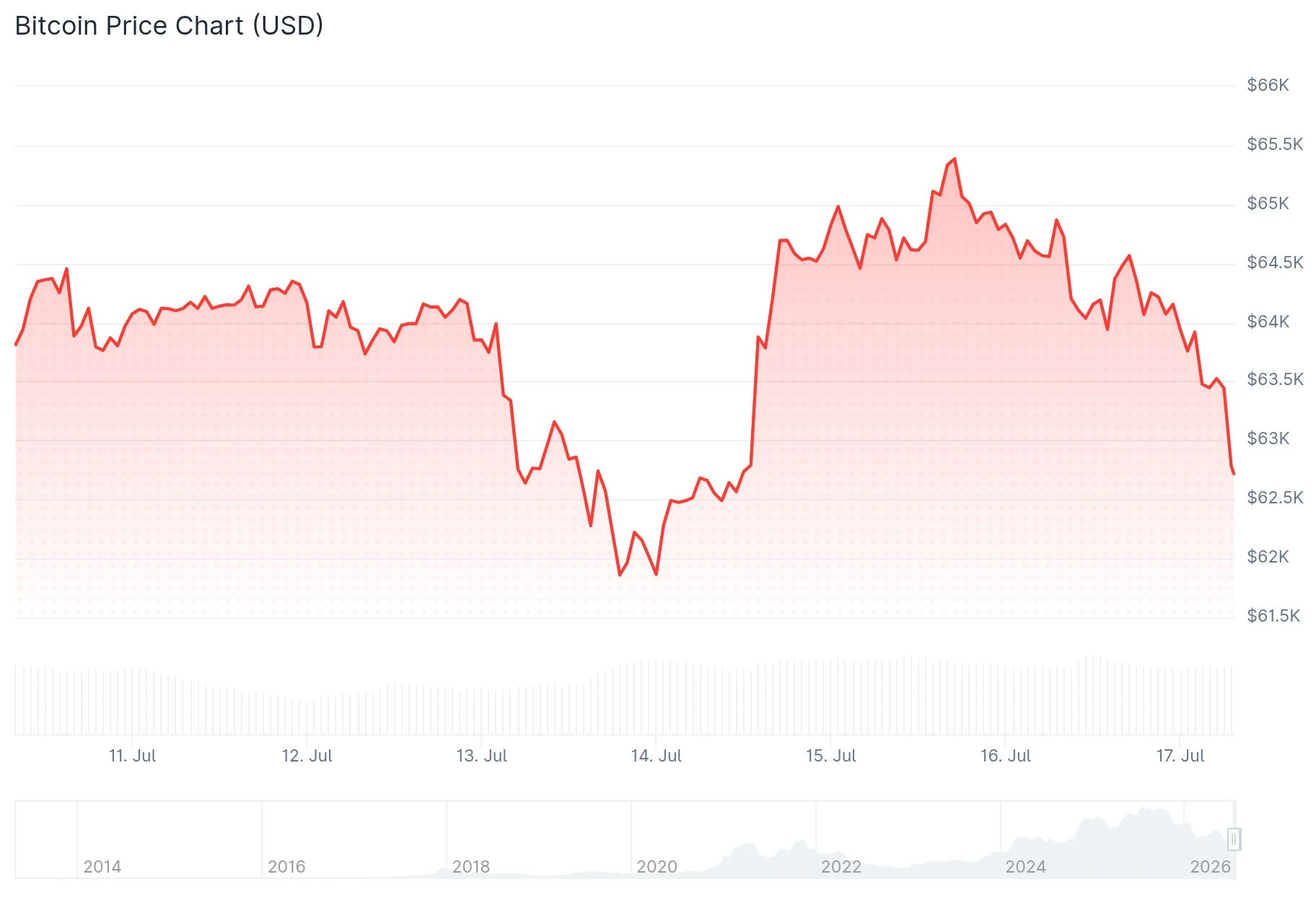
The decline followed a brief two-day rally fueled by better-than-anticipated US inflation reports. June’s Consumer Price Index (CPI) and Producer Price Index (PPI) both registered below market forecasts.
However, the positive momentum proved short-lived. Technology equities experienced significant selling pressure, with Micron Technologies plunging over 30% from its June 22nd peak. Retail investors offloaded approximately $200 million in Tesla and Apple shares during the past two-week period.
Market analytics firm The Kobeissi Letter highlighted that retail trading volume in individual equities reached an unprecedented $370 billion, surging from $220 billion recorded at 2026’s beginning, as market participants secured gains from the technology sector rally.
BTC/USD had momentarily climbed to three-week peaks near $65,900 before reversing course. Market analyst Rekt Capital observed that Bitcoin was displaying initial resistance signals at its 50-month exponential moving average positioned at that threshold.
Analyst Exitpump highlighted the anchored VWAP from Bitcoin’s $82,000 peak in early May as a critical resistance zone. In his analysis shared with X followers, he suggested that retesting this level “should cap the upside and give stronger rejection.”
Military Operations Intensify Market Pressure
US Central Command verified military operations against Iran continuing for the sixth consecutive evening on July 17. Strike packages targeted coastal surveillance installations, air defense networks, military supply chains, and maritime facilities.
Intelligence reports pinpointed specific locations including the Bandar Khamir overpass infrastructure, the Gariveh Bridge, and a significant railway terminal near Bandar Abbas. Iranian forces responded with countermeasures directed at Qatar, with preliminary accounts indicating proximity to the American Al Udeid Air Base.
The escalating tensions drove the DXY higher to 100.79 while crude oil prices climbed to $80 per barrel, both factors contributing to downward pressure on risk assets including Bitcoin.
Presidential Address Fuels Market Anxiety
President Trump delivered a prime-time national address centered on electoral integrity. He alleged Chinese actors obtained 220 million American voter records in what he characterized as “the largest compromise of election data in history.”
The President advocated for advancing the SAVE America Act, legislation requiring voter identification and citizenship verification. Opposition lawmakers dismissed the allegations as unfounded conspiracy narratives.
Market analyst Ted Pillows published his forecast on X, suggesting the highest probability scenario for $BTC involves appreciation to the $70,000–$72,000 range by August, subsequently retracing to fresh cycle lows near $50,000.
BlackRock CEO Larry Fink stated Bitcoin maintains stability at present price levels and expressed his optimistic stance on the cryptocurrency sector throughout the next 12-month period.

