


TLDR
- Siebert Financial analyst Brian Vieten projects that bitcoin will rise beyond $175,000 over the next few quarters.
- He says institutional ownership and new financing options have made bitcoin more resilient since 2022.
- Major banks, including JPMorgan, now accept BlackRock’s IBIT bitcoin ETF shares as loan collateral.
- Vieten sees stablecoin growth as the main driver of bitcoin’s next move higher.
- The GENIUS Act takes effect Jan. 18, 2027, and Samsung Wallet adds USDC in late October.
Bitcoin could climb past $175,000 over the next few quarters, according to Brian Vieten, a senior research analyst at Siebert Financial. He shared his outlook in comments to Bitcoin.com News on Oct. 14.
Vieten argues that bitcoin has become more resilient since the crypto lending failures of 2022. He says broader ownership and better access to capital are the main reasons.
“The market structure has fundamentally shifted,” Vieten said.
His forecast builds on an earlier three-factor valuation model. That model looks at money supply growth, digital wallet adoption, and demand for bitcoin.
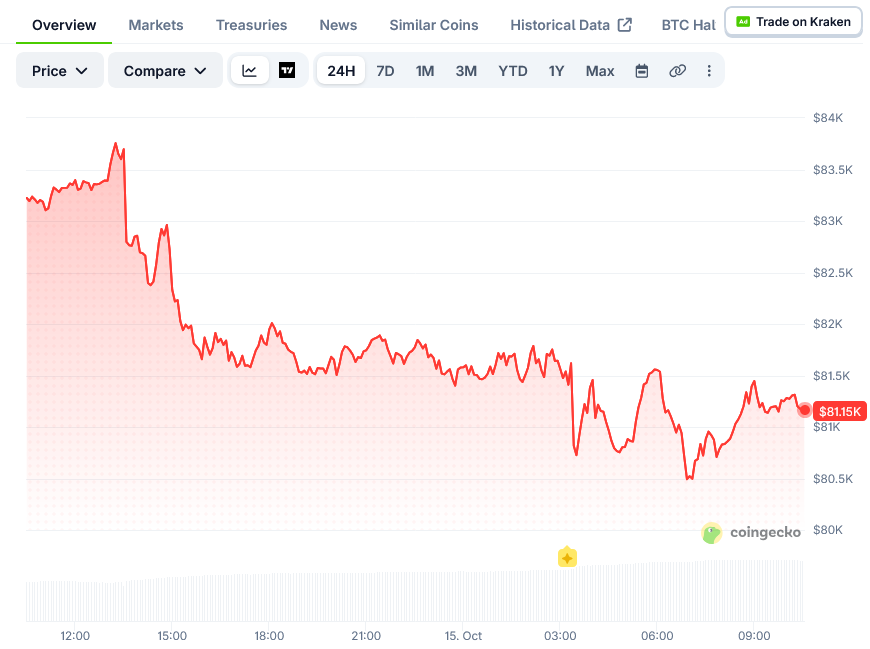
Institutions and Banks Change the Picture
Vieten sees exchange-traded funds (ETFs) as a source of steadier, longer-term ownership. In a Sept. 1 interview, he tied bitcoin’s recovery to improving sentiment and a short squeeze.
He also believes selling pressure has eased across several groups. Miners are expanding into artificial intelligence and high-performance computing, which could give them new sources of capital.
In his view, companies that hold bitcoin in their treasuries carry low debt and have modest spending needs. He added that on-chain trading platforms offer more visibility into market activity.
Bank lending is another part of his case. Vieten says major banks, including JPMorgan, now accept BlackRock’s iShares Bitcoin Trust (IBIT) as collateral.
This lets borrowers pledge fund shares without selling them. JPMorgan’s plans to accept bitcoin ETFs as collateral were first reported in June 2025.
Strategy Executive Chairman Michael Saylor has made similar comments about growing bank involvement. He expects progress on custody and lending through banks and regulators, even with market structure legislation stalled.
Vieten considers November’s midterm elections a limited threat to the direction of digital asset policy.
Stablecoins Seen as the Next Driver
Vieten links bitcoin’s next move higher to wider use of stablecoins. These tokens aim to hold a steady value, usually pegged to the U.S. dollar.
His view is that more people using blockchain payments could bring more users and liquidity into crypto markets. That could lift demand for other digital assets, including bitcoin.
The GENIUS Act requires stablecoins to be backed one-to-one with eligible assets such as cash, deposits, and short-term Treasuries. The law is expected to take effect on Jan. 18, 2027.
Vieten expects stablecoin growth to support demand for short-term Treasuries. “That’s what takes us to $175k and beyond in the next few quarters,” he said.
Consumer access is also expanding. Samsung announced on Oct. 7 that USDC functionality is coming to Samsung Wallet in the last week of October.
The feature will be available on 82 million U.S. Galaxy devices at launch. Users will be able to make eligible transfers to bank accounts in more than 60 countries.