



TL;DR
- Bitcoin whale inflows to Binance have dropped 34% since June 12, outpacing the decline in retail deposits.
- Retail inflows fell 18%, highlighting a slower pullback among smaller investors.
- The widening gap between whale and retail inflows suggests reduced exchange activity from large BTC holders.
- Lower whale deposits could ease potential selling pressure if the trend continues.
Bitcoin whale activity on Binance has slowed considerably over the past few weeks, with new on-chain data showing that large holders are moving significantly less BTC to the exchange than they were in mid-June. The decline has outpaced the slowdown in retail deposits, suggesting a shift in how different investor groups are positioning themselves.
Data from CryptoQuant shows the 30-day rolling value of Bitcoin whale inflows to Binance fell from approximately $7.04 billion on June 12 to $4.65 billion by July 6, representing a decline of about $2.39 billion, or 34%.
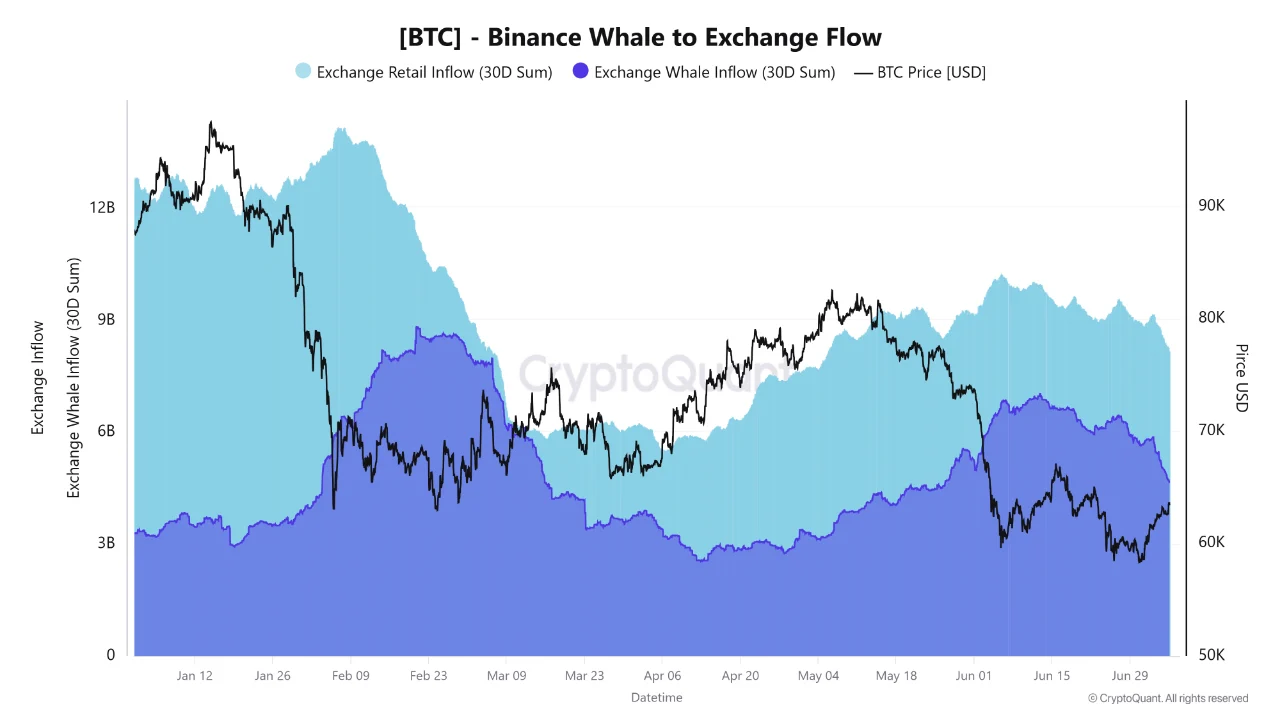
Whale Exchange flow Data | Source: CryptoQuant
Retail investors also reduced their exchange deposits during the same period, although at a much slower pace. Retail inflows declined from roughly $10.02 billion to $8.20 billion, a drop of $1.82 billion, or around 18%.
The sharper contraction among whales means large holders have pulled back from sending Bitcoin to Binance at nearly twice the rate of smaller investors.
Bitcoin Whale Activity Slows Faster Than Retail
The difference between whale and retail behavior has become increasingly noticeable over the past month.
While retail investors continue to account for the larger share of exchange inflows, the gap between the two groups has widened. The difference grew from approximately $2.98 billion in mid-June to around $3.55 billion by early July, highlighting the faster retreat in whale transfers.
Exchange inflows are closely monitored because they often indicate that investors are preparing to trade or liquidate assets. Although transferring Bitcoin to an exchange does not automatically mean a sale is imminent, reduced inflows from whales generally imply that fewer large holders are positioning coins for potential selling.
That could translate into lower exchange-side selling pressure, especially if whales continue keeping their holdings in self-custody or other long-term storage solutions rather than moving them onto trading platforms.
The latest figures also align with a broader trend seen throughout this market cycle, where institutional and long-term investors have increasingly favored holding strategies instead of actively rotating large amounts of Bitcoin through exchanges.
Market Watches Whether the Trend Continues
The next key question is whether whale inflows have simply paused or whether the decline marks the beginning of a more sustained trend.
If whale deposits remain around the current $4.65 billion level or fall even further, it would reinforce the view that large Bitcoin holders are becoming less active on Binance relative to retail participants. Such a development could reduce one potential source of short-term market supply.
On the other hand, a renewed increase in whale inflows would likely signal that major investors are once again moving funds closer to trading venues, something traders often watch for signs of changing market sentiment.
For now, the data suggests that while retail investors continue using Binance at relatively steady levels, Bitcoin whales have become noticeably more cautious in transferring assets to the exchange. Whether that reflects growing confidence in holding BTC over the longer term or simply a temporary pause remains one of the key on-chain trends to watch in the weeks ahead.

