


Key Takeaways
- Boeing shares declined 2.4% to approximately $197, with trading volume surging 77% higher than typical daily levels
- CEO Kelly Ortberg revealed that reaching stable 737 MAX production at 47 units monthly is experiencing unexpected delays from wing supply chain issues and engine constraints
- Korean Air finalized a massive 103-plane order valued at approximately $36.2 billion, while the FAA greenlit 35 more 777F freighter deliveries
- A widely anticipated Chinese aircraft order for 200 planes failed to close, eliminating a key short-term growth driver
- Wall Street consensus remains at “Moderate Buy” with a $272.58 average target price; Bank of America views the selloff as excessive
Boeing (BA) shares retreated 2.4% Thursday, settling near $197 as the aerospace giant faced mounting production challenges. Trading activity spiked to 11.7 million shares by midday, representing a 77% increase over typical volumes and indicating substantive investor reaction.
The selloff stemmed from CEO Kelly Ortberg’s candid remarks at an investor conference, where he acknowledged that Boeing’s target of producing 47 737 MAX jets monthly remains further away than previously anticipated. Supply chain constraints at the Renton manufacturing hub, particularly in wing production, combined with engine delivery delays and unresolved certification issues, are collectively hampering the production ramp-up.
This development carries significant implications for Boeing’s financial objectives, as the company’s ambitious $10 billion cash flow goal hinges on accelerating aircraft deliveries. Each production delay translates to postponed customer payments and prolonged inventory carrying costs.
Compounding investor disappointment, a much-discussed order from China for approximately 200 aircraft failed to materialize. Ortberg explicitly stated no such agreement had been reached, deflating expectations that had built throughout the week.
Major Orders Provide Positive Counterbalance
Despite the challenges, Boeing secured meaningful wins. Korean Air confirmed a historic purchase of 103 Boeing jets with a catalog value approaching $36.2 billion. The comprehensive package includes 777-9s, Dreamliners, 737-10s, and cargo aircraft, substantially bolstering Boeing’s commercial order book.
Lufthansa has also reportedly committed to an additional 20 units of the 737 MAX 10. Meanwhile, regulatory progress came from the FAA, which granted an emissions exemption enabling Boeing to deliver 35 more 777F freighters beyond 2028.
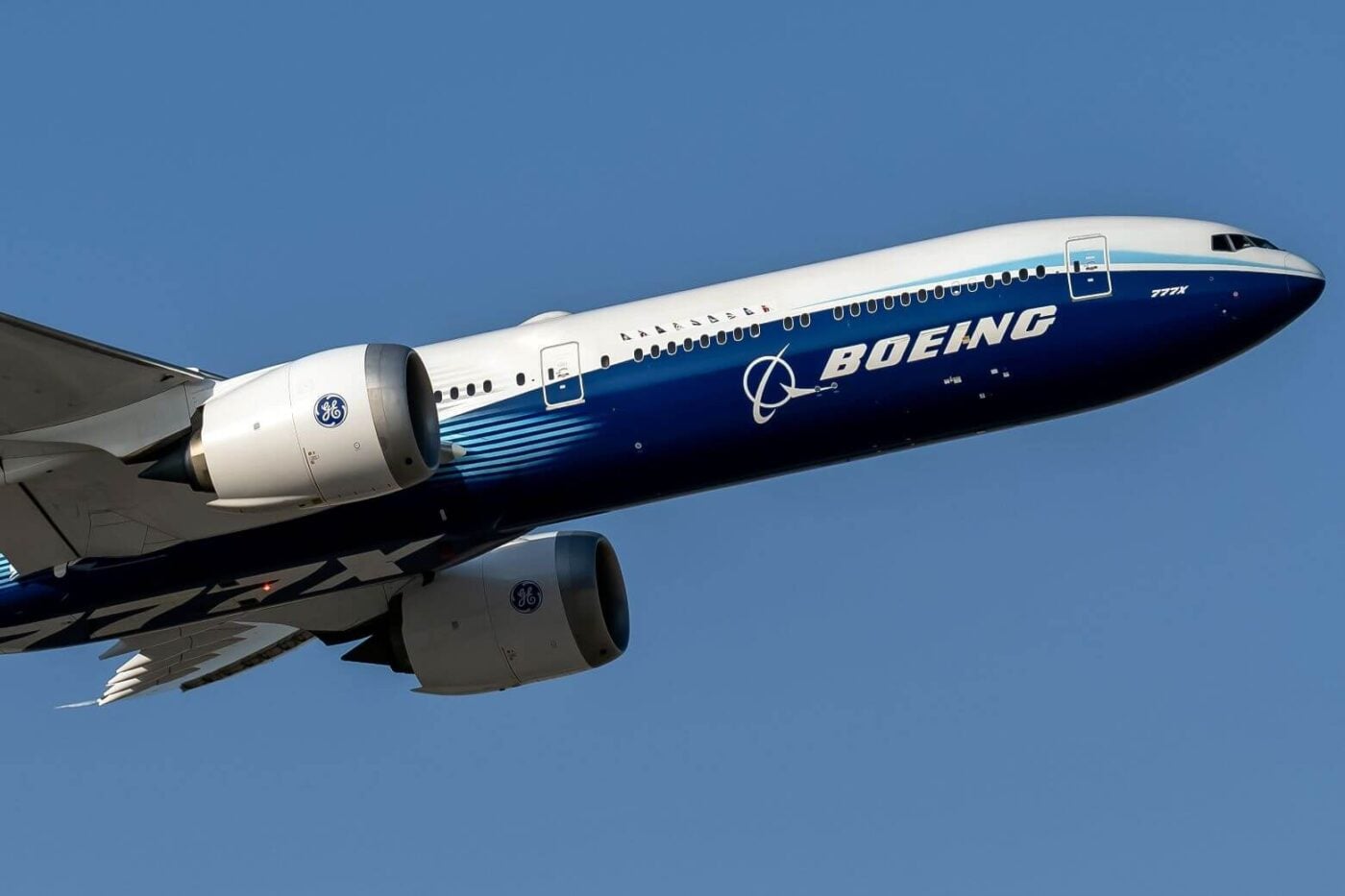
Boeing disclosed potential interest in up to four 777-8F cargo planes and a 757-200PCF leasing arrangement. The company continues targeting 2027 for initial 777X deliveries, while an expanded KC-46 contract provides stability on the defense portfolio.
Analyst Perspectives Remain Largely Constructive
The analyst community hasn’t abandoned Boeing. The prevailing consensus holds at “Moderate Buy” with a mean price objective of $272.58, representing significant upside from current levels.
Bank of America analyst Ronald Epstein characterized the week’s earlier 7% intraday decline as “a bit dramatic,” emphasizing that Boeing’s recovery trajectory was always expected to be nonlinear. He maintained his Buy recommendation with a $270 target.
Dissenting voices exist, however. Wolfe Research downgraded the stock from “Outperform” to “Hold” last August. Weiss Ratings continues with a “Sell” stance. Royal Bank of Canada lowered its target from $275 to $265 while preserving an “Outperform” rating.
Boeing’s balance sheet reflects ongoing stress. The debt-to-equity ratio stands at an elevated 6.77, the quick ratio registers at merely 0.33, and the company recently missed quarterly earnings expectations by $0.42, posting a $0.76 per-share loss against a consensus forecast of $0.34.
Bank of America highlighted another near-term concern: a possible strike by the SPEEA engineering union, whose contract expires October 6.
Technical indicators show the stock trading below both its 50-day moving average of $217.12 and 200-day moving average of $218.63, suggesting continued pressure.
Get 3 Free Stock Ebooks
Discover top-performing stocks in AI, Crypto, and Technology with expert analysis.
- Top 10 AI Stocks - Leading AI companies
- Top 10 Crypto Stocks - Blockchain leaders
- Top 10 Tech Stocks - Tech giants


