



TLDR
- Brent crude declined 0.7% to settle at $101.61 per barrel while WTI decreased 0.8% to $92.17 on Friday’s session.
- A Wall Street Journal article detailing potential Pentagon military reinforcements near Iran triggered sharp gains on Thursday.
- Military officials indicated that Washington may deploy an additional aircraft carrier strike group accompanied by approximately 10,000 military personnel to the Persian Gulf region.
- Saudi Arabia brought its East-West Pipeline back online and has resumed crude shipments from Yanbu port facilities.
- Chinese refineries have halted all fuel shipments excluding Hong Kong and Macau destinations throughout October, creating tighter markets for diesel and aviation fuel.
Oil prices retreated on Friday following Thursday’s dramatic surge. Market participants continue evaluating potential U.S.-Iran military confrontation against evidence showing Middle Eastern crude production returning to normal levels.
December Brent Oil Futures declined 0.7% to reach $101.61 per barrel. West Texas Intermediate crude contracts dropped 0.8% to close at $92.17 per barrel.
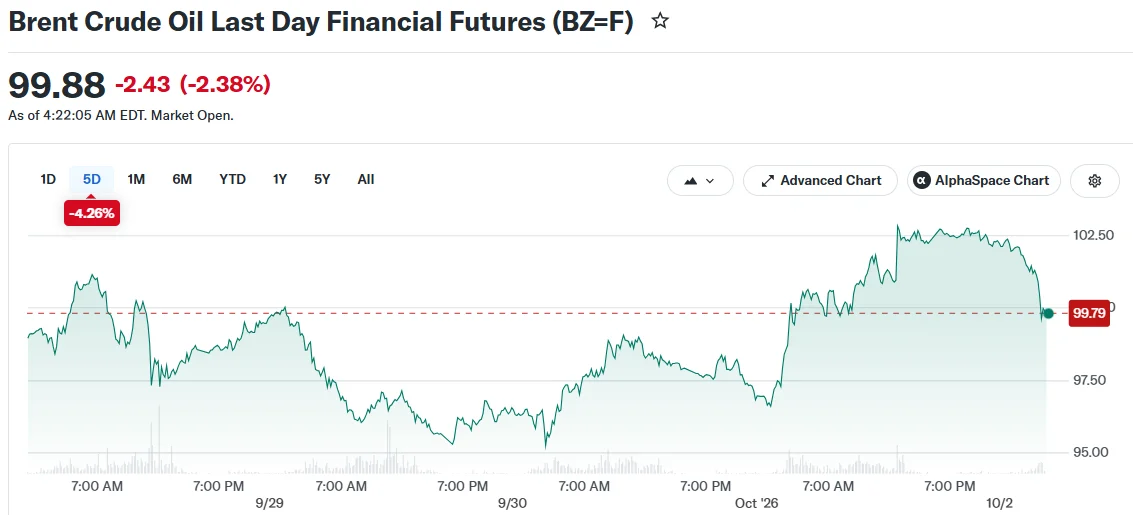
Thursday’s trading session witnessed substantial increases across both benchmarks. Brent surged more than $4 while WTI advanced over $2 during the day.
Military Buildup Triggered Thursday’s Rally
Thursday’s price surge came after the Wall Street Journal published a report indicating U.S. officials were evaluating deployment of additional aircraft carrier strike forces and military personnel to the Middle East theater.
The report heightened speculation that renewed American military operations targeting Iran might interrupt crude shipments originating from the region. Energy traders continue monitoring the Strait of Hormuz, which serves as a critical passageway for international petroleum transport.
According to Pentagon sources, military planners are considering dispatching another carrier strike group accompanied by 10,000 sailors and Marine personnel to Gulf waters. Such a deployment would expand President Trump’s operational capabilities should he authorize intensified strikes against Iranian targets.
The escalation threat emerged precisely as regional supply disruptions had begun subsiding. Market analysts noted earlier this week that crude flows from Middle Eastern producers were approaching volumes recorded before hostilities commenced.
Refined petroleum products, however, remain constrained compared to raw crude availability. Iranian tanker loadings apparently ceased completely during September. Intelligence suggests the continuing U.S. naval blockade successfully restricts Tehran’s ability to access international energy buyers.
Regional Production Improves Amid Fuel Constraints
Notwithstanding ongoing tensions, certain supply channels are demonstrating recovery. Saudi Arabian authorities have reactivated the East-West Pipeline system. The kingdom has simultaneously resumed tanker loading operations at Yanbu terminal following previous interruptions.
China’s refining sector introduced an additional complication. Industry reports indicate Chinese processors have suspended refined product exports outside Hong Kong and Macau territories throughout October. This decision is projected to reduce global availability of diesel fuel, aviation kerosene and gasoline.
Diesel markets face particular strain from diminished Russian export volumes. Additional worries center on potential limitations affecting American fuel shipment capacity.
Washington has reportedly approached European governments about tapping strategic diesel stockpiles. Such releases would alleviate pressure on fuel markets while regulators monitor refinery production rates and storage levels.
Market analysts observe that improving Middle Eastern output combined with modest worldwide demand have restricted price appreciation. Brent has nevertheless climbed 70% year-to-date as the U.S.-Iran confrontation enters its eighth month.
Diplomatic breakthrough remains elusive. Investment managers are simultaneously evaluating how elevated energy costs might influence inflation forecasts.
Persistent crude price increases could complicate monetary policy deliberations for major central banks. The U.S. Federal Reserve faces particular challenges balancing economic growth considerations against inflationary pressures.
By Friday morning, both benchmark contracts remained beneath Thursday’s session highs, with market participants monitoring further intelligence regarding Pentagon force deployments to the Gulf theater.
Get 3 Free Stock Ebooks
Discover top-performing stocks in AI, Crypto, and Technology with expert analysis.
- Top 10 AI Stocks - Leading AI companies
- Top 10 Crypto Stocks - Blockchain leaders
- Top 10 Tech Stocks - Tech giants


