


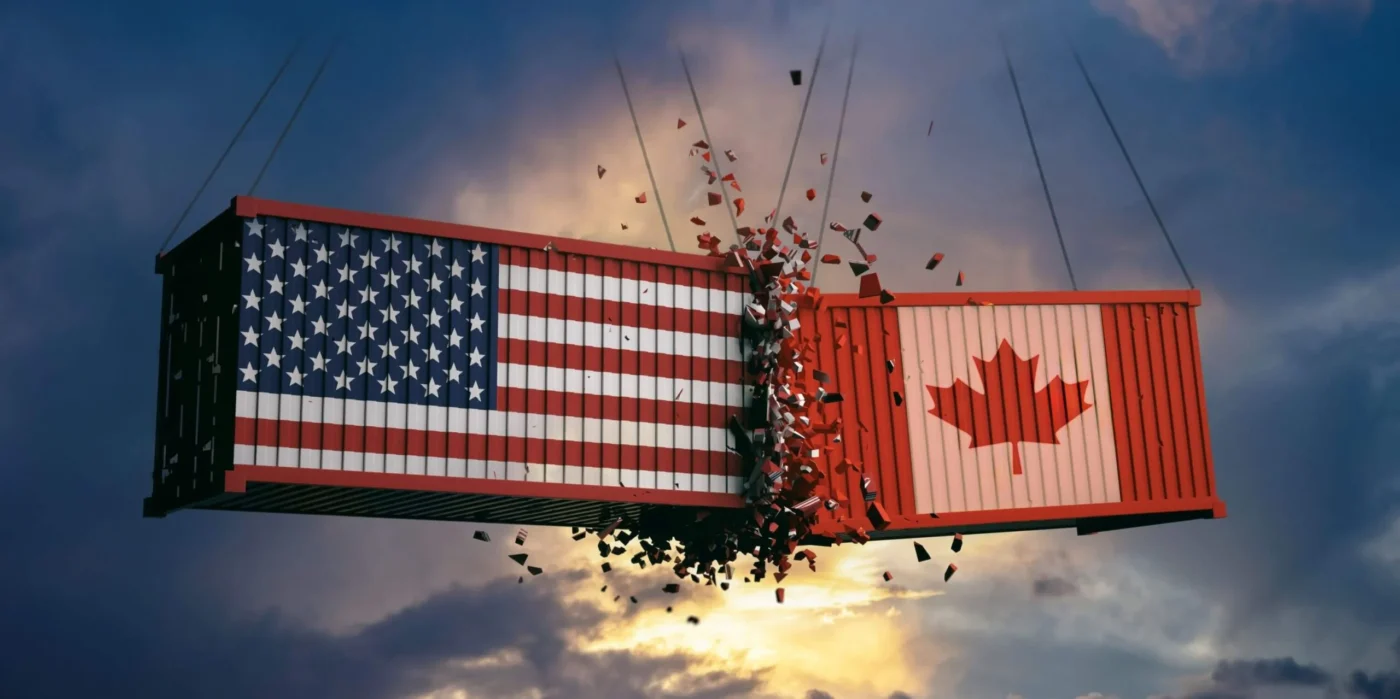
Key Takeaways
- Prime Minister Mark Carney advocates for Canada’s “associate member” status with the European Union amid deteriorating U.S.-Canada trade relations
- On September 17, 2026, Carney spoke before the European Parliament, endorsing the initiative and advocating for strengthened Canada-EU connections
- The framework was introduced by EU Commission President Ursula von der Leyen, though it requires ratification from all EU member nations
- President Trump dismissed the initiative as “laughable” and issued warnings of substantial tariffs against Europe should the agreement proceed
- Proposed collaboration areas encompass critical minerals, defense capabilities, artificial intelligence, energy infrastructure, and visa-free European travel for Canadian citizens
Canada is pursuing an unprecedented economic partnership with the European Union following a dramatic breakdown in trade relations between Canada and the United States. On September 17, 2026, Prime Minister Mark Carney delivered remarks to the European Parliament in Strasbourg, endorsing EU Commission President Ursula von der Leyen’s proposal to establish Canada as an “associate member” of the bloc.
“Europe and Canada are each strong. Europe and Canada are even stronger together,” Carney declared before European legislators.
Canada’s Strategic Pivot Toward Europe
This diplomatic initiative emerges after what government officials characterize as a complete breakdown in negotiations between Canadian and American trade representatives. Currently, approximately two-thirds of Canadian exports are destined for American markets, underscoring the magnitude of this strategic reorientation.
Over recent months, Carney has engaged in confidential discussions with leadership across France, Germany, Italy, and Scandinavian nations. He has tasked a designated envoy with investigating the most comprehensive partnership frameworks available without pursuing full EU membership status.
Negotiations focus on facilitating the unimpeded movement of Canadian products, services, and specialized workers between Canada and EU territories. Priority sectors include critical minerals extraction, energy resources, artificial intelligence development, defense manufacturing, and digital infrastructure expansion.
Under consideration are ambitious infrastructure initiatives such as transatlantic undersea cables connecting Canadian and European networks, collaborative data center construction, and joint satellite communication systems. Canada is additionally working to reorient natural gas pipeline infrastructure away from American markets and toward European partners.
Trump Issues Tariff Warning
President Donald Trump delivered a swift response to the announcement. During a Wednesday press briefing, Trump characterized the EU’s proposal as “laughable” and warned of significant tariff impositions on European goods should the partnership advance.
“If I think it’s at all a hostile act, I will put very serious tariffs or stop trading with Europe on many things,” Trump declared.
The European Commission countered by clarifying that the proposed partnership was not conceived as an antagonistic measure toward the United States. Commission spokesperson Olof Gill emphasized the arrangement was “not against anyone else, but for our common strength.”
Before implementation, the initiative requires unanimous consent from all EU member nations. Notably, ten European countries have yet to ratify a comprehensive trade agreement with Canada that was negotiated ten years ago.
Addressing EU parliamentarians, Carney emphasized that Canada seeks “collective resilience” rather than complete economic independence. He identified enhanced cooperation on critical minerals, defense coordination, artificial intelligence, energy security, space exploration, and financial payment systems as strategic imperatives.
Both parties anticipate establishing new task forces during an upcoming bilateral summit to transform these conceptual frameworks into actionable initiatives.
Carney, who completed his studies in Europe and served as Governor of the Bank of England for seven years, characterized this shift as a fundamental long-term realignment. “We are not fair-weather allies,” he emphasized before the European Parliament.
During Thursday’s address to the European Parliament, Carney outlined his comprehensive vision, with both sides preparing to establish working groups at an imminent bilateral summit.
Get 3 Free Stock Ebooks
Discover top-performing stocks in AI, Crypto, and Technology with expert analysis.
- Top 10 AI Stocks - Leading AI companies
- Top 10 Crypto Stocks - Blockchain leaders
- Top 10 Tech Stocks - Tech giants


