


TLDR
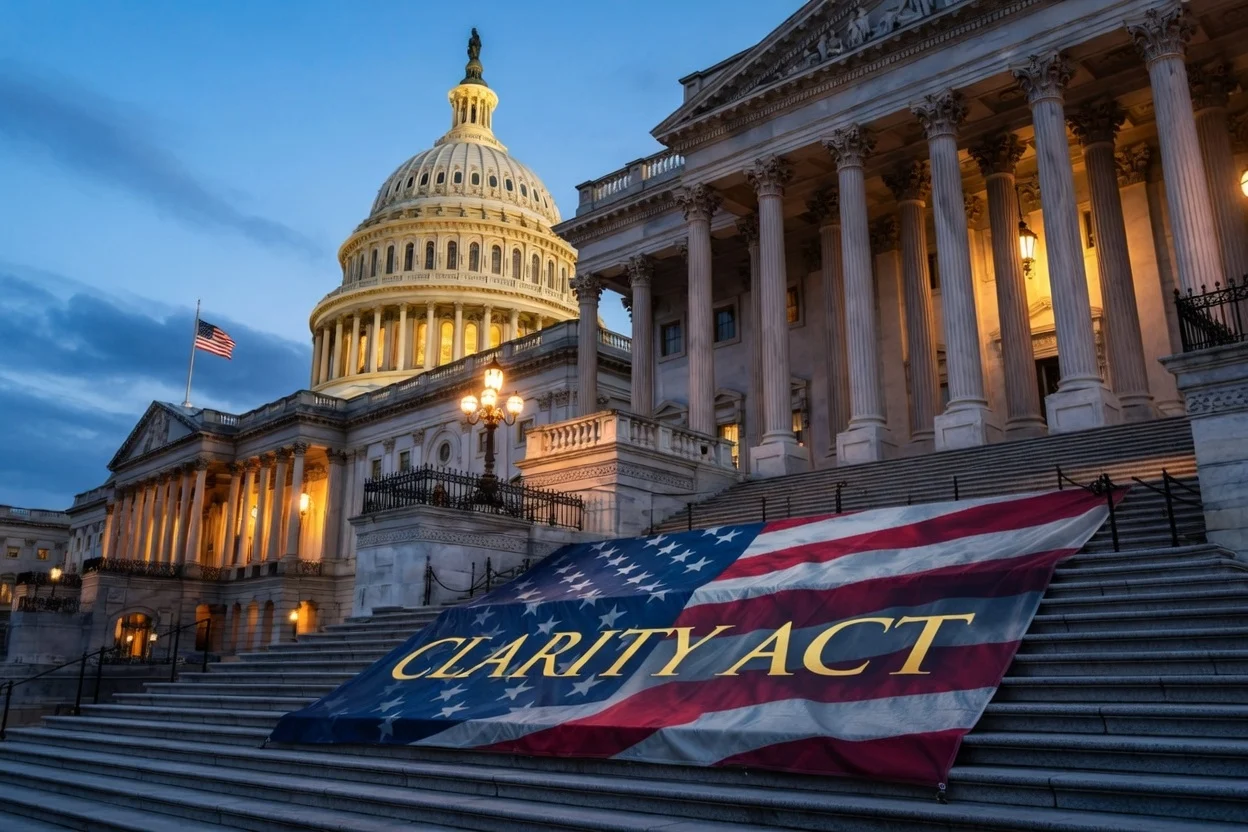
- Senators want language added to the Clarity Act or Farm Bill to keep sports prediction markets under state and tribal gaming law
- CFTC Chair Michael Selig says his agency has exclusive jurisdiction over prediction markets
- Attorneys general from 44 states have asked the CFTC to withdraw its proposed rule on event contracts
- Prediction market platforms processed a record 50.59 billion dollars in trading volume in July
- Bitwise’s Matt Hougan says the crypto industry will keep growing even if the Clarity Act stalls
Senators are pushing to change the Clarity Act so that sports prediction markets stay under state and tribal gaming law instead of federal oversight. The push came during a Senate Indian Affairs Committee roundtable this week.
Indian Gaming Association Vice Chairman Tehassi Hill told the committee that prediction markets tied to sports and casino events should not bypass existing gaming rules. He said state gaming laws and the Indian Gaming Regulatory Act should govern these markets, not federal commodities law.
Tribal gaming groups worry that expanding federal oversight could weaken state and tribal control over sports wagering. That authority has traditionally sat at the local level.
Sen. Tina Smith of Minnesota said lawmakers could add similar language to either the Clarity Act or the Farm Bill. Congress often uses the Farm Bill for policy items outside agriculture.
Smith said the fix should be simple. She argued the Commodity Futures Trading Commission should not override tribal-state agreements.
Where the CFTC Stands
CFTC Chair Michael Selig has said the agency holds exclusive jurisdiction over prediction markets. The CFTC has challenged state enforcement actions in court over this issue.
The Trump administration has backed Selig’s position. Officials have called federal oversight of prediction markets critically important.
States disagree. Attorneys general from 44 states asked the CFTC in June to withdraw its proposed rule, known as Rule 40.11. They argued the agency went beyond the authority Congress gave it under the Commodity Exchange Act.
Senate Agriculture Committee Chair John Boozman said he sympathizes with tribal gaming concerns. But he questioned whether the Clarity Act is the right tool to fix the issue, since crypto and prediction markets are separate topics.
Trading Volume Keeps Growing
Regulatory disputes have not slowed trading. Kalshi, Polymarket and Polymarket US combined for 50.59 billion dollars in trading volume in July, the highest monthly total on record for the three platforms.
Kalshi made up about 37.7 billion dollars of that total, or roughly 74.5 percent. Polymarket US saw the fastest growth after opening access to more U.S. users.
Open interest across the three platforms fell from about 2 billion dollars at the start of July to around 1.2 billion dollars by month’s end. That drop followed the settlement of positions tied to the FIFA World Cup.
The Senate also faces an August 5 deadline to advance the Clarity Act before its summer recess. Prediction markets on Polymarket now show a 23 percent chance the bill becomes law in 2026, down from 82 percent in February.
Bitwise chief investment officer Matt Hougan said a failed vote this week would leave the bill stalled but not dead. He said Congress could still pass it in September or during a year-end session.
Hougan said the industry has a fallback option. That is the joint SEC-CFTC interpretation from March, which classifies Bitcoin and other assets as digital commodities.
SEC Chair Paul Atkins said last week his agency is ready to issue rules covering the same ground as the Clarity Act. He added that only Congress can make that protection permanent.

