


Key Takeaways
- North Carolina Senator Thom Tillis has requested Senate Banking Committee Chair Tim Scott postpone the CLARITY Act markup to May
- The central issue blocking progress involves the treatment of stablecoin returns and rewards within the proposed framework
- Traditional banking institutions worry stablecoin yield offerings could drain customer deposits from conventional banks
- The Digital Chamber, representing crypto interests, is demanding immediate legislative advancement
- Senator Moreno has cautioned that failure to pass the bill by May could indefinitely postpone crypto regulation
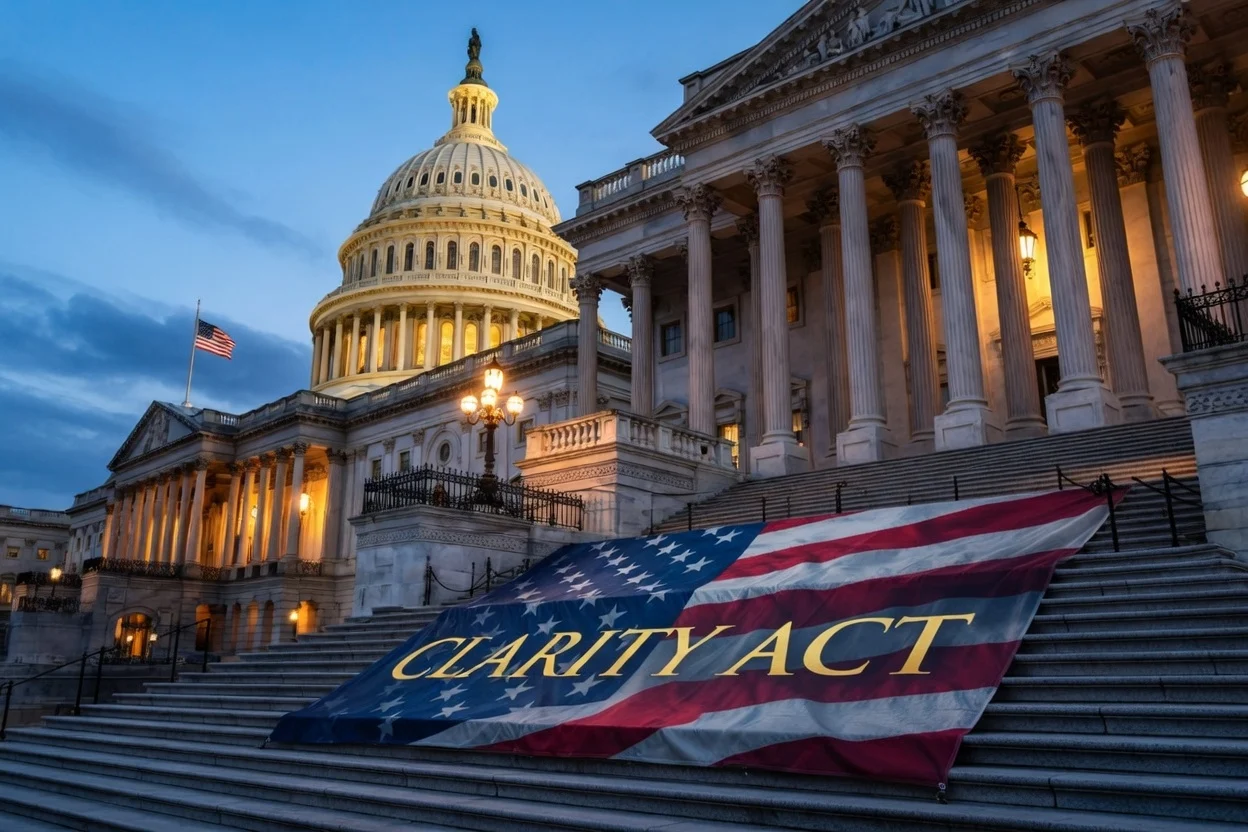
The CLARITY Act, a pivotal crypto market structure bill in the United States Senate, is experiencing additional postponement. Republican Senator Thom Tillis of North Carolina informed media representatives on Monday that the Senate Banking Committee will likely not conduct markup proceedings on the legislation during April. Instead, he has formally requested Committee Chair Tim Scott to calendar the proceedings for May.
Tillis has emerged as a central figure in negotiations attempting to reconcile conflicting interests between traditional banking institutions and cryptocurrency sector stakeholders. In his comments to reporters, he emphasized the necessity of providing adequate time for all interested parties to voice their perspectives prior to legislative advancement.
The legislation successfully passed the House of Representatives with cross-party endorsement nearly twelve months ago. While it has subsequently received approval from the Senate Agriculture Committee, it must still navigate the Senate Banking Committee before reaching a full Senate floor vote.
Controversy Over Stablecoin Returns
The primary obstacle preventing advancement centers on disagreement regarding stablecoin reward structures. Traditional banking sector representatives express concern that permitting stablecoin issuers or platforms to offer yield to token holders could trigger deposit migration away from conventional banks, particularly impacting smaller community financial institutions.
According to banking industry arguments, these institutions may lack the financial resilience necessary to withstand significant deposit withdrawals.
Conversely, cryptocurrency companies including Coinbase have advocated for more accommodating provisions regarding stablecoin rewards. Their position maintains that imposing restrictions on rewards would stifle technological advancement and innovation.
According to draft language circulating last week, the proposed framework would prohibit returns on inactive stablecoin holdings while permitting yield connected to active usage such as transactions. A source briefed The Block that modifying the legislative text at this advanced stage would prove challenging.
Senators Tillis and Angela Alsobrooks, a Maryland Democrat, have been collaborating to find common ground on this contentious matter.
Mounting Industry Advocacy
The Digital Chamber, representing cryptocurrency sector interests, dispatched correspondence Monday to the Senate Banking Committee members, pressing them to move the legislation toward markup “as soon as the calendar allows.”
The communication bore the signature of CEO Cody Carbone and was directed to both Tim Scott and Elizabeth Warren, the committee’s ranking Republican and Democratic members.
“More than 70 million Americans who have embraced digital assets deserve the regulatory clarity they have waited far too long for,” said Taylor Barr, the group’s government affairs director.
The Digital Chamber highlighted that over 270 days have elapsed since the House approved the measure.
US Treasury Secretary Scott Bessent has also exerted pressure on lawmakers. During March, he cautioned that Democratic capture of the House in November’s midterm elections could derail the bill’s prospects entirely.
Senator Bernie Moreno previously warned at the DC Blockchain Summit that if the bill did not pass by May, “digital asset legislation will not pass for the foreseeable future.”
This week, the Senate Banking Committee’s immediate focus will shift to Tuesday’s confirmation proceedings for Kevin Warsh, President Trump’s nominee for Federal Reserve Chair.

