


TLDR:
- Senate negotiators failed to resolve a major ethics dispute tied to the Clarity Act this week.
- White House officials met law enforcement groups over concerns about blockchain crime enforcement.
- Democratic support hinges on stronger ethics provisions linked to Trump’s crypto ventures.
- House lawmakers reviewed crypto tax reforms as Congress races against a tight calendar.
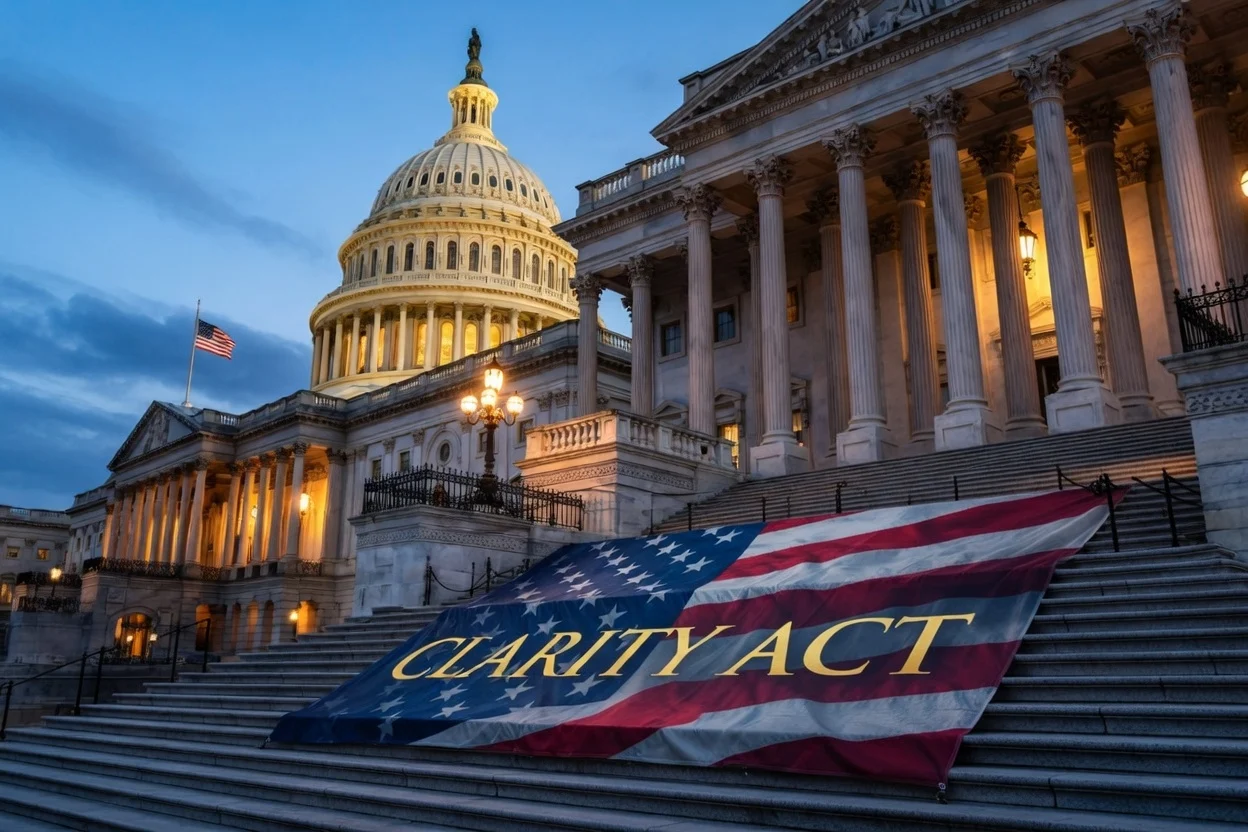
The Senate’s push to advance the Clarity Act encountered fresh resistance this week as lawmakers failed to resolve a key ethics dispute tied to the legislation. Negotiators left a closed-door meeting without an agreement, raising new questions about the bill’s path to a floor vote.
At the same time, the White House stepped up efforts to address concerns from law enforcement organizations. The developments arrive as Congress faces a shrinking legislative window before the August recess.
Clarity Act Ethics Debate Delays Senate Progress
A bipartisan group of senators met Tuesday alongside White House Crypto Council Executive Director Patrick Witt to revisit an ethics agreement discussed before the Senate Banking Committee markup in May.
The talks included Senators Kirsten Gillibrand, Ruben Gallego, Bernie Moreno, and Cynthia Lummis. However, participants failed to reach a new consensus.
According to reporting cited by Eleanor Terrett and Crypto In America, Republicans and White House officials withdrew support for parts of a tentative agreement discussed earlier.
One disputed provision would have allowed state attorneys general to challenge the Department of Justice over failures to enforce ethics rules involving President Donald Trump.
Republican negotiators raised concerns that the mechanism could create broader legal risks for members of Congress. Legal questions also emerged regarding whether state officials could compel federal enforcement actions.
Democratic lawmakers viewed the revisions as a departure from previous discussions. As a result, negotiations ended without a breakthrough, and participants reportedly described the process as difficult.
The negotiating group plans to meet again Thursday. Ethics provisions remain a central issue for Democrats seeking stronger safeguards related to Trump’s crypto business interests.
Clarity Act Law Enforcement and Crypto Tax Issues Gain Focus
Beyond ethics concerns, lawmakers continue to debate how the Clarity Act could affect criminal investigations involving blockchain technology.
The White House Crypto Council scheduled a meeting with representatives from the National Sheriffs’ Association, Fraternal Order of Police, National District Attorneys’ Association, and federal agencies.
Discussions will focus on Section 604, also known as the Blockchain Regulatory Certainty Act. The provision seeks to clarify that non-custodial software developers are not responsible for third-party misuse of their code unless they intentionally support illegal activity.
Some law enforcement groups fear the language could complicate efforts to pursue criminals operating through blockchain networks. Administration officials plan to argue that existing enforcement tools would remain intact.
Support from law enforcement remains critical. Senators Mark Warner and Catherine Cortez Masto have indicated that unresolved enforcement concerns could affect support for the legislation.
Meanwhile, the House Ways and Means Committee turned its attention to crypto taxes. During a hearing Tuesday, lawmakers reviewed six Republican-backed bills and a discussion draft covering digital asset taxation.
The proposals address mining rewards, staking income, reporting requirements, crypto donations, tax treatment parity, and disclosure programs. Industry participants welcomed several measures but noted the absence of a de minimis exemption for small Bitcoin transactions.
With only 31 Senate session days remaining before the August recess, lawmakers face increasing pressure to resolve both regulatory and tax issues tied to the broader crypto framework.

