


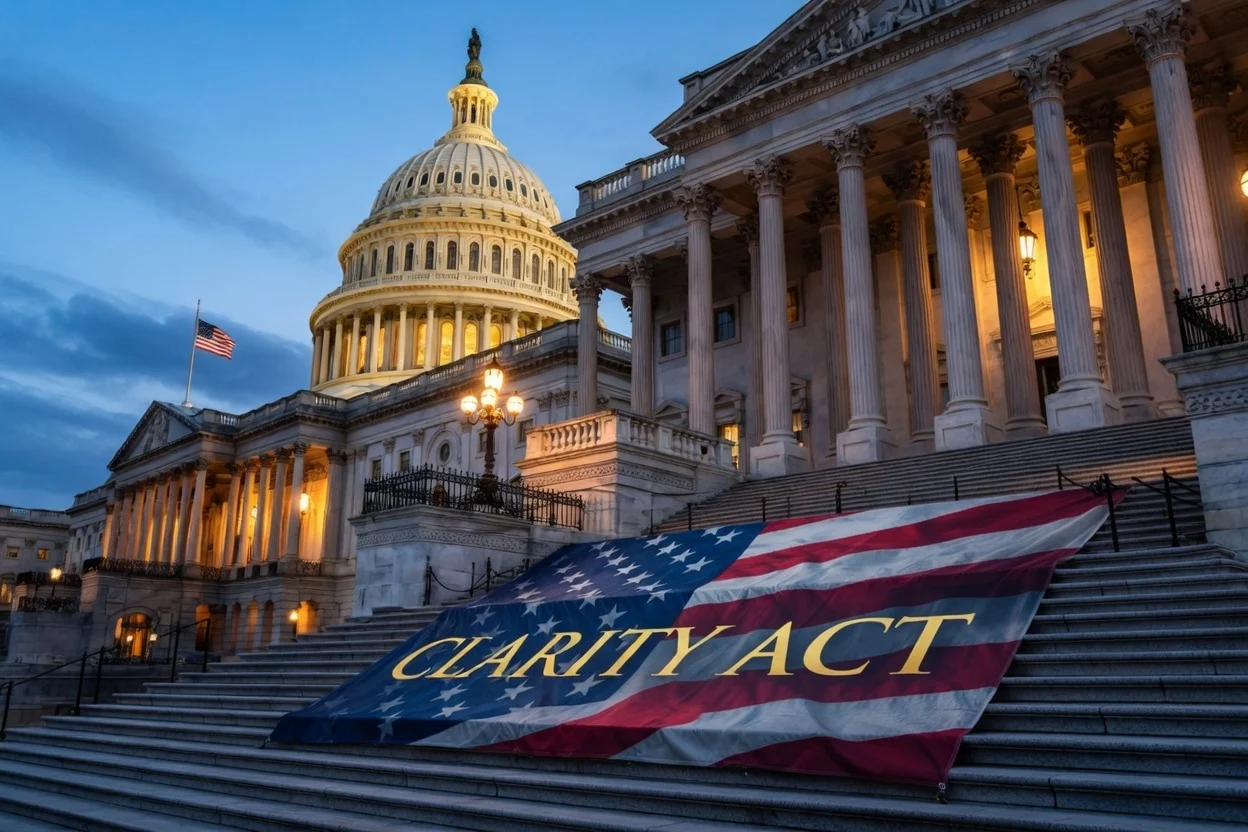
TLDR:
- NOBLE became the first major law enforcement group to publicly endorse the CLARITY Act.
- The bill would divide crypto oversight between the SEC and the CFTC if enacted into law.
- NOBLE said the legislation preserves existing criminal authorities and adds new investigative tools.
- The CLARITY Act passed the House and now awaits a full Senate vote after committee approval.
The CLARITY Act has received its first public endorsement from a major law enforcement organization as the bill moves toward a full Senate vote. The National Organization of Black Law Enforcement Executives, known as NOBLE, formally backed the legislation in a letter to Senate leaders.
The endorsement arrives as lawmakers consider a framework that would divide oversight of digital assets between federal regulators. The legislation has also gained support from senior policymakers and industry officials ahead of an expected summer vote.
CLARITY Act Wins NOBLE Endorsement Before Senate Vote
Journalist Eleanor Terrett reported that NOBLE became the first major law enforcement organization to publicly support the CLARITY Act, including the Blockchain Regulatory Certainty Act.
In a letter addressed to Senate Majority Leader John Thune and Minority Leader Charles Schumer, NOBLE said digital assets have become an increasingly important part of America’s technological and financial system.
The organization stated that law enforcement agencies rely on digital assets and related technologies to investigate financial crimes, protect victims, and safeguard communities.
NOBLE said it reviewed the legislation and found that it preserves existing criminal enforcement authorities while creating meaningful new capabilities for investigators.
According to the letter, the bill improves digital asset forfeiture authorities and establishes new compliance expectations intended to increase transparency. It also introduces additional oversight requirements for digital asset kiosks and could improve investigative visibility.
The organization added that the legislation does not alter longstanding federal authorities involving fraud investigations, money transmission business enforcement, conspiracy statutes, sanctions enforcement, and other established investigative powers.
CLARITY Act Proposes SEC and CFTC Oversight Framework
The CLARITY Act passed the House in July 2025 with bipartisan support and advanced through the Senate Banking Committee in May 2026. The bill now awaits consideration by the full Senate.
The legislation would divide regulatory responsibilities between the Securities and Exchange Commission and the Commodity Futures Trading Commission. Securities-like digital assets would fall under SEC oversight, while commodities would be regulated by the CFTC.
The proposal also includes consumer protection provisions and anti-money laundering tools designed for digital asset markets.
NOBLE stated that effective implementation of the framework will require cooperation among Congress, the Department of Justice, the Treasury Department, FinCEN, state and local law enforcement agencies, prosecutors, regulators, and industry participants.
Support for the bill has also emerged from several senior officials. SEC Chairman Paul Atkins, Senators Cynthia Lummis and Tim Scott, and Treasury Secretary Scott Bessent have publicly supported advancing the legislation.
On X, Senator Lummis said the United States has historically led major technological transformations. She described digital assets as the country’s next important technological frontier.
Moreover, Lummis said the CLARITY Act would help preserve U.S. leadership in innovation.. Treasury Secretary Bessent has indicated that lawmakers are targeting passage of the legislation during the summer.

