


Key Takeaways
- New HarrisX polling reveals 52% of 2,008 surveyed voters back the CLARITY Act, while just 11% stand against it
- Seven in ten Americans believe cryptocurrency regulation should have already been enacted by lawmakers
- Senate Banking Committee may schedule markup proceedings for May 14
- Coinbase’s VP of US Policy Kara Calvert emphasizes the necessity of securing 60 Senate votes through bipartisan collaboration
- Institutional adoption faces greater obstacles from convoluted tax reporting requirements than market structure challenges
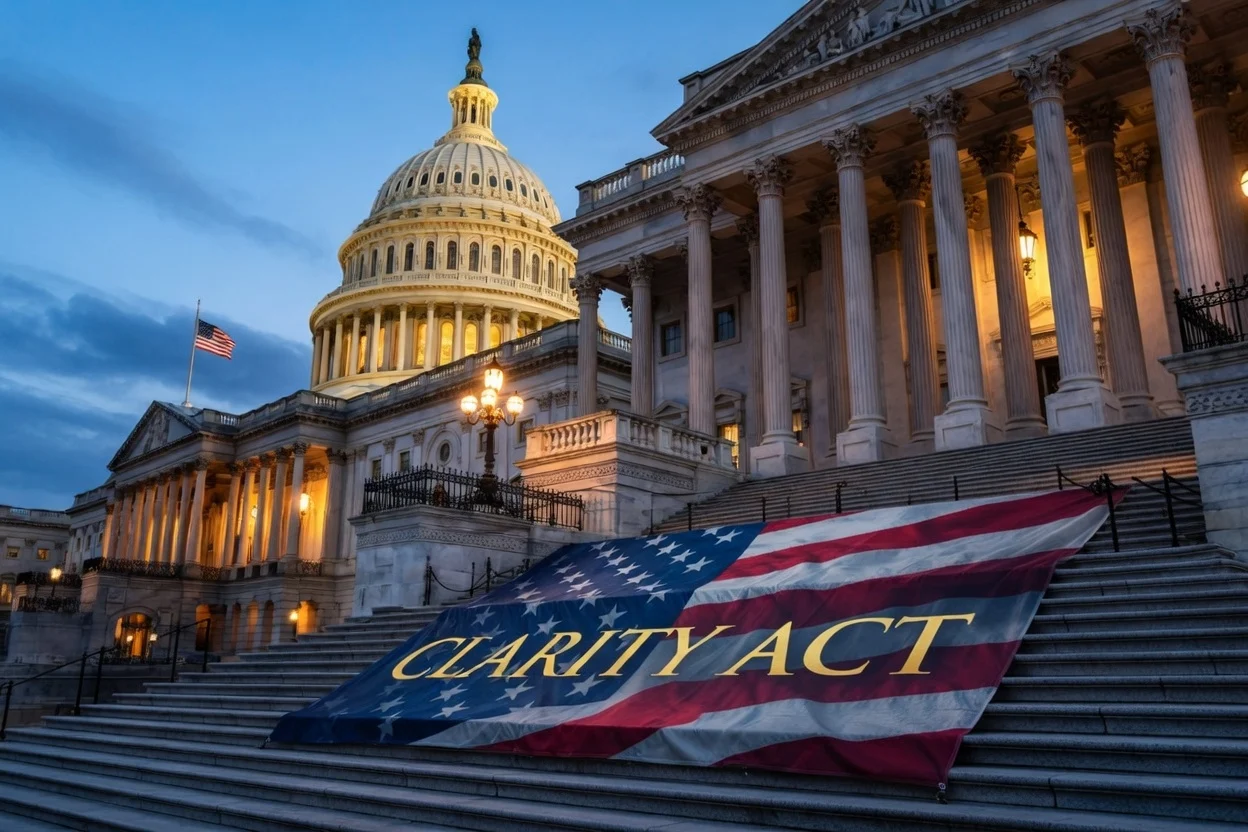
Cryptocurrency market structure legislation known as the CLARITY Act is advancing toward a critical Senate decision following fresh polling data that demonstrates widespread public approval across political affiliations.
Recent findings from a HarrisX poll surveying 2,008 registered voters nationwide indicate majority support at 52%, drawing endorsement from members of all three major political groups. Opposition registers at merely 11%.
The polling data additionally reveals that 70% of respondents feel congressional action on digital asset regulation is overdue. A substantial 62% expressed that American leadership in establishing worldwide standards for digital finance holds significant importance.
During her appearance at Miami’s Consensus 2026 conference, Kara Calvert, who serves as Vice President of US Policy at Coinbase, indicated expectations for the Senate Banking Committee to conduct markup proceedings potentially as soon as the following week.
Crypto reporter Eleanor Terrett has shared information suggesting the committee intends to schedule the markup for voting on May 14.
According to Calvert, achieving passage requires a minimum of 60 Senate votes, necessitating Democratic participation.
“That means you need Democrats. You need a bipartisan bill, and we have all been working really hard to make sure that bipartisanship holds,” she said.
Democratic Backing Remains Uncertain
While public sentiment appears favorable, the legislation has yet to achieve comprehensive bipartisan endorsement within the Senate Banking Committee itself. Though Committee Chairman Tim Scott has expressed intentions to move the legislation forward with cross-party cooperation, Democratic committee members may unanimously oppose it.
Democratic Senator Kirsten Gillibrand has indicated the legislation faces dim prospects without incorporating ethics-related language. Democratic lawmakers are advocating for such provisions to address concerns surrounding President Trump’s cryptocurrency-related commercial ventures.
Senator Elizabeth Warren, serving as a senior Democrat on the Senate Banking Committee, continues her opposition to the proposed legislation.
The CLARITY bill experienced delays in January following Coinbase’s decision to withdraw endorsement, expressing reservations about protections for open source software, restrictions on stablecoin yield generation, and decentralized finance regulatory frameworks.
Taxation Framework Poses Institutional Obstacles
Calvert identified ambiguous tax policies as the primary impediment to institutional cryptocurrency adoption, surpassing even market structure regulatory concerns.
Current IRS regulations mandate that cryptocurrency platforms file 1099-DA forms documenting every transaction, regardless of transaction size.
“We’re sending out millions of 1099-DA’s for things like $1 transactions — that makes zero sense,” Calvert said.
She conveyed optimism that tax policy reforms might progress through congressional channels during 2026. She referenced the Digital Asset PARITY Act, presented by Representatives Max Miller and Steven Horsford this past March, as an illustration of reform initiatives under consideration.
Senator Cynthia Lummis responded to the polling results by emphasizing that American voters have clearly expressed their desire for the nation to assume a leadership position in digital assets.
Senator Bernie Moreno, who successfully challenged cryptocurrency opponent Sherrod Brown during the 2024 election cycle, maintains optimism that President Trump could enact the CLARITY Act into law as early as Independence Day.

