



TLDR
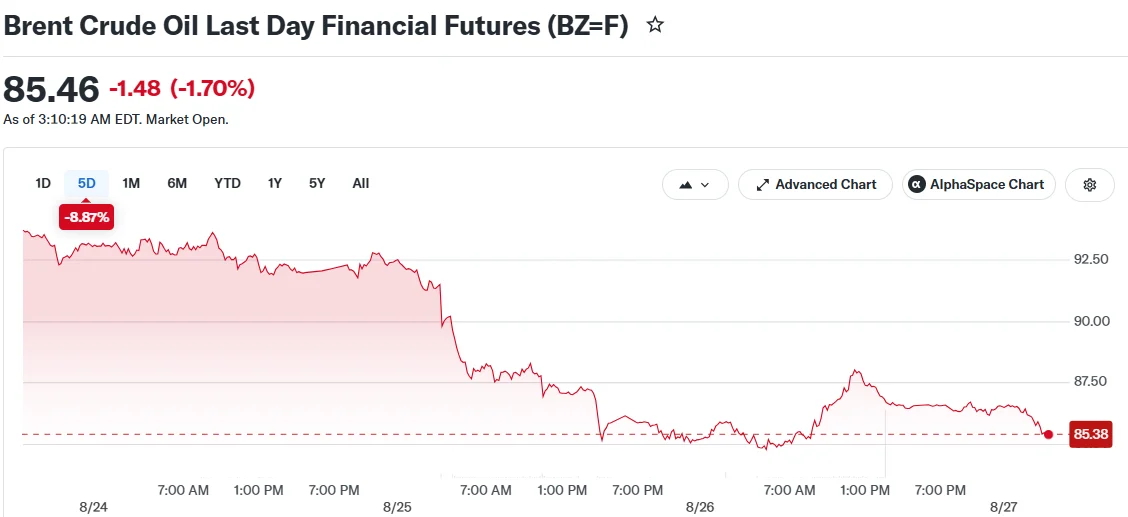
- Brent crude declined 2.5% to reach $86.38 per barrel while WTI slipped 2.2% to $80.53
- Foreign ministers from Iran and Oman held discussions on a provisional plan to restore Strait of Hormuz access
- The nations committed to collaborative mine-clearing operations in the strategic waterway
- Crude markets have declined more than 6% during the current week amid diplomatic developments
- Escalating Russia-Ukraine conflict poses additional threats to worldwide petroleum supply
Crude oil markets extended their losing streak to a third consecutive session Tuesday following diplomatic discussions between Iran and Oman that sparked optimism about restoring access to the Strait of Hormuz, potentially alleviating worldwide supply concerns.
Brent crude futures for October delivery retreated 2.5% to settle at $86.38 per barrel. West Texas Intermediate declined 2.2% to close at $80.53, having briefly traded beneath the $80 threshold during intraday activity. Both benchmark contracts were headed toward their weakest closing levels in approximately two weeks.
The downward pressure intensified after Iran and Oman announced that their respective foreign ministers convened in Tehran to discuss a provisional arrangement for reopening the Strait of Hormuz. Before regional hostilities disrupted transportation, the strategic waterway facilitated approximately 20% of global crude shipments.
According to a joint communiqué released by both nations, the preliminary framework would create a provisional maritime passage through the contested waters. Additionally, the countries pledged cooperative efforts to remove explosive devices from the strait.
Hormuz Deal Still Has Hurdles
President Trump posted on Truth Social claiming the U.S. Navy had successfully eliminated or destroyed all explosive devices throughout the strait. Market observers have expressed skepticism regarding this assertion.
Diplomatic exchanges between Oman and Iran will persist, according to the joint announcement, with objectives including establishing a lasting shipping lane and determining future governance of the waterway.
However, energy analysts at ING cautioned that even successful negotiations between Oman and Iran wouldn’t immediately restore petroleum flows to pre-conflict volumes. They emphasized that the United States would need to terminate its naval blockade of Iranian maritime facilities and relax economic restrictions before meaningful normalization could occur.
Washington imposed enhanced economic penalties on Iran during the opening days of this week and issued warnings to other nations about conducting commerce with Tehran. Iranian officials accused the United States of deliberately undermining progress toward a Hormuz arrangement with Oman.
Nonetheless, Russian government-controlled media outlets reported that Washington and Tehran had finalized a fresh ceasefire agreement scheduled for announcement within days. Pakistan, serving as a regional intermediary, similarly indicated that reconciliation discussions were advancing positively.
Axios disclosed that approximately 40 vessels successfully navigated the strait during the past weekend. American diplomatic personnel are also allegedly preparing to return to Middle Eastern locations.
Russia-Ukraine Conflict Adds Supply Risk
Oil’s weekly downturn persisted despite emerging intelligence suggesting potential supply interruptions in other regions. Moscow is allegedly contemplating intensified ballistic projectile strikes against Kyiv and critical infrastructure following assessments that peace negotiations have reached an impasse.
Ukrainian forces have historically responded to Russian military actions by targeting Moscow’s energy facilities and petroleum processing installations. Any intensification of hostilities could compound existing strain on international supply networks.
U.S. CIA Director John Ratcliffe allegedly journeyed to Moscow during the current week for consultations with Russian government representatives. The specific topics discussed during those meetings remained undisclosed at publication time.
Maritime tracking information indicated that vessel traffic through Hormuz continues significantly below pre-conflict volumes notwithstanding the ongoing diplomatic activities.
Get 3 Free Stock Ebooks
Discover top-performing stocks in AI, Crypto, and Technology with expert analysis.
- Top 10 AI Stocks - Leading AI companies
- Top 10 Crypto Stocks - Blockchain leaders
- Top 10 Tech Stocks - Tech giants


