



TLDR
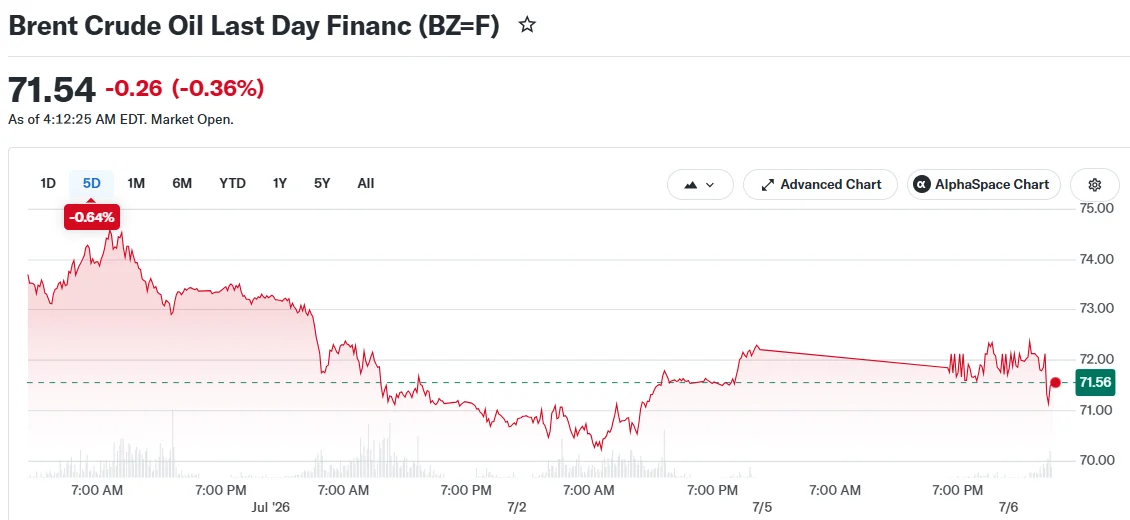
- Brent crude decreased more than 1% to reach $71.10 per barrel on Monday
- OPEC+ members decided to increase production by 188,000 barrels daily starting in August
- Strait of Hormuz shipping traffic is normalizing following the interim US-Iran peace agreement
- Analysts project global oil demand will decline by 1.5 million barrels per day in 2026
- Citigroup analysts warn Brent could drop to $60 per barrel before year-end
Crude oil markets experienced downward pressure Monday following OPEC+’s decision to expand production and the continued normalization of tanker traffic through a critical Middle Eastern shipping route.
Brent crude declined $1.02, representing a 1.41% drop, settling at $71.10 per barrel. US West Texas Intermediate fell 80 cents to close at $67.89. Both major benchmarks have faced sustained downward momentum over recent weeks.
The OPEC+ coalition, spearheaded by Saudi Arabia and Russia, reached an agreement Sunday to expand collective production quotas by 188,000 barrels daily beginning in August. This move follows comparable production increases already scheduled for June and July.
The alliance has been systematically unwinding the production cuts implemented in earlier years. Seven prominent member countries supported the most recent output expansion.
Hormuz Shipping Slowly Coming Back Online
The Strait of Hormuz experienced a complete halt in tanker operations during the US-Israeli military conflict with Iran. This disruption effectively limited actual production from critical exporters such as Saudi Arabia, Kuwait, and Iraq, rendering significant portions of the OPEC+ production increases theoretical rather than practical.
Petroleum and liquefied natural gas transportation through a US-secured passage in the strategic waterway demonstrated signs of recovery on Sunday. The previous day witnessed several vessels making unexplained course reversals within the corridor before ultimately continuing their intended routes.
Gulf region oil shipments in June surged by more than 3 million barrels compared to May, surpassing 10 million barrels daily. Despite this improvement, current volumes remain 40% beneath pre-conflict levels.
Brent crude experienced a dramatic 30% collapse during the second quarter after Washington and Tehran finalized an interim peace agreement, enabling a phased restoration of Hormuz shipping operations.
Supply Climbing as Demand Falls
ANZ Bank currently forecasts global oil demand will shrink by 1.5 million barrels daily in 2026. Year-over-year decreases could potentially reach 4 million barrels per day during the second quarter according to preliminary figures.
PVM market analysts observed that producers are “selling into a falling market, offering little hope of an imminent price recovery.”
Abu Dhabi National Oil Company has liquidated approximately 16 million barrels of crude through expanded discounts in spot market auctions since June, signaling a substantial increase in available inventory.
Russian western port crude shipments reached unprecedented levels in June and are projected to maintain that pace through July. Ukrainian drone attacks targeting Russian refineries have compelled Moscow to export greater volumes of unprocessed crude rather than refining it domestically.
Market structure indicators are also shifting bearish. Timespreads for both Brent and Dubai have transitioned into contango conditions, where near-term contracts trade at discounts relative to deferred contracts. Numerous physical crude varieties are also selling below benchmark reference prices.
Citigroup has identified the potential for Brent to decline to $60 per barrel by year-end should current supply expansion and demand weakness trends persist.

