



Key Highlights
- Brent crude plummeted more than 9% over two trading sessions, sliding from levels above $100 to approximately $87 per barrel
- President Trump halted aerial bombardments against Iran, pointing to active diplomatic negotiations as the reason
- Transit through the Strait of Hormuz continues at drastically reduced levels, with under 10 vessels navigating daily
- Tehran suspended counter-strikes following Washington’s military pause; Beijing is reportedly facilitating back-channel diplomacy
- Energy experts caution that the truce remains informal and actual crude shipments face severe limitations
Crude oil markets have experienced significant downward pressure as optimism builds around potential diplomatic resolution between Washington and Tehran, alleviating concerns over prolonged supply interruptions from the Middle East region.
Brent crude experienced a steep decline exceeding 9% over two consecutive trading days, retreating from prices north of $100 per barrel recorded last week to approximately $87.24 by Tuesday. Meanwhile, U.S. West Texas Intermediate also registered substantial losses, closing at $82.61 on Monday — marking its weakest point since mid-July.
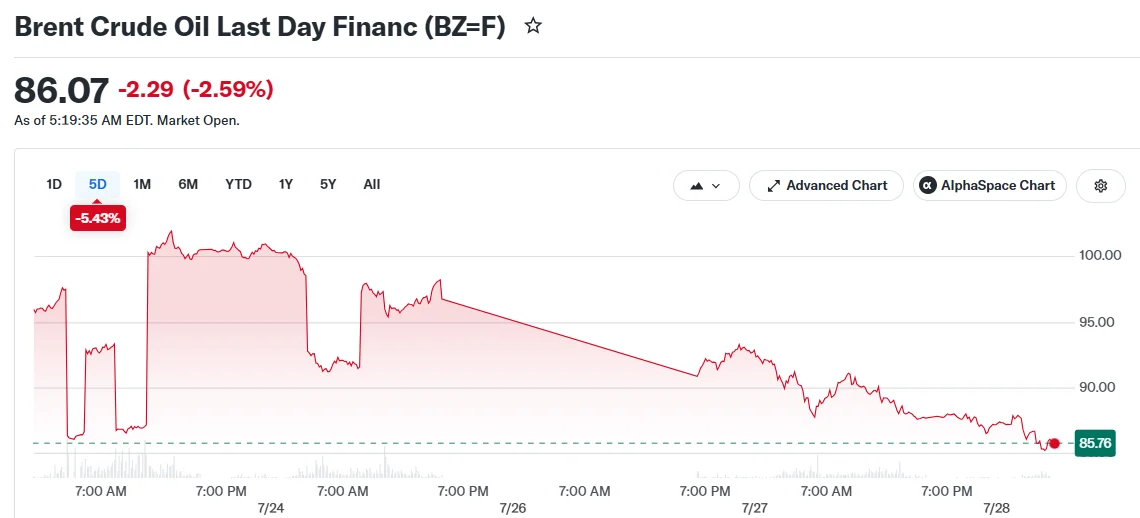
The market downturn accelerated after President Donald Trump announced a temporary suspension of American military operations against Iran during the weekend to create space for negotiation efforts.
Speaking Monday, Trump characterized ongoing discussions with Iran as “good talks,” suggesting there exists “a good chance that something could happen.” He simultaneously cautioned that “strong military action” would follow should diplomatic channels prove unsuccessful.
Tehran responded to Washington’s military cessation by suspending its own planned retaliatory operations. Intelligence reports further suggest that Chinese officials have been actively engaged in discrete efforts to facilitate renewed communication between the adversaries.
Strait of Hormuz Traffic Remains Severely Constrained
While market sentiment has improved, actual oil flows through critical maritime chokepoints continue operating far beneath typical capacity.
Maritime tracking data from Kpler indicates that fewer than 10 commercial cargo vessels successfully transited the Strait of Hormuz each day throughout the weekend. Industry analysts estimate current flows have collapsed to approximately 15% of pre-conflict volumes, dramatically down from the standard throughput of roughly 20 million barrels daily.
“A political pause doesn’t put a single extra barrel on the water right here and now,” said Ole Hvalbye, market analyst at SEB Research.
Vessel movements through the Bab el-Mandeb strait similarly remain suppressed following Houthi militia attacks on Saudi petroleum facilities positioned along Red Sea territories, compelling shipping companies to adopt lengthier and substantially more expensive alternative routes.
Representatives from Iran and Oman are pursuing ongoing negotiations focused on reestablishing normal shipping operations through the Strait of Hormuz, a waterway that typically handles approximately one-fifth of worldwide petroleum transport.
Market Experts Caution Against Premature Optimism
Energy market specialists warn that price instability will persist until formal agreements are reached — rather than relying solely on unofficial combat pauses.
“The market seems to be forever seeking good news from an arena that really is not providing any,” said PVM analyst John Evans. He said oil futures will only fall further if high prices dent demand, not because of “questionable mini-ceasefires.”
IG senior market analyst Tony Sycamore noted that the recent selloff demonstrates increasing market confidence in a potential conflict resolution, while emphasizing that the current cessation remains extremely precarious.
Should negotiations collapse, or if renewed assaults target Saudi export infrastructure, the geopolitical risk premium embedded in crude prices could rapidly resurface.
In related developments, Kazakhstan’s primary petroleum export facility at the Caspian Pipeline Consortium restarted loading operations following disruptions caused by Ukrainian drone strikes, providing some relief to immediate supply constraints.
Get 3 Free Stock Ebooks
Discover top-performing stocks in AI, Crypto, and Technology with expert analysis.
- Top 10 AI Stocks - Leading AI companies
- Top 10 Crypto Stocks - Blockchain leaders
- Top 10 Tech Stocks - Tech giants


