


Quick Summary
- Dogecoin features unlimited supply issuance with approximately 5 billion new coins entering circulation annually
- January 2026 saw the 21Shares Dogecoin ETF commence trading on Nasdaq
- Tesla has integrated DOGE as an accepted payment method for qualifying transactions
- Significant supply concentration exists among major wallet holders and custodial services
- DOGE functions effectively for low-fee transactions but offers limited value-accrual mechanisms
Since its 2013 inception, Dogecoin has maintained its position as one of cryptocurrency’s most widely recognized digital assets. The project began as satire but evolved into a coin commanding genuine market liquidity, universal exchange listings, and brand awareness that rivals any blockchain project.
Yet name recognition and investment merit are two entirely different considerations.
Dogecoin operates on a proof-of-work consensus mechanism utilizing Scrypt hashing algorithms, with blocks generated approximately every sixty seconds. Each block produces a static reward of 10,000 DOGE. Contrasting sharply with Bitcoin, Dogecoin implements no maximum supply threshold. Official project documentation explicitly confirms continuous annual issuance totaling 5 billion tokens.
Given the current circulating supply hovering near 150 billion DOGE, this translates to approximately 3.3% to 3.5% supply expansion annually. While this inflation rate gradually decreases proportionally over time, the issuance mechanism operates in perpetuity.
Continuous Inflation Creates Investment Headwinds
This perpetual token generation represents the fundamental obstacle facing long-term investors. Constant supply expansion requires proportional demand growth merely to maintain price equilibrium. DOGE advocates contend that predictable issuance promotes transactional usage over speculative accumulation. Skeptics maintain it establishes an inherent cap on appreciation potential.
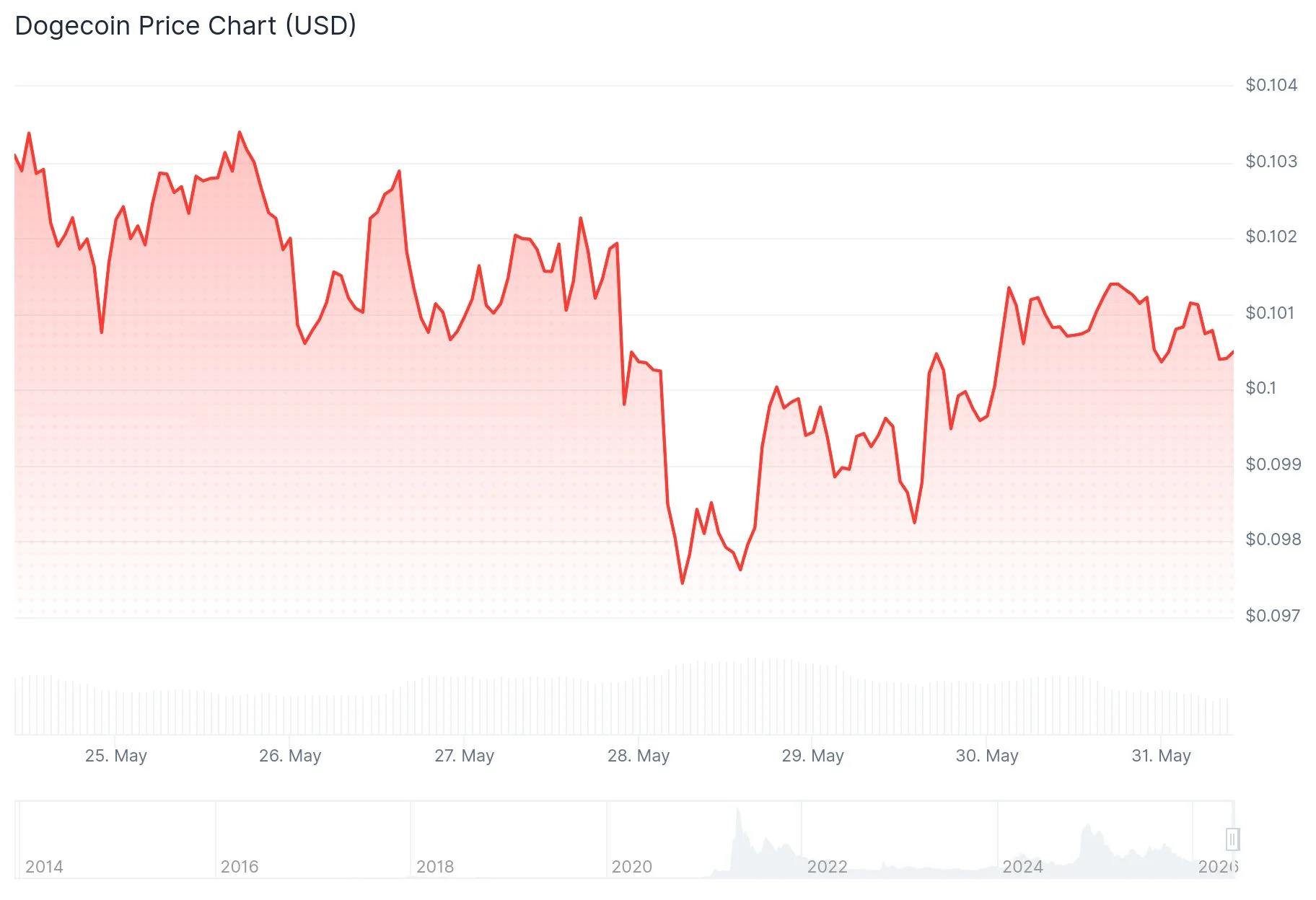
CoinGecko data indicates the current valuation sits approximately at $15.5 billion market capitalization.
On the favorable side, Dogecoin delivers exceptional transaction affordability. Standard miner fees default to 0.01 DOGE per kilobyte, enabling the low-cost payment functionality central to its use case. The Dogecoin Foundation has actively developed infrastructure including GigaWallet and Libdogecoin to streamline merchant adoption.
Tesla’s published support documentation verifies the company processes Dogecoin for qualified merchandise purchases. While not representing widespread commercial adoption, this constitutes verifiable real-world utility.
Traditional Finance Access Opens New Channels
January 2026 marked the 21Shares Dogecoin ETF launch on Nasdaq, confirmed through Nasdaq’s official circular and corresponding SEC documentation. This development provides conventional investors with regulated DOGE exposure through existing brokerage infrastructure, eliminating direct cryptocurrency custody requirements.
While this expansion doesn’t alter Dogecoin’s core economics, it substantially broadens the potential investor base.
Wallet concentration patterns continue raising questions. BitInfoCharts analytics reveal substantial holdings concentrated within large addresses. Although some wallets likely represent exchange cold storage, the concentration exists and can magnify volatility during significant trading activity.
DOGE lacks a fee-generating application ecosystem that captures value and redistributes it to token holders as exists on competing platforms. Its valuation depends primarily on payment utility, cultural momentum, and speculative trading volume.
The 21Shares ETF commencing Nasdaq trading in January 2026 represents the most significant recent development impacting traditional investor access to Dogecoin exposure.

