



TLDR
- The Dow Jones Industrial Average declined for three consecutive trading sessions as Treasury yields surged to their highest points in over a decade.
- The benchmark 10-year Treasury yield jumped to 5.223%, matching levels last observed in June 2007.
- Energy markets rallied sharply, with Brent crude surpassing $106 per barrel while WTI crude settled near $94.61 per barrel.
- Market participants now assign a nearly 71% probability to another Federal Reserve rate increase in October.
- Oracle stock declined 3.5% following reports about potential complications with a New Mexico data center development.
US stocks faced renewed headwinds this week as escalating bond yields continued to weigh on market sentiment. The Dow Jones Industrial Average recorded its third consecutive decline on Thursday, falling 161.61 points, or 0.31%, to settle at 51,349.98.
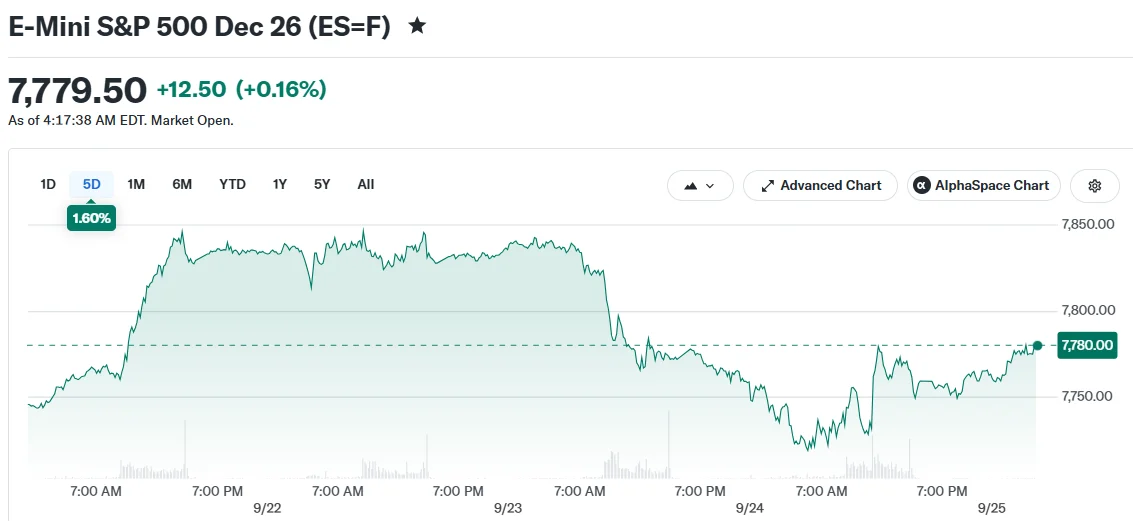
The S&P 500 edged down 0.02% to finish at 7,704.13. Meanwhile, the Nasdaq Composite posted a marginal advance of 0.01%, ending the session at 26,939.37.
Treasury Yields Climb to Levels Not Seen Since 2007
The primary catalyst driving market weakness remains the fixed income market. The 30-year Treasury bond yield surged to 5.501%, marking its highest level since June 2004.
Meanwhile, the benchmark 10-year Treasury yield, a critical indicator for mortgage rates and broader borrowing costs, advanced to 5.223%. This represents the steepest level recorded since June 2007. The 2-year Treasury yield similarly climbed, touching 4.941%.
These elevated yields translate into increased borrowing costs for both consumers and corporations. The timing is particularly challenging as many American families are simultaneously grappling with elevated energy expenses.
As bond yields advanced, market expectations for additional Federal Reserve tightening intensified. Data from the CME FedWatch tool indicates traders now assign approximately 71% probability to another rate hike in October. This marks a significant increase from roughly 55% just one week prior.
Jason Stephens, founder of Evertern Wealth, emphasized that the bond market deserves the closest scrutiny at present. He noted that the critical question isn’t simply whether the Fed will raise rates once more, but rather how extended the period of elevated rates will prove to be.
According to Stephens, a 10-year Treasury yield sustained above 5% has implications for the housing sector, corporate financing costs, private equity markets, and equity market valuations in the longer term.
Energy Markets Rally While Economic Indicators Remain Robust
Oil prices registered substantial gains throughout the week. Brent crude, the global pricing benchmark, advanced more than 3% to settle above $106 per barrel. Meanwhile, US West Texas Intermediate crude climbed 2.7% to finish at $94.61 per barrel.
Stephens identified energy as one of the most significant variables in the current market environment. He noted that any rapid movement in crude prices linked to geopolitical tensions in the Middle East has direct implications for inflation expectations and monetary policy considerations.
Notwithstanding the market turbulence, economic activity indicators continue to signal strength. This week’s S&P Global purchasing managers’ index readings for both manufacturing and services sectors demonstrated ongoing expansion in the American economy.
Stephens characterized the present situation as somewhat paradoxical. Market participants are expressing concern about interest rates precisely because economic performance remains solid, rather than showing signs of deterioration.
Oracle emerged as one of Thursday’s most significant decliners. The stock retreated 3.5% after Bloomberg News disclosed that the technology company was invoking force majeure provisions to shield itself from potential delays affecting a New Mexico data center development.
By Friday morning, US equity futures showed stability. Futures contracts linked to the Dow and S&P 500 posted modest gains, while Nasdaq-100 futures advanced 0.2%.
Energy prices pulled back modestly on Friday, with WTI crude futures declining to $92 per barrel and Brent crude trading around $105 per barrel. The national average for gasoline prices hovered near $4.50.
A consumer sentiment report from the University of Michigan is scheduled for release Friday. This data will provide updated insights into American consumer perceptions regarding inflation as the autumn season begins.
Get 3 Free Stock Ebooks
Discover top-performing stocks in AI, Crypto, and Technology with expert analysis.
- Top 10 AI Stocks - Leading AI companies
- Top 10 Crypto Stocks - Blockchain leaders
- Top 10 Tech Stocks - Tech giants


