


Key Takeaways
- Shares of FedEx plummeted 7.6% in premarket hours to $293.12 even after surpassing Q4 earnings projections
- Fourth quarter results showed $25B in revenue with adjusted earnings per share of $6.31, exceeding analyst forecasts of $24B and $5.96
- Annual adjusted EPS reached $20.24 for the fiscal year, above the Street’s $19.86 projection
- Guidance for calendar 2026 calling for EPS between $16.90 and $18.10 fell short of investor expectations
- The freight business spinoff completed June 1 stripped approximately $80 per share from FedEx’s valuation and creates analytical challenges
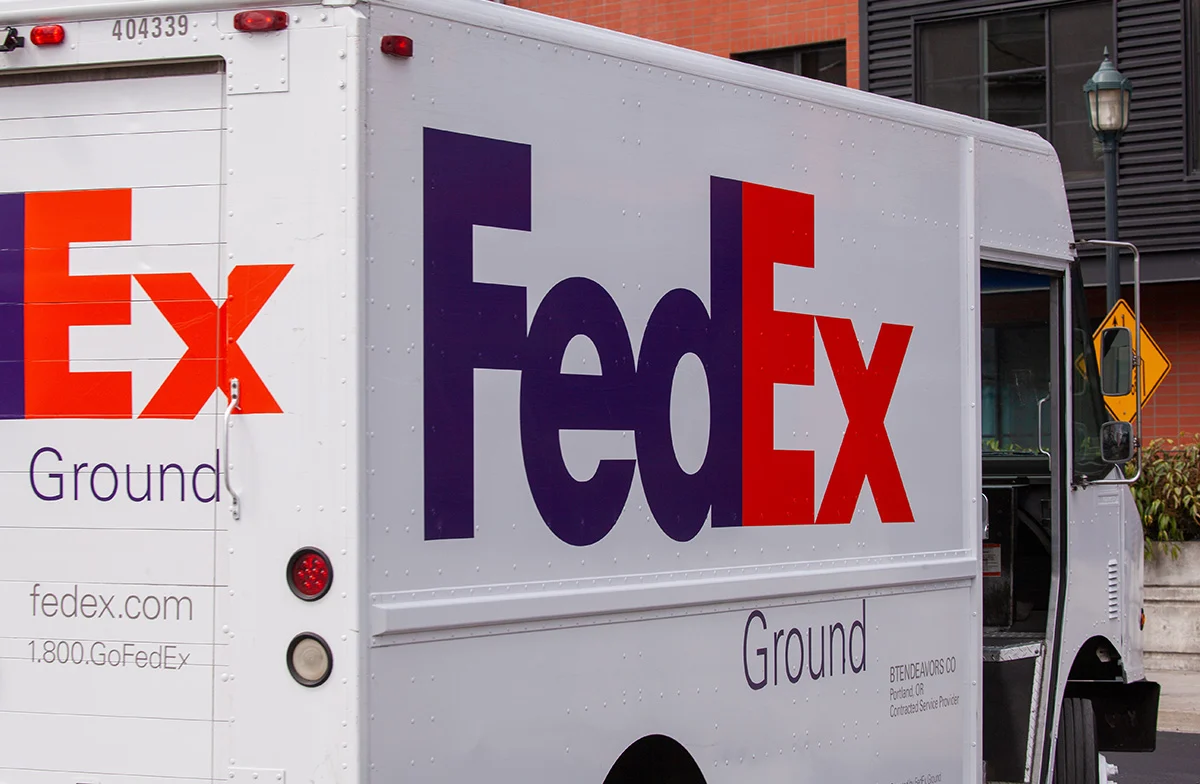
Despite delivering quarterly results that exceeded Wall Street projections across the board, FedEx shares faced a harsh punishment from investors. The stock plunged 7.6% during Wednesday’s premarket session to $293.12, following a 3.5% decline to $317.24 in Tuesday’s regular trading.
The shipping giant reported fourth quarter revenue of $25 billion, surpassing the Street’s $24 billion consensus forecast. Adjusted earnings per share of $6.31 similarly beat expectations of $5.96. Looking at the complete fiscal year through May, adjusted EPS totaled $20.24, outperforming both the analyst consensus of $19.86 and the company’s own projected range of $19.30 to $20.10.
What triggered the steep decline?
Management transitioned to calendar-based reporting and provided initial projections under this new framework. The company anticipates 11% revenue expansion compared to 2025, with adjusted EPS projected between $16.90 and $18.10 for calendar year 2026. This represents a notable decrease from the $20.24 fiscal year result, leaving analysts scrambling to recalibrate their financial models for meaningful comparisons.
“It will be difficult to judge numbers for a few quarters given the noise, but focus will be on fundamental debates,” Morgan Stanley analysts said.
Trucking Division Separation Reshapes Financial Picture
On the first day of June, FedEx completed the separation of FedEx Freight, its less-than-truckload division, into an independent publicly traded entity. Existing shareholders obtained one FedEx Freight share for every two shares of the parent company they owned. This corporate action effectively removed roughly $80 from FedEx’s share price, which had been hovering around $411 in late May.
The separation eliminates what had evolved into a lucrative yet increasingly challenging business segment. In the company’s March quarterly report, the freight division generated $1.991 billion of FedEx’s $24 billion total revenue.
Melius Research, maintaining a buy rating on FDX, characterized the restructured entity as “a cleaner, more focused parcel business,” noting that the freight operation “had become a clear headwind to overall profitability.”
Profitability Challenges Within Express Operations
The streamlined corporate structure arrives with complications. Operating margins within FedEx’s Federal Express division contracted to 7.7%, declining from 8.4% in the prior year period. Elevated expenses for workforce compensation, benefits, third-party transportation services, and fuel all contributed to margin compression.
Shipment volumes have suffered following the elimination of duty-free “de minimis” treatment for inexpensive e-commerce packages from Chinese-based retailers including Shein and Temu. Evolving U.S. trade regulations and escalating fuel expenses connected to Middle East tensions have compounded these challenges.
J.P. Morgan acknowledged the optics, noting that “FedEx could experience an overhang during the time it will take for the market to sort through the different moving pieces.”
The separated FedEx Freight entity, now trading under ticker FDXF, gained 3.44% on Wednesday. Rival UPS, confronting similar volume pressures, declined 1.31%.
FedEx currently commands a valuation of 14.68 times anticipated forward 12-month earnings, marginally above UPS at 14.05.
Get 3 Free Stock Ebooks
Discover top-performing stocks in AI, Crypto, and Technology with expert analysis.
- Top 10 AI Stocks - Leading AI companies
- Top 10 Crypto Stocks - Blockchain leaders
- Top 10 Tech Stocks - Tech giants


