


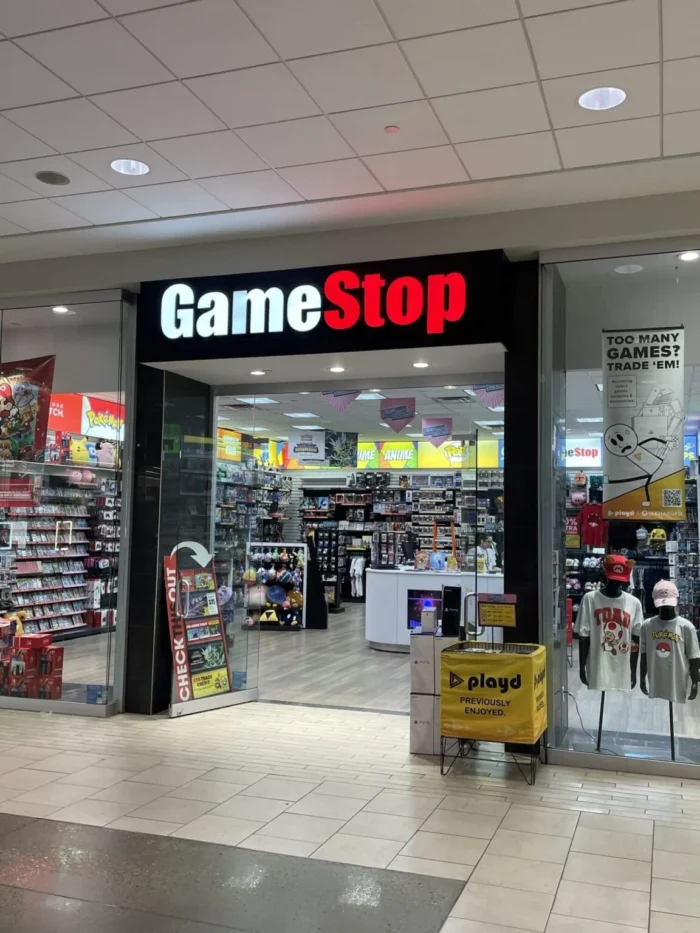
Key Highlights
- Ryan Cohen, GameStop’s CEO, acquired 1,150,680 shares at an average cost of $22.94 per share, totaling approximately $26.4 million
- Board member Alain Attal purchased 17,500 shares at $22.97, investing $401,975, following an earlier $100,000 purchase in September
- Shares climbed 3.2% in after-hours trading on news of the insider transactions
- The company’s latest quarterly earnings showed EPS of $0.27, meeting projections; sales reached $790.2 million, surpassing forecasts despite an 18.7% annual decline
- Wall Street analysts currently assign an average “Hold” recommendation to GameStop shares
GameStop (GME) shares advanced 3.2% during after-hours trading on Monday following the disclosure that CEO Ryan Cohen acquired $26.4 million worth of company stock.
On September 21, Cohen purchased 1,150,680 shares at a weighted average of $22.94 each. The transactions occurred at prices ranging between $22.76 and $23.02. Following this acquisition, Cohen’s direct ownership has grown to 40,498,522 shares, representing a position worth roughly $174.98 million.
The transaction has reignited interest in a stock that’s been steadily attracting insider confidence.
Cohen wasn’t alone in his bullish stance. Board member Alain Attal executed two separate purchases recently. On September 10, he acquired 5,000 shares at $20.00 each, investing $100,000. Ten days later, on September 21, he added 17,500 shares at $22.97, committing an additional $401,975. Attal’s total position now stands at 618,964 shares, marking a 2.91% uptick.
During Monday’s regular session, GME traded at $22.82, registering a gain of $0.18. Trading volume reached 9.5 million shares, exceeding the typical average of 7.67 million.
Latest Quarterly Results
GameStop unveiled its quarterly financial performance on September 8. Earnings per share registered at $0.27, aligning with Wall Street’s forecasts. Sales totaled $790.2 million, exceeding the consensus projection of $756.85 million.
Despite topping revenue estimates, the figure represented an 18.7% decline from the corresponding period last year. The previous year’s quarter delivered EPS of $0.31. The company currently shows a return on equity of 13.57% and maintains a net margin of 25.16%.
GameStop’s shares trade at a price-to-earnings multiple of 15.01, with a market capitalization of $11.51 billion and a volatility beta of 1.72. The 50-day moving average is positioned at $20.05, while the 200-day average rests at $21.89. Over the past year, shares have fluctuated between $17.79 and $28.10.
Street Sentiment and Institutional Activity
Analyst sentiment remains measured. Weiss Ratings and Wall Street Zen both maintain “Hold” ratings on the stock. Notably, Wall Street Zen downgraded GameStop from “Buy” to “Hold” on September 7.
Regarding institutional activity, Rockefeller Capital Management expanded its GME holdings by 805.6% during the fourth quarter, while multiple other investment firms established fresh positions earlier this year. Institutional investors collectively control 29.21% of outstanding shares.
On September 17, Jim Cramer offered a favorable view on GameStop, citing the company’s profitability, substantial cash position, and ongoing transformation efforts as reasons to consider buying.
Unconfirmed reports have circulated suggesting Keith Gill, widely recognized as “Roaring Kitty,” might be re-engaging with the stock. However, no substantiated business development has been linked to these rumors.
With the 50-day moving average at $20.05 sitting considerably below the current trading price, recent buying activity appears to have lifted GME above its near-term technical support. The company maintains a current ratio of 8.72 alongside a debt-to-equity ratio of 0.68.
Get 3 Free Stock Ebooks
Discover top-performing stocks in AI, Crypto, and Technology with expert analysis.
- Top 10 AI Stocks - Leading AI companies
- Top 10 Crypto Stocks - Blockchain leaders
- Top 10 Tech Stocks - Tech giants


