



Key Takeaways
- Bullion plunged 3% Monday, reaching a seven-week bottom at $4,156.45 per ounce.
- Surging crude oil costs linked to Iran-US tensions over the Strait of Hormuz are stoking inflationary pressures.
- Market participants now price in a 70.3% probability of another Fed rate increase in October.
- Silver plummeted nearly 5%, with platinum and palladium experiencing similar declines.
- Investors await this week’s PCE inflation figures and September employment data for additional guidance.
Gold prices experienced a significant downturn Monday, declining 3% to reach their weakest point in over seven weeks. Spot bullion settled at $4,156.45 per ounce, with December-delivery US gold futures dropping 3.1% to $4,188.80.
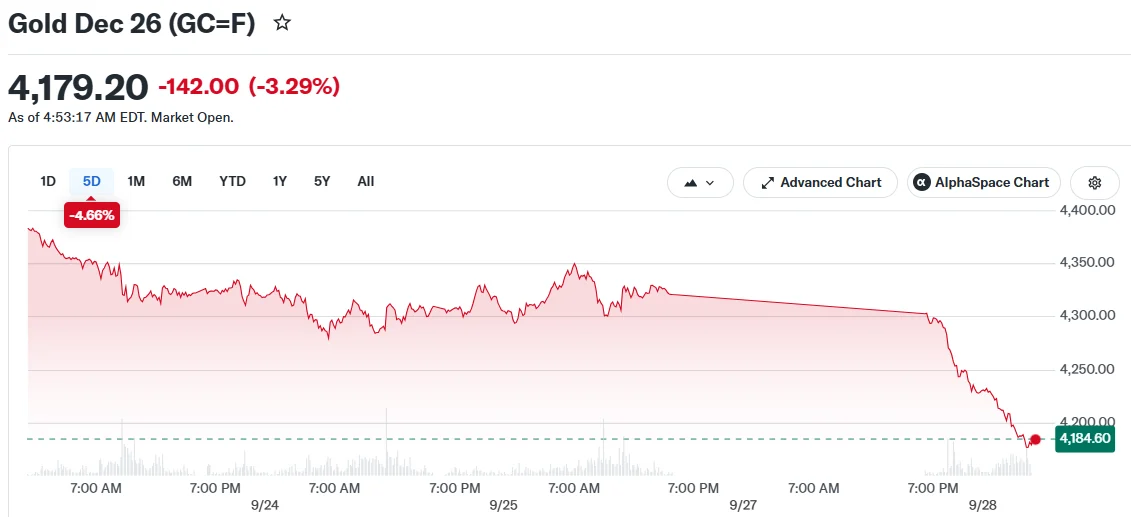
This downturn follows a previous weekly decline exceeding 2%. Elevated energy costs combined with increasing speculation about additional Federal Reserve monetary tightening are the primary factors weighing on the precious metal.
Energy Markets Rally on Iranian Conflict
Brent crude experienced a rebound following President Donald Trump’s dismissal of Iran’s peace initiative. The proposed agreement aimed to end the current dispute and reopen the Strait of Hormuz, a critical passage for worldwide petroleum shipments.
Tehran indicated it would maintain its requirements for reopening the strategic waterway. Trump mentioned he anticipates negotiations with Iran to continue this week, though the impasse persists.
The standoff between Washington and Tehran has entered its eighth month. Brent crude prices have surged approximately 70% year-to-date.
Elevated petroleum costs typically amplify inflationary pressures as they increase expenses throughout various economic sectors. This dynamic is intensifying pressure on the Federal Reserve to maintain restrictive monetary policy.
Rate Increase Probability Escalates
Market participants now estimate a 70.3% likelihood of another Federal Reserve rate hike in October, based on CME’s FedWatch Tool data. The central bank implemented a 25-basis-point increase earlier this month.
Multiple Fed policymakers have indicated additional monetary tightening may be necessary. Cleveland Fed President Beth Hammack expressed concern that prolonged elevated inflation could normalize higher prices in public perception. She emphasized the central bank must prevent this outcome.
Hammack additionally noted that long-dated Treasury yields face upward pressure from enhanced growth projections, fiscal deficit concerns, and anticipation of further rate adjustments.
Elevated borrowing costs diminish gold’s appeal among investors. Since bullion generates no interest or dividend income, fixed-income instruments offering superior returns often attract capital away from precious metals.
The greenback maintained strength Monday, raising gold costs for international purchasers. US Treasury yields continued their upward trajectory as well.
Additional precious metals declined in tandem with gold. Spot silver tumbled 4.8% to $61.17 per ounce. Platinum fell 2.4% to $1,735.88, while palladium decreased 2.2% to $1,239.60.
Notwithstanding the recent pullback, gold trades substantially below its January record peak near $5,600. The metal has oscillated between approximately $4,230 and $4,510 throughout most of this month.
Appetite for gold exchange-traded funds has remained robust. Gold ETF inventories have increased by roughly 50 tonnes this month despite price declines.
US consumer confidence deteriorated in September, dropping to a four-month nadir. Heightened anxiety regarding prices and economic conditions contributed to the decline.
Treasury Secretary Scott Bessent encouraged the Fed to maintain flexibility regarding interest rates. He suggested productivity improvements, supported partially by artificial intelligence adoption and regulatory reforms, could help contain inflationary pressures.
Market attention now turns to this week’s economic releases. Wednesday features the August PCE inflation data, the Fed’s primary inflation metric. Friday’s September employment report will provide additional insight into labor market dynamics.
These releases are anticipated to significantly influence market expectations regarding the Fed’s subsequent policy decision.
Get 3 Free Stock Ebooks
Discover top-performing stocks in AI, Crypto, and Technology with expert analysis.
- Top 10 AI Stocks - Leading AI companies
- Top 10 Crypto Stocks - Blockchain leaders
- Top 10 Tech Stocks - Tech giants


