


Key Highlights
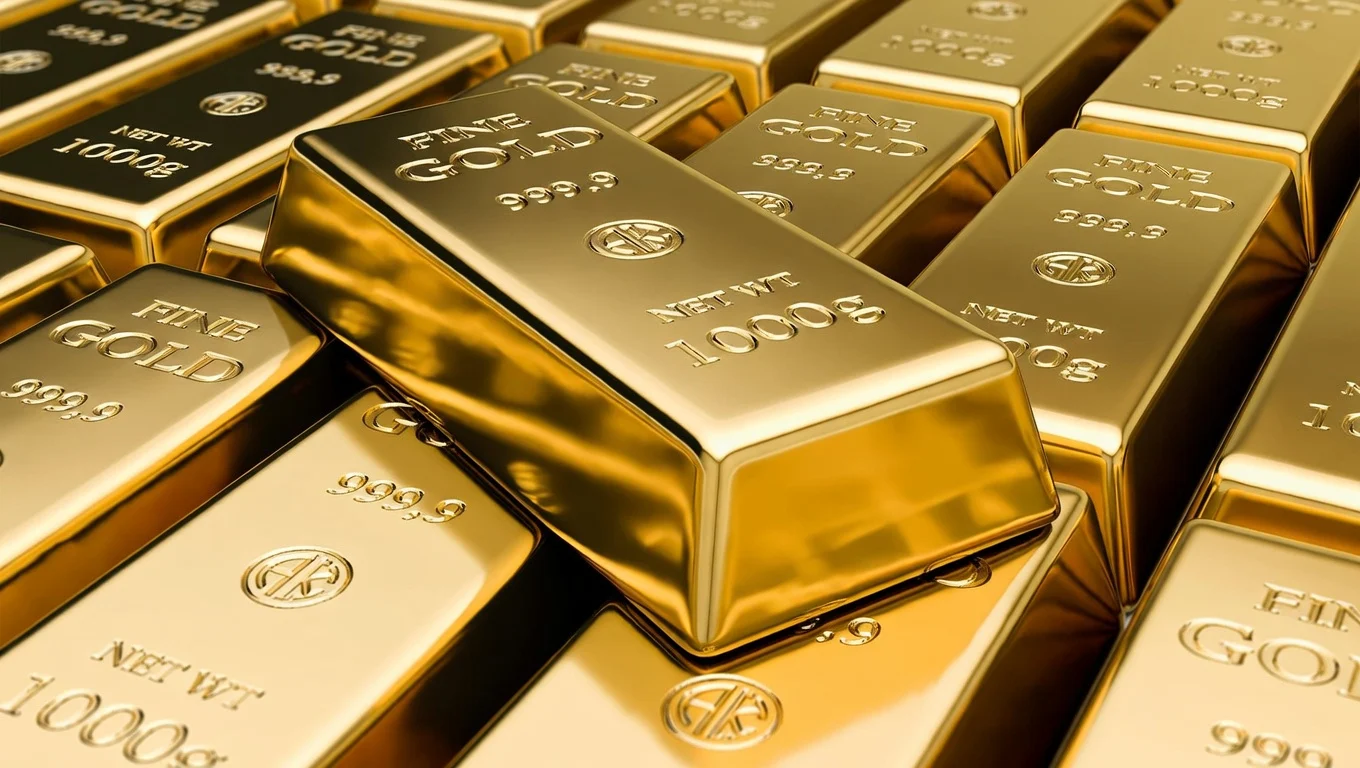
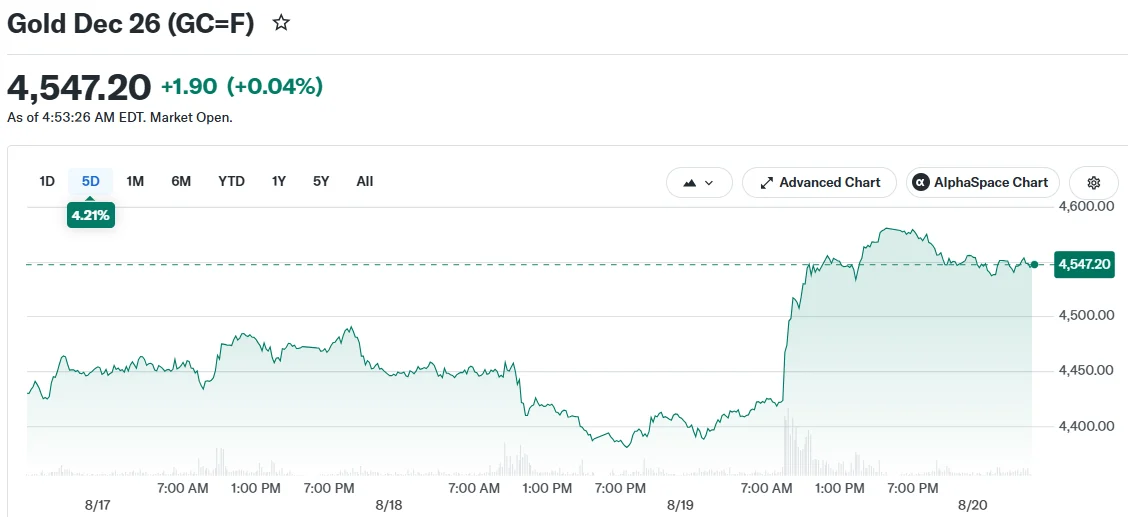
- Gold futures climbed 0.1% to reach $4,549.14, maintaining support above the $4,500 threshold following Wednesday’s 4% rally
- Treasury Department revealed plans to expand its bond-buyback initiative by at least double, resulting in declining long-term yields
- July Federal Reserve meeting records indicated multiple policymakers remain willing to implement rate increases should inflation persist
- Current market pricing suggests a 67.3% probability of no rate change at the Fed’s upcoming September policy meeting
- Recent World Gold Council research shows 45% of global central banks intend to boost their gold holdings
Precious metal markets continue to show resilience near the $4,500 per ounce mark following Wednesday’s robust performance, buoyed by declining government bond yields and dollar weakness. The yellow metal experienced minor pullback during Thursday’s early session while maintaining proximity to recent peak levels.
As of 02:37 ET, spot gold declined 0.7% to settle at $4,491.95 per ounce, whereas gold futures registered a modest 0.1% gain to $4,549.14. Silver advanced 0.1% to $67.08 per ounce, while platinum retreated 0.8% to $1,807.32.
Expanded Treasury Program Pressures Yields Lower
Wednesday’s significant price movement was primarily attributed to an unexpected Treasury Department declaration. Officials announced plans to expand certain bond-buyback operations focused on longer-maturity government securities by a minimum of twofold.
This heightened purchasing activity created downward pressure on long-term Treasury yields. Since gold generates no yield, declining rates diminish the comparative advantage of yield-bearing investments, enhancing bullion’s appeal to market participants.
The U.S. dollar remained under pressure as well. Dollar weakness enhances gold’s affordability for international purchasers utilizing alternative currencies, typically boosting overall demand.
Analysts at ANZ noted the Treasury’s decision reflects policymakers’ desire to reduce financing costs. They emphasized that looser monetary conditions typically create favorable circumstances for precious metals.
The metal had been staging a recovery after temporarily dipping to $4,000 per ounce during the previous month. ANZ highlighted resurgent institutional interest and central bank acquisitions as contributing factors to the rebound.
Central Bank Maintains Vigilance on Price Pressures
Records from the Federal Reserve’s July policy gathering painted a more reserved outlook. Multiple central bank officials expressed readiness to implement rate increases. Several policymakers suggested tightening would become necessary should inflation fail to progress toward the Fed’s 2% objective.
Capital Economics analyst Ariane Curtis noted the minutes validated the Fed’s increasingly hawkish posture since June. Nevertheless, she observed that recent inflation metrics, employment figures, and economic activity indicators have all disappointed, implying rate increases remain unlikely in the near term.
Financial markets are currently assigning a 67.3% likelihood that the Fed maintains current rates at the September policy session, versus a 32.7% probability of an increase, based on CME FedWatch data.
Elevated interest rates typically exert pressure on gold valuations by enhancing the attractiveness of yield-generating alternatives. The ongoing dynamic between Treasury’s yield-reduction efforts and the Fed’s inflation-fighting posture will likely continue shaping precious metal performance in coming months.
Federal government obligations have surpassed $40 trillion for the first time in history, Treasury Department figures confirm.
According to World Gold Council survey results, 45% of central banking institutions worldwide plan to expand their gold positions, pointing to inflation concerns and geopolitical risks as primary motivations.
Get 3 Free Stock Ebooks
Discover top-performing stocks in AI, Crypto, and Technology with expert analysis.
- Top 10 AI Stocks - Leading AI companies
- Top 10 Crypto Stocks - Blockchain leaders
- Top 10 Tech Stocks - Tech giants


