



TLDR
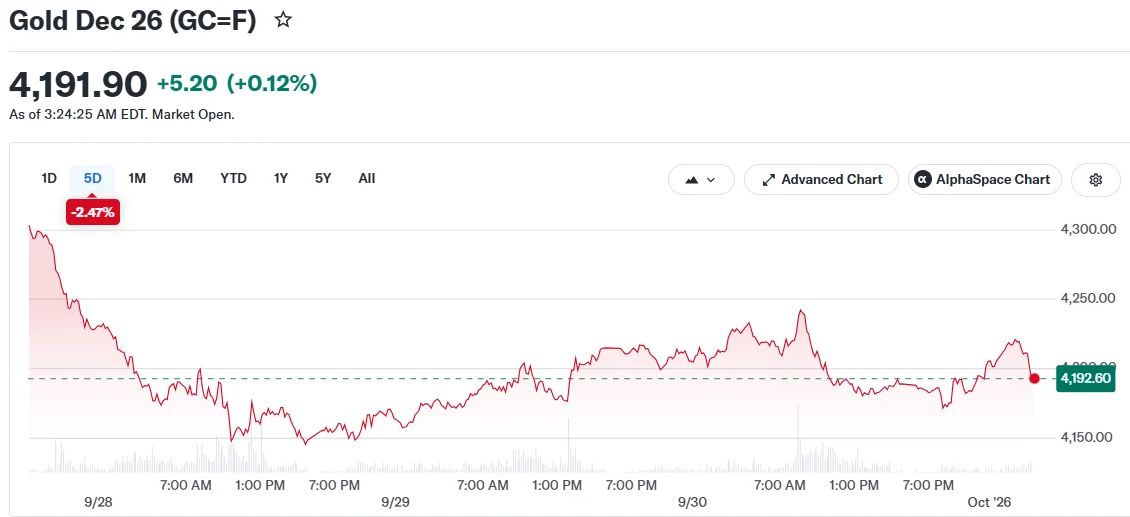
- Gold advanced 0.7% to $4,184.68 per ounce following a 6% decline in September, marking its steepest monthly loss since June
- Core PCE, the Federal Reserve’s favored inflation metric, increased 0.2% in August, missing analyst forecasts
- Market-implied probability of an October rate increase plunged to approximately 34% from nearly 70% days earlier
- Robust consumer expenditure data maintained Treasury yields at levels not seen in decades, limiting gold’s upside potential
- Market participants await Friday’s employment figures for additional insight into monetary policy direction
Gold prices posted gains on Thursday, recovering from a challenging September as fresh inflation figures provided market participants with renewed optimism.
As of 01:44 ET, spot gold appreciated 0.7% to $4,184.68 per ounce. Gold futures contracts similarly advanced 0.7%, settling at $4,214.
Other precious metals followed suit, with silver surging 1.4% to $61.27. Platinum advanced 0.5%, trading at $1,725.77.
Cooler PCE Reading Reshapes Monetary Policy Outlook
The personal consumption expenditures price index represents the Federal Reserve’s preferred inflation metric. Core PCE, which excludes volatile food and energy components, increased a modest 0.2% in August.
This figure fell short of analyst expectations. Additionally, the prior month’s data underwent a downward revision.
The milder-than-anticipated inflation reading significantly altered market sentiment regarding the central bank’s policy trajectory. Odds of an October rate increase plummeted dramatically.
Just days ago, futures markets priced in approximately 70% probability of tightening. Following Thursday’s release, that likelihood collapsed to roughly 34%.
Diminished rate hike expectations generally benefit gold. As a non-yielding asset, gold becomes less competitive when interest-bearing alternatives offer higher returns.
Resilient Consumer Activity Sustains Elevated Yields
Despite the encouraging inflation print, gold continues facing headwinds. August consumer spending accelerated at its quickest rate in more than twelve months.
This economic resilience indicates the economy may withstand restrictive monetary policy. Consequently, Treasury yields remained anchored near multi-decade peaks.
Elevated bond yields create unfavorable conditions for gold. They raise the opportunity cost of maintaining positions in non-income-producing assets.
The U.S. Dollar Index maintained strength, edging up 0.2% to 101.66. Dollar appreciation typically pressures gold by increasing its cost for international purchasers.
September proved brutal for the precious metal, which surrendered 6%. This represented its most significant monthly retreat since June.
The selloff followed the Federal Reserve’s decision to raise borrowing costs for the first time since 2023. Policymakers simultaneously indicated additional tightening remained on the table.
Sovereign bond yields climbed globally throughout September. Market participants expressed mounting concern regarding expanding government obligations and fiscal imbalances.
These anxieties inflated the term premium—the additional compensation investors require for bearing duration risk in longer-dated securities.
The broad-based yield surge undermined gold’s appeal throughout the previous month.
Attention now shifts to Friday’s employment situation report. This critical release may provide further clarity on the Federal Reserve’s rate path.
Labor market data will likely dictate near-term price action in gold markets. Investors remain highly attuned to indicators of economic momentum or deterioration.
For the moment, gold has achieved a measure of equilibrium following a turbulent period. However, persistently high yields continue exerting downward pressure on the metal.
Get 3 Free Stock Ebooks
Discover top-performing stocks in AI, Crypto, and Technology with expert analysis.
- Top 10 AI Stocks - Leading AI companies
- Top 10 Crypto Stocks - Blockchain leaders
- Top 10 Tech Stocks - Tech giants


