



Key Takeaways
- Gold has surged approximately 10% during August, marking its most robust monthly performance since January
- Federal Reserve Chair Kevin Warsh’s aggressive inflation stance catalyzed a 3.2% decline on Friday
- Futures markets currently assign a 57% probability to a September interest rate increase, creating headwinds for gold
- Escalating crude oil values following U.S.-Iran military confrontations are intensifying inflation worries
- Earlier Treasury bond-buying operations this month contributed momentum to August’s strong performance
Gold experienced downward pressure Monday as market participants assessed the Federal Reserve’s most recent monetary policy indications. Notwithstanding this retreat, the precious metal remains positioned for its strongest monthly showing since January, climbing roughly 10% throughout August.
During Monday’s trading session, spot gold declined 0.4% to settle at $4,438.30 per ounce. Meanwhile, gold futures contracts decreased 0.9% to reach $4,488.41.
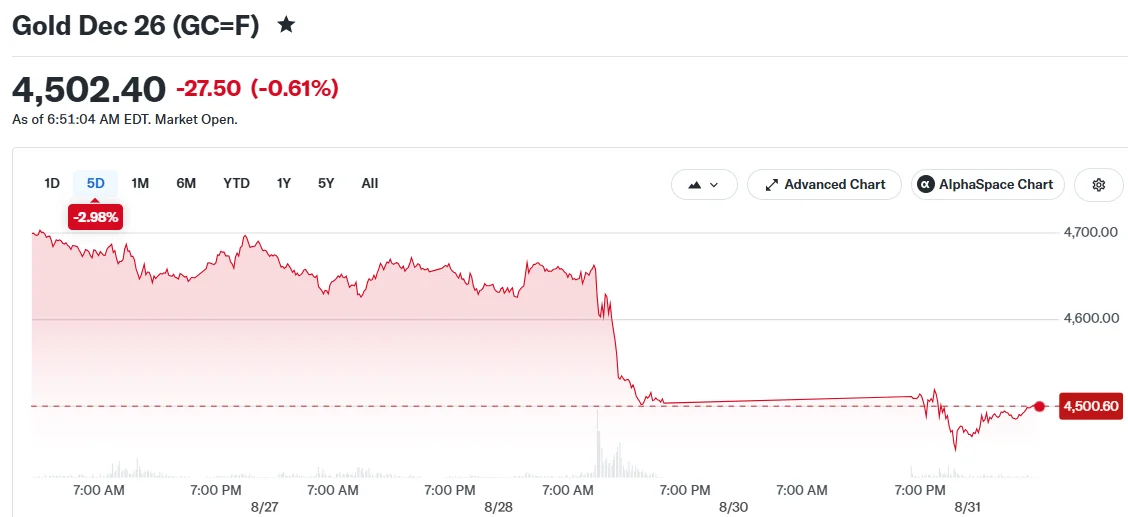
This downturn follows Friday’s substantial 3.2% plunge, representing gold’s steepest single-session loss since the beginning of June. The Friday selloff materialized after Federal Reserve Chair Kevin Warsh communicated at Jackson Hole that the central bank maintains additional responsibilities in reducing inflation toward its 2% objective.
Market Reprices September Rate Increase Likelihood
Warsh’s Jackson Hole statements rapidly transformed market sentiment. Trading activity now reflects approximately 57% odds favoring a September interest rate elevation, based on CME’s FedWatch analytical tool.
Since gold generates no yield, anticipated interest rate elevations enhance the relative appeal of bonds and alternative income-producing instruments. This expectation adjustment redirects investment capital away from precious metals.
Dollar strength, which materialized following Warsh’s statements, additionally constrains gold valuations. Dollar appreciation increases gold’s cost for international purchasers utilizing alternative currencies.
ANZ research professionals attributed the pullback directly to Warsh’s cautionary messaging. Nevertheless, they anticipate limited downside potential, maintaining that gold’s fundamental long-term investment rationale persists.
The benchmark 10-year Treasury yield hovered around 4.71% Monday morning, per ING commodities analyst Ewa Manthey. She noted that ongoing inflationary pressures combined with additional rate increase possibilities could sustain downward pressure on precious metals.
Treasury Operations and Energy Markets Influence Dynamics
Gold’s impressive August advance received support earlier this month following the U.S. Treasury’s unanticipated expansion of longer-maturity government bond acquisitions. This action suppressed yields while simultaneously pressuring the dollar downward.
The Treasury intervention simultaneously heightened apprehensions regarding expanding government obligations and whether strategies aimed at managing borrowing expenses might erode confidence in U.S.-denominated assets. This development reinvigorated the currency debasement investment narrative.
The debasement investment thesis powered gold’s approximately 65% appreciation throughout 2025. Market participants accumulated gold positions as protection against fiscal deficits, monetary depreciation, and diminishing real purchasing capacity.
Oil prices introduced additional complexity to the situation. Brent crude advanced to approximately $89.38 per barrel while U.S. crude achieved $84.50 following American military operations targeting Iranian launch facilities on Larak Island Sunday. Iran subsequently allegedly counterattacked U.S. personnel in Jordan, heightening concerns regarding broader regional conflict that could sustain elevated energy costs.
Elevated crude prices contribute to inflationary dynamics, thereby complicating the Federal Reserve’s policy trajectory and maintaining elevated rate increase expectations.
Gold had staged an impressive recovery from late June’s trough near $3,942 before encountering Friday’s sharp reversal. Market participants will now scrutinize forthcoming U.S. employment and inflation releases closely for indications regarding potential September Federal Reserve action.
Get 3 Free Stock Ebooks
Discover top-performing stocks in AI, Crypto, and Technology with expert analysis.
- Top 10 AI Stocks - Leading AI companies
- Top 10 Crypto Stocks - Blockchain leaders
- Top 10 Tech Stocks - Tech giants


