



Key Takeaways
- Bullion declined 0.5% to $4,395.78 as bond yields strengthened and crude oil advanced
- Geopolitical tensions involving Iran elevated oil markets and sparked inflation concerns
- Market probability for Fed rate pause in September now stands at 65%
- Global central banks purchased 244 tonnes during Q1 2026, marking the strongest quarter since Q4 2024
- ANZ analysts project gold climbing to $5,200 per ounce before year-end
The precious metal retreated on Tuesday as a pair of persistent market forces resurfaced: strengthening U.S. bond yields and advancing crude oil quotations. These dual pressures drove bullion down 0.5% to settle at $4,395.78 per ounce during morning trade.
December gold futures mirrored the decline, easing 0.5% to $4,451.07. Silver surrendered 0.8% to reach $65.24 per ounce, while platinum decreased 0.7% to $1,760.90.
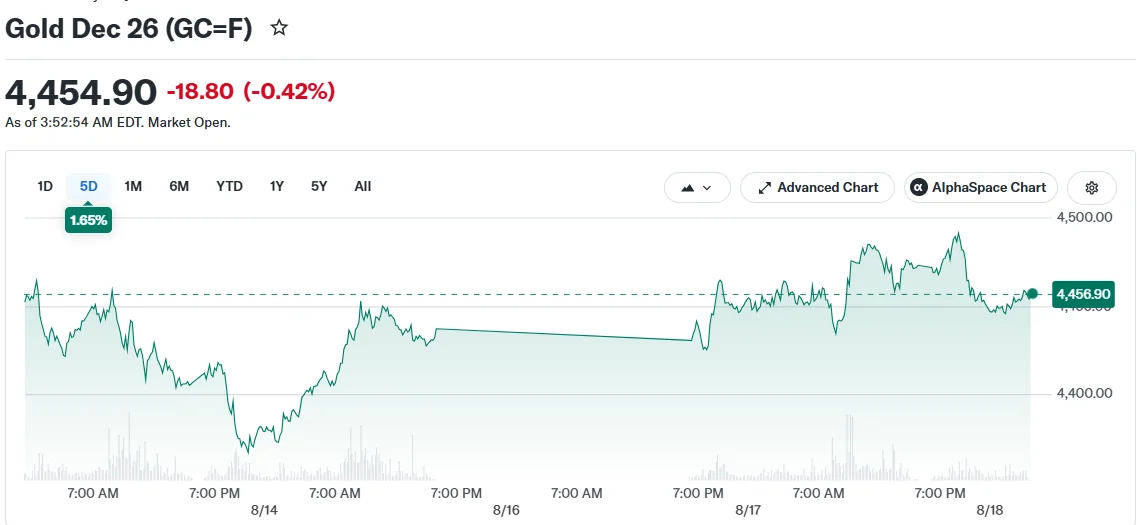
The U.S. Dollar Index advanced 0.1% to 99.67, contributing modest additional headwinds for commodities priced in the greenback.
Bond Yields Increase Opportunity Cost for Non-Yielding Assets
The 10-year U.S. Treasury yield continued its upward trajectory on Tuesday. As yields advance, investors face higher opportunity costs when allocating capital to gold, an asset that produces no interest or dividend income.
This relationship has consistently limited bullion’s upside momentum over recent trading sessions. Market participants frequently shift allocations toward interest-bearing instruments when fixed-income returns become more attractive.
Crude Oil Surge Amplifies Inflation Concerns
Oil prices strengthened following Iran’s announcement of plans to adopt a “fully offensive” military stance should diplomatic negotiations with the United States collapse. Washington simultaneously rejected any extension of the current temporary ceasefire arrangement.
These developments maintained elevated tension across energy markets. Advancing crude prices typically amplify inflation expectations, which increases the likelihood that the Federal Reserve maintains elevated interest rates for an extended period.
While gold traditionally serves as an inflation protection vehicle, elevated interest rate environments typically diminish its attractiveness given its non-income-producing characteristics.
Market participants have substantially reduced expectations for a September Fed rate increase following last month’s surprise employment contraction, softer consumer price index readings, and disappointing retail sales figures. Current market pricing indicates approximately a 65% likelihood that the central bank maintains its current rate position next month.
Traders await Wednesday’s publication of the Federal Open Market Committee minutes from the July policy meeting. Additionally, Federal Reserve Chair Kevin Warsh’s scheduled comments at the Jackson Hole economic symposium will be closely monitored for guidance regarding future monetary policy direction.
Institutional Demand Continues Providing Price Support
Notwithstanding Tuesday’s retreat, the yellow metal has still appreciated over 10% during the current month. This broader recovery has been underpinned by robust institutional accumulation, particularly from Chinese monetary authorities.
Worldwide central bank gold acquisitions totaled 244 tonnes during the opening quarter of 2026, representing the strongest quarterly performance since the final quarter of 2024. Chinese authorities alone accumulated 8 tonnes in April, marking their largest single-month purchase since December 2024.
Bullion successfully recaptured its 100-day moving average last week for the first time since April, although it has subsequently retreated toward that technical threshold.
Critical resistance is positioned within the $4,440 to $4,450 zone, with the 200-day moving average located near $4,503 representing the subsequent major technical obstacle. A decisive breakout above both levels would establish a pathway toward the $5,000 psychological benchmark.
ANZ economists maintain their year-end forecast of $5,200 per ounce, attributing their bullish outlook to ongoing central bank portfolio diversification driven by deteriorating geopolitical relationships.
Get 3 Free Stock Ebooks
Discover top-performing stocks in AI, Crypto, and Technology with expert analysis.
- Top 10 AI Stocks - Leading AI companies
- Top 10 Crypto Stocks - Blockchain leaders
- Top 10 Tech Stocks - Tech giants


