


Key Takeaways
- First-quarter 2026 revenue reached €4.07 billion with 5.6% organic growth, falling short of the 7.1% analyst consensus.
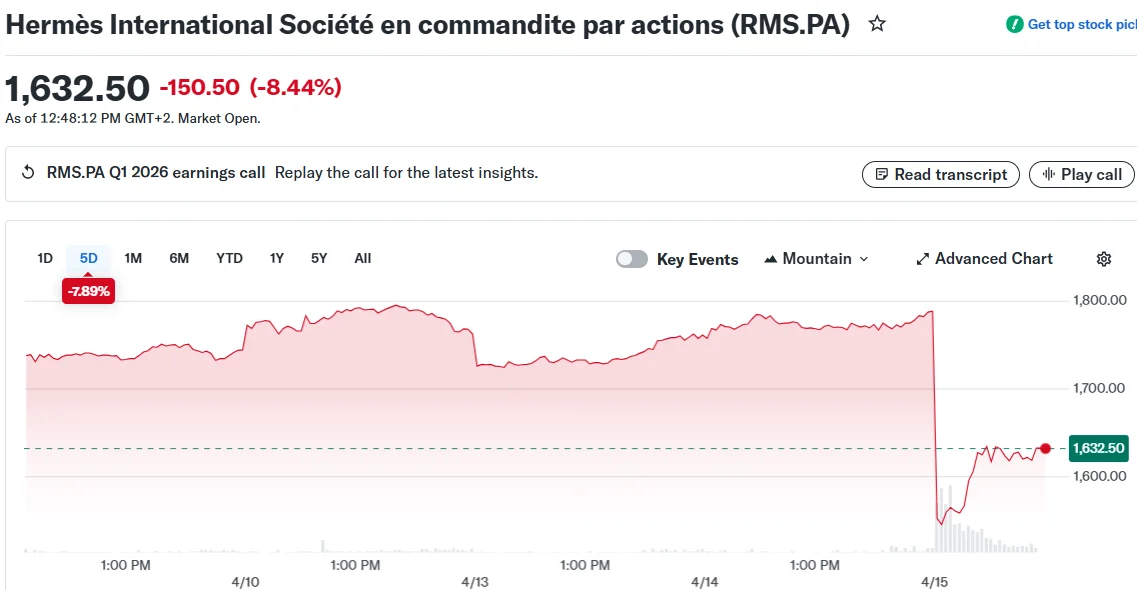
- Shares plummeted over 13% during Paris trading sessions, erasing approximately $20 billion in market capitalization.
- Geopolitical tensions in the Middle East subtracted roughly 150 basis points from overall revenue expansion, with regional performance declining 13.4% compared to the previous year.
- The Asia-Pacific region (excluding Japan) registered merely 2.2% growth, representing a dramatic deceleration from the 8% expansion recorded in Q4 2025, sparking concerns about Chinese market dynamics.
- North American operations emerged as the clear winner, delivering robust 17.2% growth that surpassed market projections.
The French luxury powerhouse Hermès experienced a brutal market reaction on Wednesday following the release of first-quarter figures that disappointed investors. The underwhelming performance, attributed primarily to struggles across Middle Eastern and Asian markets, triggered a share price collapse exceeding 13% in Parisian markets — representing one of the company’s most severe single-session declines in recent memory.
For the quarter ending March 2026, the luxury brand generated €4.07 billion in revenue, representing organic growth of 5.6%. While positive on the surface, this figure pales in comparison to the 7.1% expansion Wall Street analysts had anticipated. The performance also represents a notable retreat from the impressive 9.8% growth momentum Hermès achieved during the final quarter of 2025.
When examined through the lens of reported figures accounting for currency fluctuations, the situation appeared even more challenging. Foreign exchange headwinds totaling €290 million pushed the year-over-year headline figure into negative territory. Market consensus had projected revenue of €4.16 billion.
The ongoing Iranian conflict had tangible consequences. According to estimates from Jefferies analysts, Middle Eastern hostilities trimmed approximately 150 basis points from the quarter’s revenue trajectory. Wholesale channels serving concession retail locations across the region and duty-free airport shops bore the brunt of the impact. The Middle East as a whole witnessed revenue contract by 13.4% on a year-over-year basis.
Asia-Pacific Deceleration Sparks Investor Anxiety
While Middle Eastern challenges were significant, investor anxiety centered predominantly on another geographic segment: Asia-Pacific, excluding Japanese operations.
This critical market segment expanded by a mere 2.2% during Q1 — substantially trailing the 5.7% consensus projection and representing a dramatic slowdown from the 8% growth trajectory achieved in the previous quarter. For a luxury brand with substantial exposure to Chinese consumer expenditure patterns like Hermès, such pronounced deceleration immediately triggers alarm bells.
Jefferies research team articulated the situation clearly: the Asia-Pacific ex-Japan performance “will be a major point of debate” and represents a “clear source of concern for fundamental investors.” The critical question facing the market centers on whether this slowdown constitutes a transitory fluctuation or signals more enduring challenges within Chinese consumer demand.
According to Jefferies, the stock’s pre-earnings decline already incorporated two primary concerns — Middle Eastern geopolitical exposure and weakening Chinese consumption trends. Wednesday’s financial disclosure validated both apprehensions.
North American Market Provides Silver Lining
Despite the overall disappointing quarter, not all geographic indicators pointed downward. The Americas region generated 17.2% growth, substantially outperforming analyst expectations. This represents impressive momentum in a market segment that continues gaining strategic importance within the luxury consumption landscape.
Notwithstanding the Q1 underperformance, Hermès maintained its medium-term strategic outlook. Company leadership stated they have “moved into 2026 with confidence” despite navigating an unpredictable economic environment and volatile geopolitical landscape.
The equity declined as much as 13.6% during early Parisian trading activity before stabilizing around a 12.93% loss, closing at €1,551.50. Over $20 billion in shareholder value evaporated within a single trading day.
Hermès currently trades at a P/E multiple of 41.69x, consistent with its premium market positioning within the luxury goods industry. The company maintains a GF Score of 96/100, complemented by a financial strength rating of 9/10.
Management noted that Middle Eastern market trends have demonstrated sequential improvement throughout the early portion of the second quarter.
Get 3 Free Stock Ebooks
Discover top-performing stocks in AI, Crypto, and Technology with expert analysis.
- Top 10 AI Stocks - Leading AI companies
- Top 10 Crypto Stocks - Blockchain leaders
- Top 10 Tech Stocks - Tech giants


