


Key Takeaways
- The car rental company posted a Q2 loss of $0.11 per share, surpassing analyst expectations of a $0.24 loss
- Revenue increased 10% from the prior year, reaching $2.4 billion
- Shares surged 17% during premarket hours, climbing to $1.82
- Adjusted EBITDA of $81 million hit the upper limit of management’s guidance range
- With approximately 30% of the float shorted, HTZ faces potential short squeeze dynamics
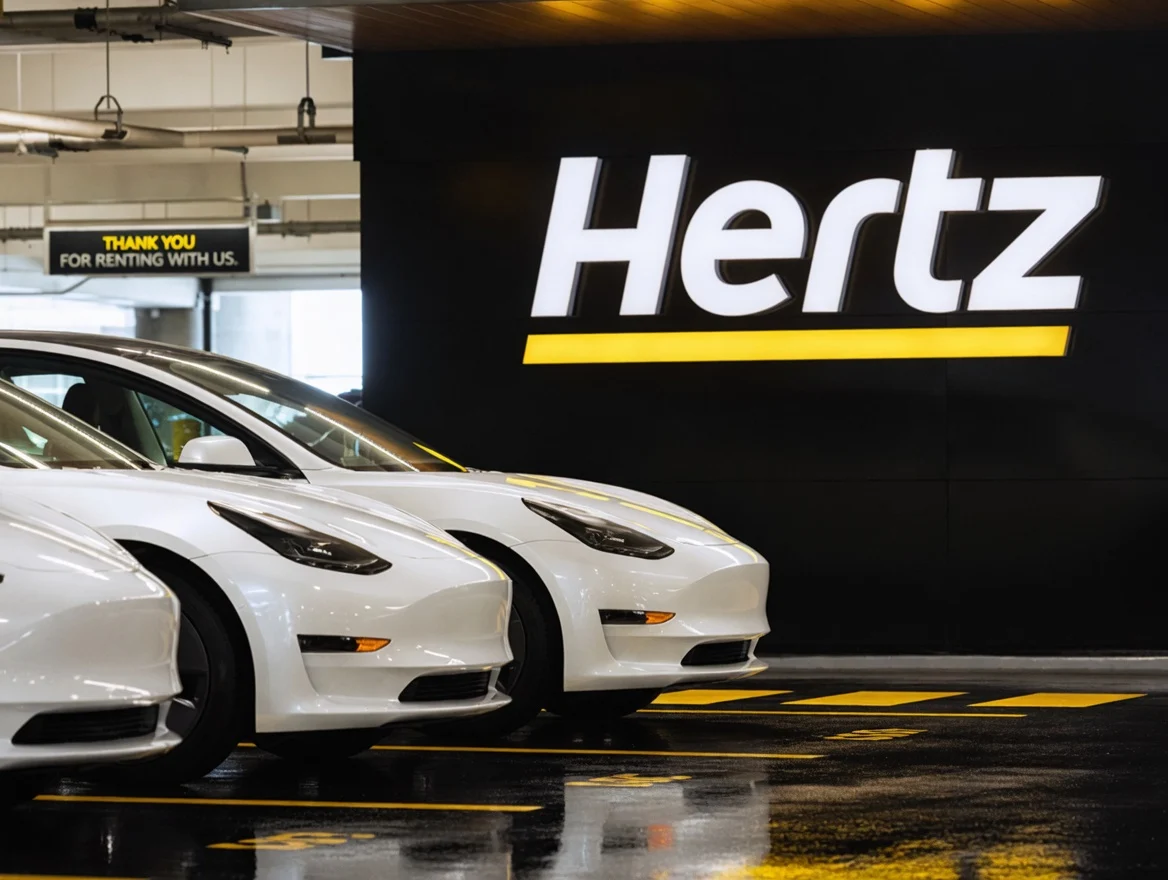
Shares of Hertz experienced a dramatic 17% surge during Thursday’s premarket session following the release of second-quarter financial results that significantly exceeded analyst projections.
Hertz Global Holdings, Inc., HTZ
During premarket activity, the stock climbed to $1.82, rebounding from its 52-week low of $1.45 recorded immediately prior to the earnings announcement. This rally followed a brutal 70% decline year-to-date leading into the quarterly report.
The rental car company delivered GAAP net income of $64 million, translating to $0.05 per diluted share, for the second quarter of 2026. This represents a significant turnaround from the net loss of $294 million, or $0.95 per diluted share, recorded during the comparable period last year.
When measured on a per-share loss basis, Hertz’s $0.11 deficit handily outperformed the Wall Street consensus forecast calling for a $0.24 loss, per FactSet data.
Total quarterly revenue reached $2.4 billion, representing a 10% year-over-year increase and topping the approximately $2.3 billion that Wall Street analysts had anticipated.
Strong Unit Economics Tell Positive Story
Average revenue per day increased 9% to reach $61.98. Meanwhile, revenue per unit on a monthly basis rose 8% to $1,542.
These improvements occurred despite Hertz maintaining a marginally reduced fleet size, suggesting enhanced pricing power and discipline rather than reliance on volume expansion alone.
According to CEO Gil West, the performance “reflect the disciplined execution of our strategy and our consistent commercial strength.”
The company’s adjusted corporate EBITDA totaled $81 million, reaching the upper boundary of its revised guidance range spanning $50 to $80 million.
Management had issued that guidance range during the summer months following earlier warnings about deteriorating conditions in the used-car marketplace. The actual Q2 performance indicates the situation evolved more favorably than initially anticipated.
Heavy Short Interest Creates Squeeze Potential
Approximately 30% of HTZ’s available tradeable shares are currently held in short positions. This level stands roughly ten times higher than the typical U.S. equity.
When stocks with substantial short interest receive unexpected positive news, bearish traders may be compelled to rapidly close their positions. This forced buying activity can amplify upward price movements beyond what fundamental earnings results alone would generate.
HTZ experienced a sharp 41% decline on June 24 following management’s warning that used-car market challenges would negatively impact second-quarter performance. That cautionary guidance effectively established a low hurdle that Thursday’s actual results easily surpassed.
In related supplier developments, Verra Mobility recently revealed less advantageous contract renewal terms with Hertz, indicating the rental company has been actively renegotiating supplier arrangements as part of comprehensive cost-reduction initiatives.
Broader market indices showed the S&P 500 and Dow Jones trading up 0.1% and 0.3% respectively during premarket hours, while the Nasdaq slipped 0.6%. The substantial movement in HTZ shares stemmed exclusively from company-specific developments.
The company’s adjusted EBITDA performance of $81 million achieved the top end of its guidance range, which management had established following earlier warnings regarding softness in used-vehicle valuations during the summer period.
Get 3 Free Stock Ebooks
Discover top-performing stocks in AI, Crypto, and Technology with expert analysis.
- Top 10 AI Stocks - Leading AI companies
- Top 10 Crypto Stocks - Blockchain leaders
- Top 10 Tech Stocks - Tech giants


