


TLDR
- Intel stock is recovering after falling more than 18% following earnings.
- Shares stabilized near $81.79 after dropping about 42% from their record high.
- Strong Microsoft and Amazon results improved sentiment across technology stocks.
- Intel stock faces resistance between $98 and $102.
- The nearest support level stands at $91.50.
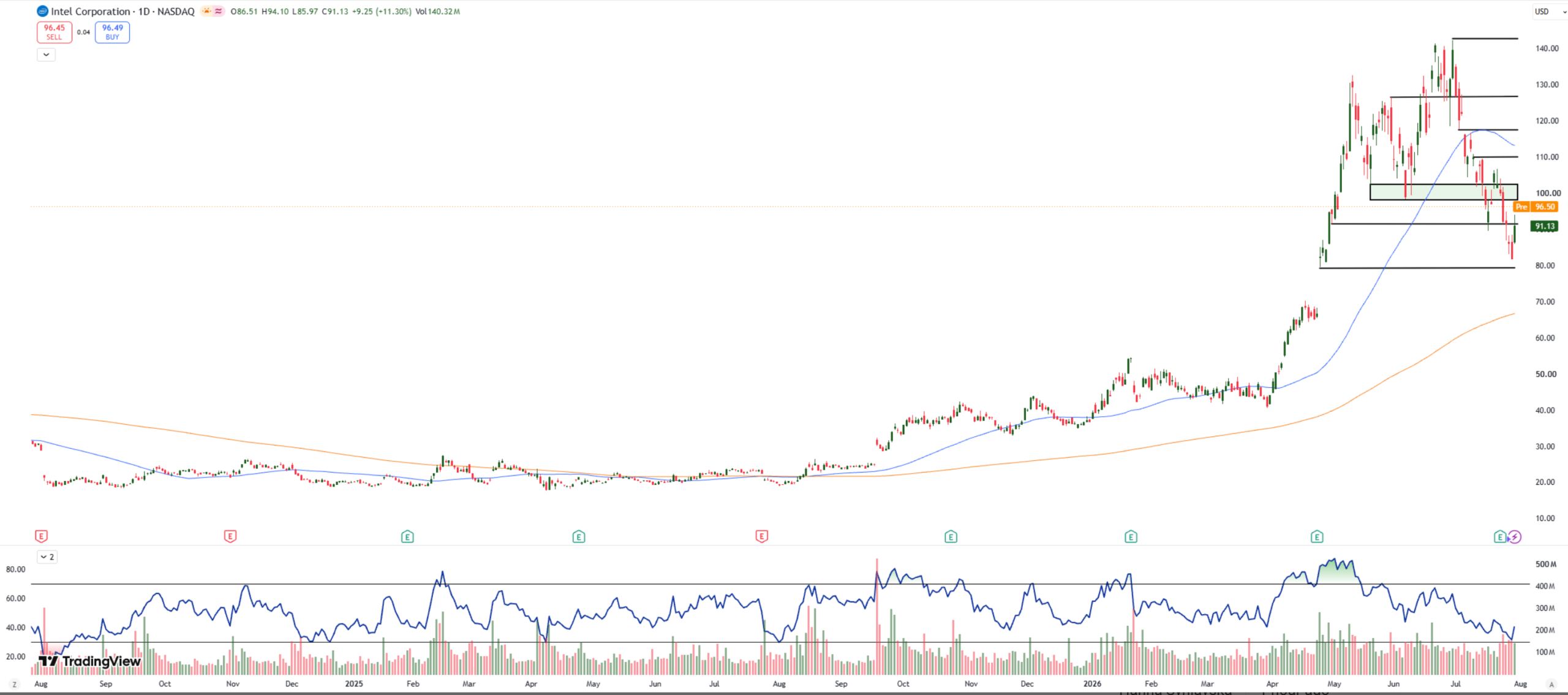
Intel (INTC) stock is attempting to recover after a sharp post-earnings selloff pushed shares down more than 18%. The stock later stabilized near $81.79 after falling about 42% from its all-time high.
Improving sentiment across technology and semiconductor stocks has supported the rebound. Strong results from Microsoft and Amazon eased concerns about artificial intelligence infrastructure demand and helped buyers return.
Intel Stock Rebounds With Tech Sector
Intel stock has regained momentum as investors respond to stronger earnings from major technology companies. Microsoft and Amazon reported solid quarterly results, confirming continued spending on AI systems and cloud infrastructure.
The recovery also received support from South Korea’s KOSPI index. The index rebounded nearly 18% after losing more than 45% from its record high, helping improve market sentiment.
Intel shares have now closed the post-earnings price gap. Buyers have regained control, while the stock shows early signs of a technical recovery after the steep decline.
The first resistance zone sits between $98 and $102. This range remains the main upside target in coming sessions. Support stands near $91.50, while a break below that level could expose $79.50.
Revenue Growth Supports Recovery
Intel reported its strongest revenue growth in more than a decade. The result supported the company’s outlook despite the heavy selling that followed the earnings release.
Investors now want clearer evidence that large AI investments can produce steady earnings growth and stronger free cash flow. That focus may continue to shape Intel stock trading.
U.S. semiconductor policy also remains supportive. The Trump administration has backed efforts to expand chip manufacturing inside the United States, which could support Intel’s domestic production plans.
The company now faces the task of maintaining revenue growth while improving cash generation. Market direction will depend on whether buyers can hold support and push toward the $98–$102 resistance zone.
Get 3 Free Stock Ebooks
Discover top-performing stocks in AI, Crypto, and Technology with expert analysis.
- Top 10 AI Stocks - Leading AI companies
- Top 10 Crypto Stocks - Blockchain leaders
- Top 10 Tech Stocks - Tech giants


