


Key Takeaways
- Shares of Manchester United declined approximately 4% on Wednesday, trading near $19.60.
- The football club’s quarterly deficit expanded significantly to £28.7 million.
- Fourth-quarter revenue decreased 4% to £157.5 million, with adjusted EBITDA sliding 22.9%.
- Annual revenue hit an all-time high of £677.6 million.
- Market participants are evaluating debt levels and capital requirements for the planned 100,000-capacity stadium.
Manchester United (MANU) shares retreated approximately 4% on Wednesday, hovering around $19.60, following the football club’s release of mixed fourth-quarter financial figures. The stock had settled at $20.51 on Tuesday, making the earnings announcement the most apparent driver behind Wednesday’s selloff.
Fourth-quarter revenue contracted 4% on a year-over-year basis to £157.5 million from the previous year’s £164.1 million. Adjusted EBITDA experienced a 22.9% decline, falling to £28.9 million from £37.5 million.
The deficit expanded far more dramatically, with net losses reaching £28.7 million versus £3.9 million in the comparable period last year. The club recorded an adjusted deficit of £28.2 million for the quarter.
Commercial Operations Drive Quarterly Weakness
Commercial revenue experienced an 18.1% contraction to £72.2 million, with sponsorship income declining 26.2%. The year-ago quarter had benefited from a postseason tour across Malaysia and Hong Kong that wasn’t replicated this fiscal year due to the FIFA World Cup schedule.
Matchday income similarly decreased 4.3% to £35.6 million. Broadcasting revenue emerged as the brighter segment, surging 28.4% to £49.7 million thanks to the men’s squad’s enhanced Premier League showing.
The disappointing quarter stands in stark contrast to a robust full fiscal year. Manchester United achieved record-breaking revenue of £677.6 million, representing a 1.7% increase, despite sitting out UEFA competitions.
Full-year adjusted EBITDA climbed to a record £216.4 million, up 18.4%. Operating profit improved to £22.6 million from an £18.4 million deficit as expense management and stronger Premier League results boosted performance.
The men’s squad secured third position in the Premier League and has qualified for Champions League participation in the 2026/27 campaign. This should generate incremental broadcasting and matchday income compared to the previous season.
Massive Stadium Project Raises Capital Concerns
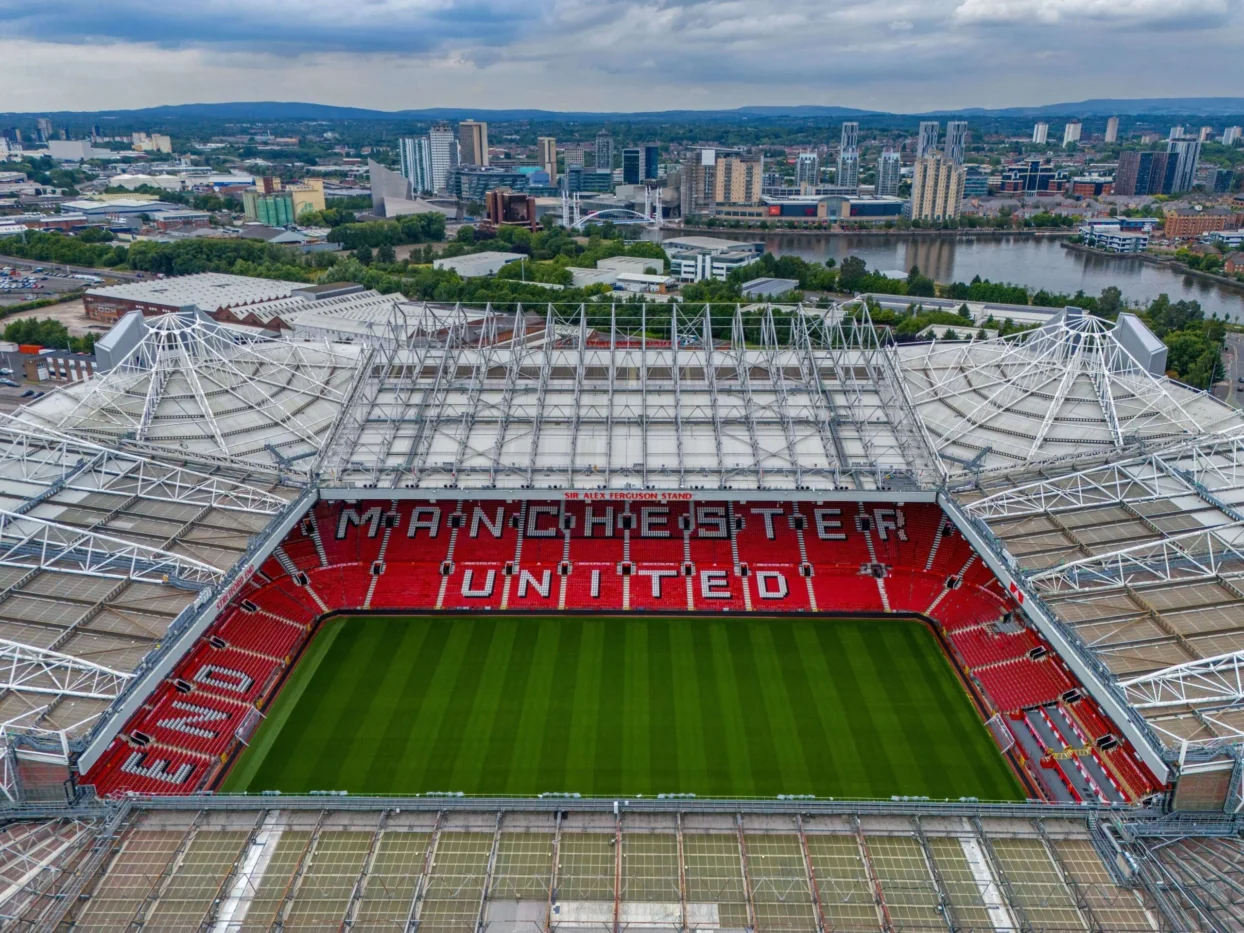
Market observers are closely monitoring Manchester United’s ambitious plan for a 100,000-seat stadium. The organization has secured most of the real estate necessary for the development, including a 25-acre parcel adjacent to Old Trafford.
Manchester United allocated £63.5 million during fiscal 2026 toward acquiring property linked to the stadium initiative. Overall property and equipment capital expenditure totaled £85.9 million for the year.
Debt obligations present an additional factor for consideration. Non-current borrowings stood at $775 million as of June 30, climbing from $650 million twelve months prior, while the revolving credit facility carried £110 million in outstanding balances.
The organization finished the fiscal year holding £67.2 million in cash and equivalents, down from £86.1 million. Elevated financing expenses, player acquisitions and upcoming stadium construction could therefore persist as significant concerns for market participants.
Manchester United projects fiscal 2027 revenue between £740 million and £760 million with adjusted EBITDA ranging from £205 million to £225 million. The guidance incorporates the resumption of Champions League participation but still leaves execution, on-field performance and financing arrangements as critical risk factors.
The most recent confirmed financials demonstrate a challenging fourth quarter offset by record full-year revenue and EBITDA. Wednesday’s equity decline indicates market participants are concentrating more intensely on the quarterly deficit, reduced commercial income and the organization’s forthcoming capital requirements.
Get 3 Free Stock Ebooks
Discover top-performing stocks in AI, Crypto, and Technology with expert analysis.
- Top 10 AI Stocks - Leading AI companies
- Top 10 Crypto Stocks - Blockchain leaders
- Top 10 Tech Stocks - Tech giants


