


TLDR
- Merck delivered an adjusted Q1 loss of $1.28 per share, surpassing expectations for a $1.47 loss
- Global revenue climbed 5% to $16.3 billion, exceeding the $15.8 billion analyst consensus
- Keytruda revenue reached $8 billion, up 12%, while Gardasil declined 22% due to soft demand in China
- Winrevair revenue jumped 88% to $525 million; Januvia sales declined 29% before its May patent expiration
- 2025 revenue guidance increased slightly to $65.8B–$67B with adjusted EPS of $5.04–$5.16
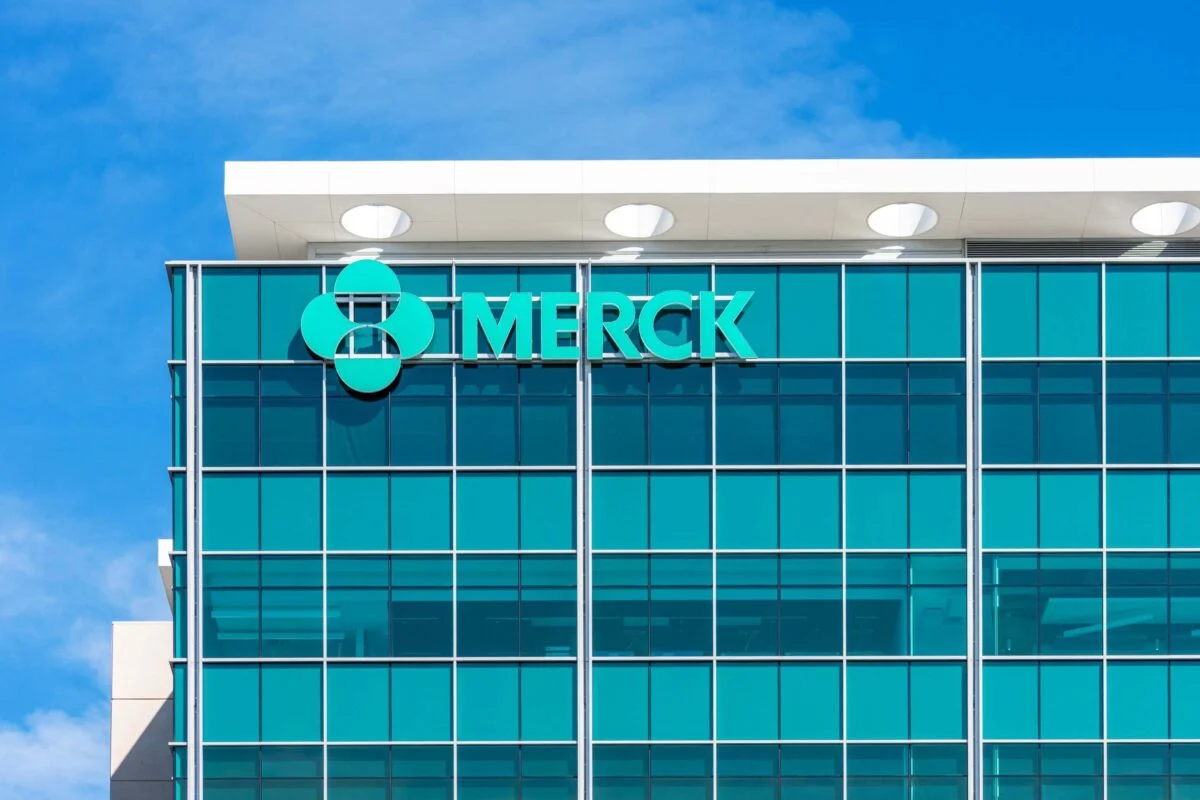
Merck delivered first-quarter financial results on Thursday that exceeded Wall Street projections, propelling shares higher by 4.8% during premarket hours.
The pharmaceutical giant reported an adjusted loss of $1.28 per share in Q1, performing better than the anticipated $1.47 loss projected by analysts. The reported net loss stood at $4.24 billion, equating to $1.72 per share, primarily attributed to a $3.62 per share charge related to its $9.2 billion acquisition of Cidara Therapeutics completed in January.
This contrasts sharply with the year-ago period, when the company earned $5.08 billion, or $2.01 per share.
Global revenue increased 5% to $16.29 billion, surpassing the FactSet consensus estimate of $15.85 billion.
Keytruda, the company’s flagship cancer immunotherapy, continued to serve as the primary growth driver. The treatment generated $8 billion in quarterly sales, representing a 12% increase and comprising nearly half of total company revenue. This figure encompasses both the traditional intravenous formulation and the recently introduced subcutaneous version, Keytruda SC.
The pharmaceutical faces increasing scrutiny as its U.S. patent protection expires in 2028, when cheaper biosimilar alternatives are anticipated to enter the marketplace.
CEO Robert Davis has previously outlined strategies to construct a “patent wall” protecting Keytruda through additional indications and combination therapies, with certain patents extending to 2029.
Gardasil Weakness Continues
Not all product lines showed positive momentum. Gardasil, Merck’s vaccine for human papillomavirus, experienced a 22% sales decline on a foreign exchange-adjusted basis during Q1.
This decrease stems from persistent challenges in the Chinese market, combined with reduced sales in Japan following the conclusion of a nationwide catch-up vaccination initiative. Unfavorable purchasing patterns in the U.S. public sector further contributed to the decline.
Januvia, the company’s diabetes medication, continues losing market share even before its official May patent expiration. First-quarter sales dropped 29% as generic alternatives capture market share ahead of the formal loss of exclusivity.
Winrevair Picks Up the Slack
On a more positive note, Winrevair — Merck’s therapy for pulmonary arterial hypertension — delivered another impressive quarterly performance. Revenue skyrocketed 88% year-over-year to $525 million.
Bridion also made a positive contribution, with sales advancing 7% to $472 million, though international generic competition partially offset these gains.
The pharmaceutical company modestly increased its full-year projections. Management now anticipates global sales ranging from $65.8 billion to $67 billion, up from the previous forecast of $65.5 billion to $67 billion.
Adjusted earnings guidance was elevated to $5.04 to $5.16 per share, compared with the earlier range of $5.00 to $5.15.
Earlier this year, the company cautioned that full-year performance would face headwinds from patent expirations on Januvia and additional medications. This warning had pressured shares following the fourth-quarter earnings release.
The FDA granted approval last week for a once-daily, two-drug HIV-1 treatment regimen, providing another asset to the company’s pipeline as it seeks to broaden revenue streams before the Keytruda patent cliff arrives.
MRK shares advanced 4.8% in premarket trading Thursday.
Get 3 Free Stock Ebooks
Discover top-performing stocks in AI, Crypto, and Technology with expert analysis.
- Top 10 AI Stocks - Leading AI companies
- Top 10 Crypto Stocks - Blockchain leaders
- Top 10 Tech Stocks - Tech giants


