


TLDR
- Dell’s Chief Operating Officer emphasized significant DRAM and NAND memory bottlenecks that are limiting AI server production capabilities during their earnings discussion.
- According to Susquehanna’s research, DRAM contract pricing is projected to surge more than 50% during this quarter, while NAND flash could see 60% increases.
- Despite positive supply indicators, MU shares have fallen over 13% across the last three months and declined approximately 1.4% during Wednesday’s premarket session.
- Union members at Micron’s Taiwan facilities have overwhelmingly supported potential strike action, with roughly 80% approval, threatening to compound supply constraints.
- Wall Street maintains a Buy rating consensus with a mean price target of $1,521.74 as the company prepares for its September 30 quarterly results.
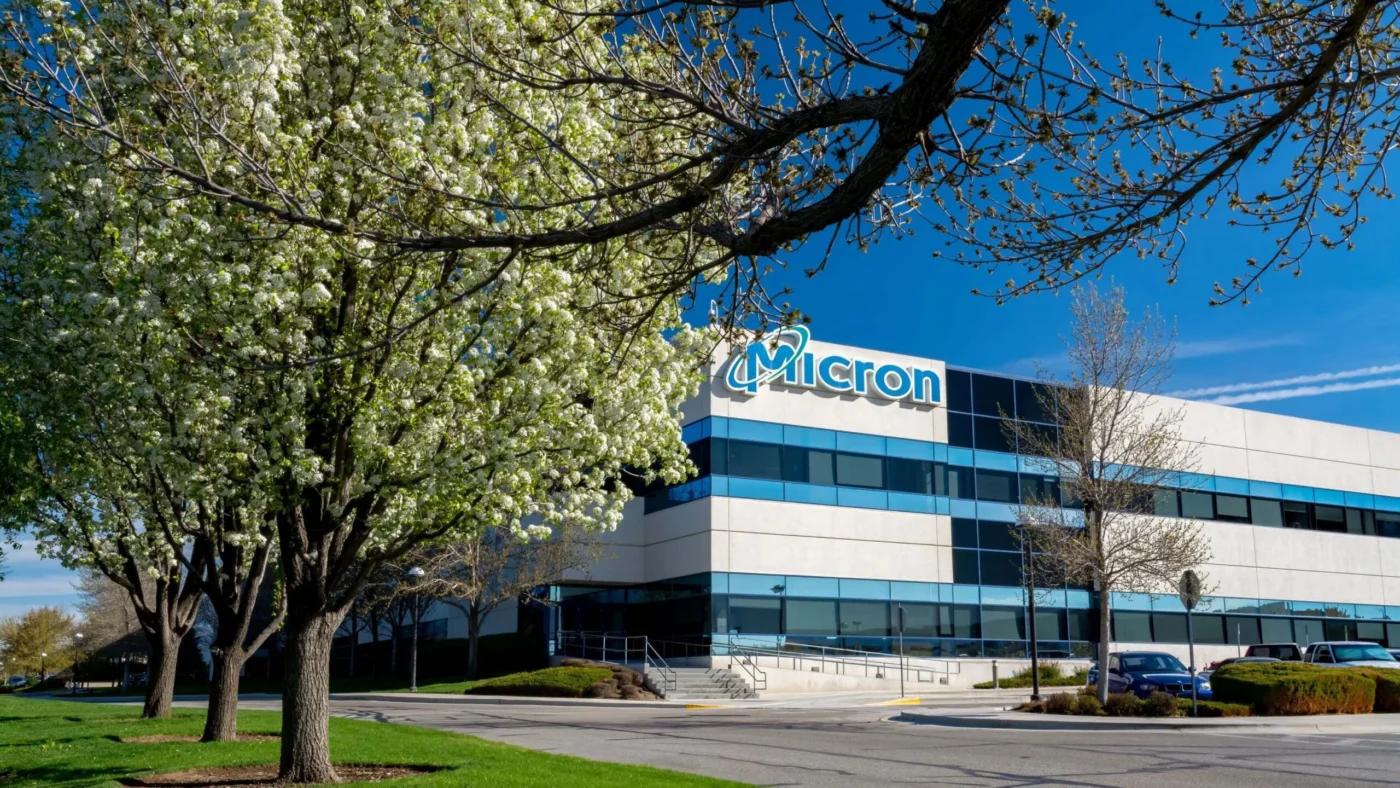
Shares of Micron Technology (MU) showed minimal movement during Wednesday’s premarket session, declining roughly 1.4% to $920.06, despite mounting indicators pointing to an intensifying memory chip shortage across the industry.
During Dell Technologies’ earnings call on Tuesday evening, Chief Operating Officer Jeffrey Clarke delivered stark commentary about current supply dynamics. “The constraints remain the same. DRAM, DRAM, DRAM, followed by NAND, NAND, NAND,” Clarke emphasized during the analyst discussion. The company indicated that AI server demand significantly exceeds available supply, with memory components representing the primary limitation.
This type of supply-side commentary represents precisely what investors bullish on Micron have anticipated. With DRAM comprising approximately 75% of the company’s total revenue stream, contract pricing for these chips is projected to increase over 50% in the current quarter compared to the previous period, based on Susquehanna’s analysis. Meanwhile, NAND flash memory pricing is expected to surge 60%.
Despite these favorable conditions, MU has faced headwinds. The stock has declined more than 13% throughout the past three-month period, although it maintains nearly 700% gains over the trailing twelve months.
Supply Constraints Intensifying
The supply situation could become even more constrained in the near term. Micron’s manufacturing operations in Taiwan are confronting potential labor disruptions, with approximately 80% of union members across its Taoyuan and Taichung facilities approving strike authorization over compensation disputes related to bonus structures. Micron Taiwan has indicated plans to present details regarding its Incentive Pay Plan in October while maintaining ongoing dialogue with its workforce.
Industry analysts caution that any production interruptions would exacerbate global memory supply limitations during a period when demand already exceeds available inventory.
Jeff Herbst, a former Nvidia executive, provided additional perspective, noting that AI computing requirements continue to surpass memory availability and that Samsung, SK Hynix, and Micron are all operating at maximum capacity. He emphasized that constructing new semiconductor fabrication facilities requires several years, suggesting sustained elevated pricing over the medium term.
Tariff Uncertainty Looms Over Industry
From a regulatory standpoint, the Trump administration is considering additional semiconductor tariffs that could apply to laptops, gaming systems, and data center infrastructure. President Trump has publicly commended Micron’s domestic expansion initiatives, including a $10 billion research commitment and $250 billion in U.S. manufacturing investments. As the sole American manufacturer of high-bandwidth memory, Micron holds strategic importance in the administration’s AI supply chain security considerations.
Nevertheless, technology sector companies have expressed concerns that tariff implementations could elevate expenses and decelerate AI infrastructure investment.
Quarterly Results Anticipated
Micron’s upcoming catalyst arrives with its fiscal fourth-quarter financial results scheduled for September 30. Analyst consensus estimates anticipate earnings per share of $31.26, representing substantial growth from $3.03 in the comparable year-ago quarter, with revenue projected at $50.78 billion versus $11.31 billion in the prior-year period. The stock currently trades at approximately 6x forward earnings according to certain valuation metrics, while alternative calculations place it nearer to 21x.
Analyst community sentiment remains decidedly constructive. Mizuho maintains an Outperform rating with a $1,300 price objective. New Street Research elevated their recommendation to Buy in August, establishing a $1,250 target. Citigroup holds a Buy rating with a $1,150 price target. The consensus average forecast stands at $1,521.7
Get 3 Free Stock Ebooks
Discover top-performing stocks in AI, Crypto, and Technology with expert analysis.
- Top 10 AI Stocks - Leading AI companies
- Top 10 Crypto Stocks - Blockchain leaders
- Top 10 Tech Stocks - Tech giants


