


Key Takeaways
- Micron shares plummeted 7.7% Thursday, eliminating $94.24 billion from its market valuation — marking the company’s most severe single-session market cap decline ever.
- The sharp downturn followed Broadcom’s quarterly results, which failed to excite investors after the company maintained its existing AI revenue forecast.
- Broadcom experienced an even steeper decline, losing $286 billion in market capitalization — ranking as the fourth-biggest one-day loss for any U.S. corporation in history.
- Other semiconductor stocks also retreated, with AMD declining 3.6%, Intel falling 0.8%, and the PHLX Semiconductor Index losing 2.2%.
- Investors are now focused on Micron’s June 24 earnings announcement for updated insights into AI-driven memory chip demand.
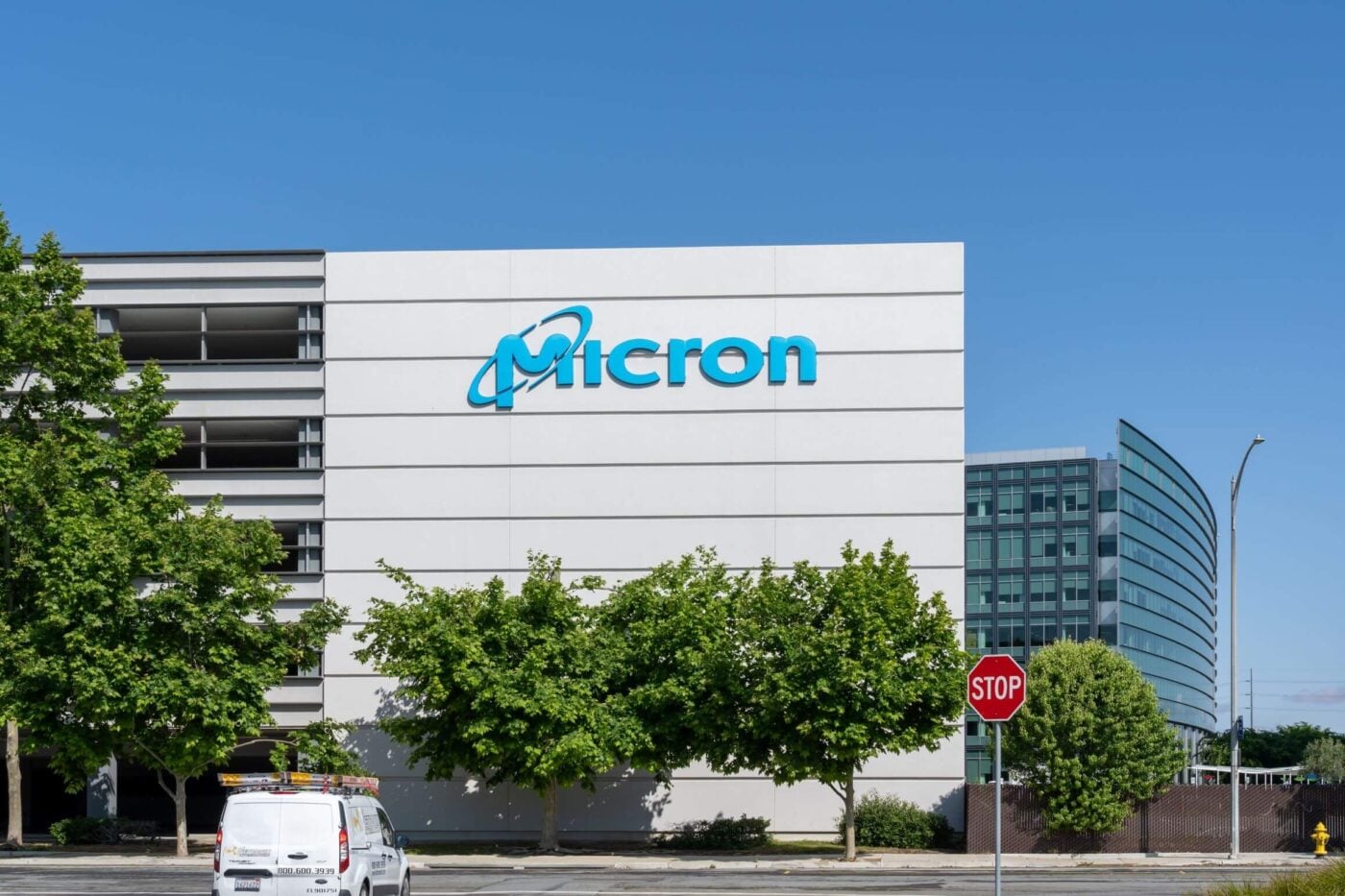
Micron Technology (MU) shares tumbled 7.7% during Thursday’s trading session, eliminating $94.24 billion from the company’s market valuation in just one day. This represents the most significant single-day market capitalization decline in Micron’s corporate history.
The steep decline followed Broadcom‘s (AVGO) latest quarterly earnings disclosure, which some market observers viewed as solid but ultimately disappointed investors. The primary concern? Broadcom declined to raise its artificial intelligence revenue projections, which rattled market participants anticipating more optimistic guidance.
Broadcom weathered significant losses as well. The company’s shares declined 12.6%, erasing $286 billion from its market value — positioning it as the fourth-largest single-session market cap elimination for any American company in recorded history.
The negative sentiment reverberated throughout the semiconductor industry. AMD shares retreated 3.6%, Intel declined 0.8%, and the PHLX Semiconductor Index — a comprehensive benchmark for chip manufacturers — dropped 2.2%. Nvidia stood out as a notable outlier, advancing 1.94%.
D.A. Davidson analyst Gil Luria characterized Broadcom’s financial performance as “impressive” while recognizing the report created uncertainty throughout the semiconductor landscape.
Micron’s Momentum Before the Decline
Prior to Thursday’s selloff, Micron had been experiencing substantial upward momentum. The stock had recently achieved its inaugural closing price above $1,000, with its total market capitalization temporarily nearing $1.2 trillion.
Financial analysts had been consistently elevating their price projections, highlighting several positive developments on the horizon. Among the most anticipated: Nvidia’s introduction of next-generation personal computing processors featuring expanded memory capacity capabilities, which industry watchers believe could significantly benefit Micron.
Itau BBA analyst Stephano Gabriel recently noted increasing indications that memory supply constraints are “intensifying.” Gabriel contends this development favors Micron, as it indicates current elevated memory pricing represents more than just temporary cyclical fluctuations.
Gabriel anticipates additional long-term supply contracts will be finalized at present premium pricing levels, potentially providing Micron with more stable revenue streams moving forward.
“This helps ease peak-cycle concerns,” he said.
Valuation Concerns and Future Outlook
Despite optimistic analyst perspectives, some wariness had already emerged. Analyst price projections had consistently trailed recent trading valuations, and notable insider stock dispositions had been observed in recent months.
Broadcom’s decision to maintain — rather than elevate — its AI revenue outlook proved sufficient to spark profit-taking across richly valued semiconductor manufacturers like Micron that had experienced strong appreciation leading into the announcement.
Micron’s upcoming quarterly earnings disclosure is slated for June 24. Market participants will scrutinize the report for refreshed guidance regarding AI-related memory demand, supply contract agreements, and whether supply constraint dynamics remain intact.
An industry communication distributed June 3 had highlighted potential AI memory supply limitations across critical market segments — another consideration investors will evaluate against Micron’s forthcoming commentary.
Get 3 Free Stock Ebooks
Discover top-performing stocks in AI, Crypto, and Technology with expert analysis.
- Top 10 AI Stocks - Leading AI companies
- Top 10 Crypto Stocks - Blockchain leaders
- Top 10 Tech Stocks - Tech giants


